
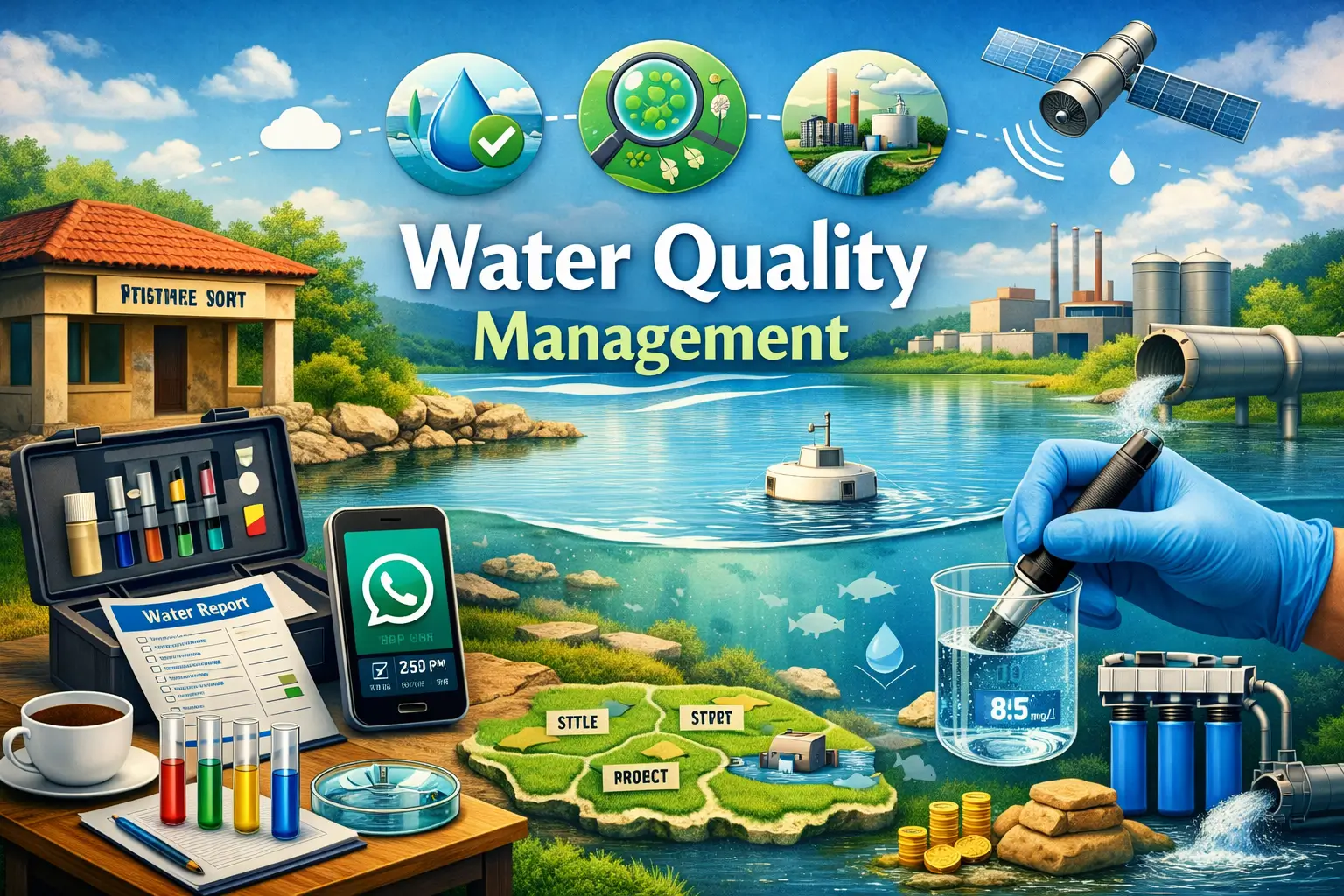
Water Quality Management Course
The Water Quality Management Course is designed to provide learners with a comprehensive understanding of water quality assessment, monitoring, treatment, and environmental protection practices. Moreover, the course explores the scientific, technical, and regulatory aspects of maintaining safe and sustainable water resources. As a result, learners gain practical knowledge and industry-relevant skills required for effective water quality management.
Water Quality Management Course Overview
Water is one of the most important natural resources for human health, agriculture, industry, and environmental sustainability. Therefore, maintaining water quality is essential for protecting ecosystems and ensuring public health. This Water Quality Management Course introduces learners to the principles and practices used to monitor, evaluate, and improve water quality.
In addition, participants explore water treatment technologies, pollution prevention strategies, and regulatory frameworks. Furthermore, they gain insights into sustainable water resource management and environmental conservation.
Fundamentals of Water Quality
The course begins with the fundamentals of water quality. Therefore, students learn about physical, chemical, and biological characteristics that determine water quality. Moreover, they understand the factors that influence water contamination and ecosystem health.
These concepts provide a strong foundation for water quality management.
Water Quality Monitoring and Testing
Monitoring and testing are essential for evaluating water conditions. Consequently, learners study sampling techniques, laboratory testing methods, and water quality indicators. In addition, they explore tools used to assess pH levels, dissolved oxygen, turbidity, and microbial contamination.
As a result, students gain practical skills in water quality assessment.
Water Treatment Processes
Water treatment plays a critical role in ensuring safe water supplies. Therefore, the course covers filtration, disinfection, purification, and advanced treatment technologies. Furthermore, learners understand how treatment systems remove contaminants and improve water quality.
These skills support effective water management practices.
Water Pollution Control
Pollution can significantly impact water resources and public health. Consequently, students learn about pollution sources, environmental impacts, and prevention strategies. In addition, they explore methods used to control industrial, agricultural, and domestic water pollution.
These concepts promote environmental sustainability and resource protection.
Drinking Water Safety Standards
Safe drinking water is essential for communities worldwide. Therefore, learners study water quality regulations, safety standards, and compliance requirements. Moreover, they understand the importance of maintaining safe drinking water systems.
As a result, students gain knowledge of public health and water safety management.
Wastewater Management
Wastewater treatment and management are important components of environmental protection. Consequently, the course introduces wastewater collection, treatment processes, and disposal methods. In addition, learners explore sustainable wastewater management practices.
These skills contribute to effective environmental management.
Sustainable Water Resource Management
Sustainability is a key goal of modern water management. Therefore, students learn strategies for conserving water resources, improving efficiency, and supporting long-term environmental health. Furthermore, they explore integrated approaches to water resource planning and management.
These concepts encourage responsible water stewardship.
Practical Learning and Case Studies
The Water Quality Management Course includes practical projects, laboratory-based activities, and real-world case studies. Moreover, learners analyze water quality challenges and apply management techniques to realistic scenarios.
As a result, students gain hands-on experience and practical industry knowledge.
Learning Outcomes
By the end of this course, learners will be able to:
- Understand the principles of water quality management.
- Conduct water quality monitoring and testing procedures.
- Identify common water contaminants and pollution sources.
- Apply water treatment and purification techniques.
- Understand drinking water safety standards and regulations.
- Support sustainable water resource management practices.
- Contribute to environmental protection and public health initiatives.
Who Should Enroll?
This course is ideal for environmental science students, water resource professionals, laboratory technicians, environmental consultants, public health professionals, and individuals interested in water management. Moreover, it benefits anyone seeking foundational knowledge of water quality assessment and treatment systems.
Conclusion
The Water Quality Management Course provides comprehensive training in water monitoring, treatment technologies, pollution control, and sustainable water resource management. Furthermore, it combines theoretical knowledge with practical applications. As a result, learners gain the expertise needed to support safe water systems, environmental sustainability, and public health protection.
9. FAQ SECTION
What is a Water Quality Management Course?
A Water Quality Management Course teaches water monitoring, testing, treatment, and pollution control techniques.
Who can enroll in this course?
Students, environmental professionals, laboratory technicians, and beginners can enroll.
Do I need prior experience?
No, the course is suitable for both beginners and professionals.
What skills will I learn?
You will learn water quality assessment, testing methods, treatment processes, and pollution management.
Is practical training included?
Yes, the course includes projects, case studies, and practical water quality activities.
Will I receive a certificate?
Yes, learners receive a course completion certificate.
Does the course cover water treatment technologies?
Yes, water purification and treatment processes are key parts of the curriculum.
What career opportunities are available?
Career opportunities include Water Quality Analyst, Environmental Technician, Water Treatment Operator, and Environmental Consultant.
Is wastewater management included?
Yes, the course covers wastewater treatment and management systems.
Why should I study Water Quality Management?
The course helps develop essential skills for protecting water resources, public health, and environmental sustainability.





Reviews
There are no reviews yet.