
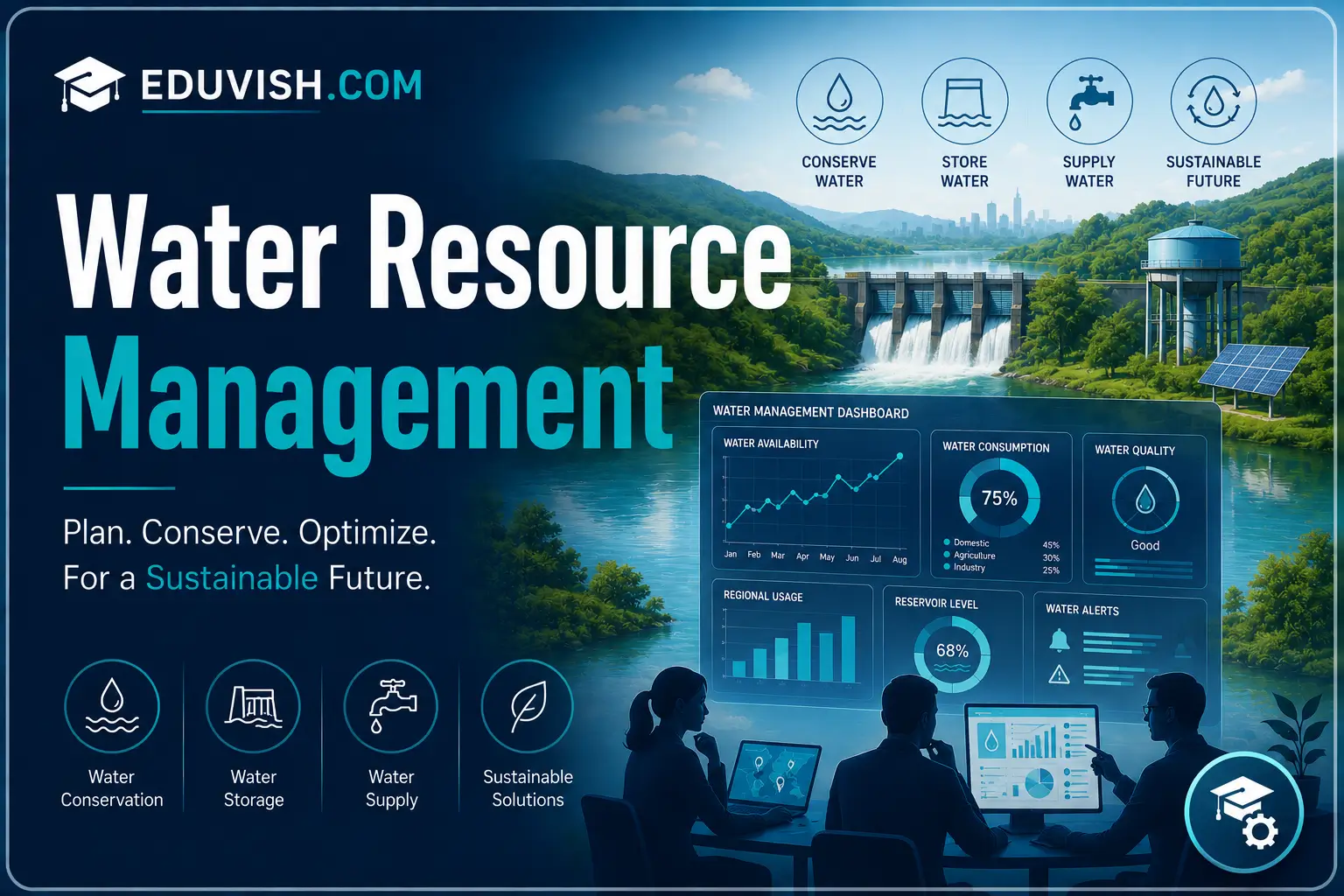
Water Resource Management is a comprehensive course designed to equip learners with the knowledge and skills required to manage water resources sustainably. This program introduces the fundamentals of hydrology, water conservation, irrigation systems, watershed management, and policies for sustainable water use.
Students will gain insights into the challenges of water scarcity, pollution control, and climate change impacts, while also exploring modern technologies such as GIS mapping, smart irrigation, and water recycling systems. The course emphasizes both technical and policy perspectives, preparing learners to balance ecological sustainability with human and industrial needs.
By the end of this course, participants will be able to:
- Understand the principles of hydrology and water cycle management.
- Apply techniques for water conservation and efficient usage.
- Explore irrigation systems and watershed management practices.
- Evaluate policies and regulations for sustainable water governance.
- Analyze the impact of climate change on water resources.
- Implement modern technologies for water monitoring and recycling.
- Contribute to sustainable development through effective water management strategies.
This course is ideal for students, environmentalists, agricultural professionals, and policymakers interested in sustainable resource management. With case studies, practical assignments, and industry-focused training, you’ll gain the confidence to address global water challenges and promote responsible usage.
FAQ SECTION
1. What is water resource management?
Water resource management involves planning, developing, conserving, and managing water resources to ensure sustainable use and availability.
2. Why is water resource management important?
It helps ensure water security, supports agriculture and industry, protects ecosystems, and promotes sustainable development.
3. Who should enroll in this course?
Environmental professionals, students, engineers, agricultural specialists, policymakers, and sustainability practitioners can benefit from this course.
4. What topics are covered?
The course covers water conservation, watershed management, irrigation systems, water quality, governance, and climate change impacts.
5. Does the course include groundwater management?
Yes, learners study groundwater systems, aquifer management, and sustainable groundwater use.
6. What is Integrated Water Resource Management (IWRM)?
IWRM is a coordinated approach that balances environmental, social, and economic aspects of water management.
7. Is certification provided?
Yes, participants receive a certificate upon successful completion of the course.
8. Will I learn water conservation techniques?
Yes, the course includes practical water conservation methods and efficiency strategies.
9. How does climate change affect water resources?
Climate change influences rainfall patterns, drought frequency, flooding risks, and water availability.
10. What career opportunities are available after completing this course?
Career options include Water Resource Specialist, Environmental Consultant, Watershed Manager, Sustainability Officer, Irrigation Planner, and Water Policy Analyst.



Reviews
There are no reviews yet.