
Course Overview
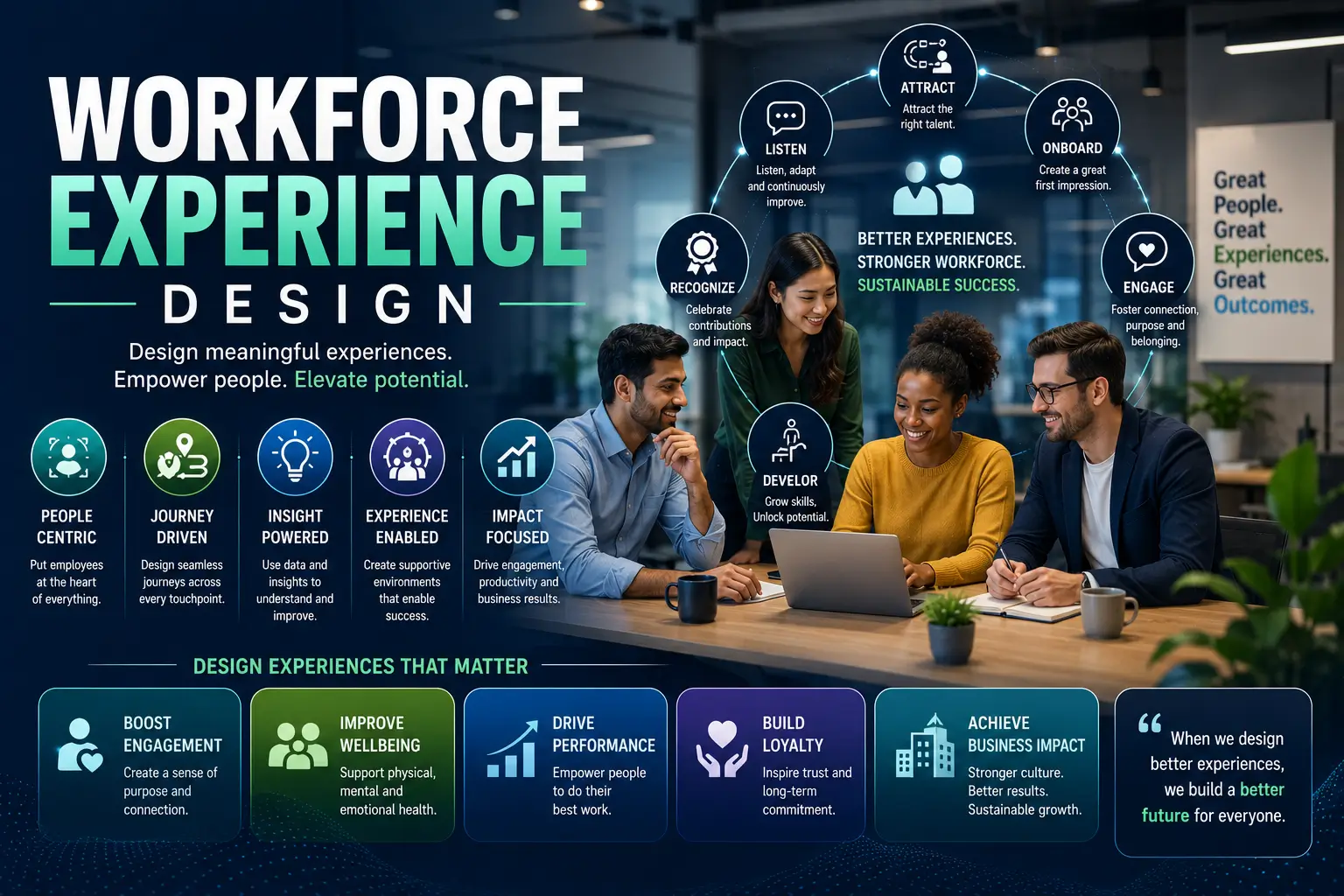
The Workforce Experience Design Course provides practical knowledge of creating employee-centered workplace experiences that improve engagement, satisfaction, collaboration, and business performance. Organizations today understand that a positive employee experience is essential for attracting talent, increasing retention, and building a productive workplace culture.
A well-designed workplace experience supports employees throughout every stage of their journey—from recruitment and onboarding to career development, performance management, recognition, wellbeing, and long-term growth. This course explains how Human Resources professionals and business leaders can design meaningful experiences that strengthen organizational success.
Understanding Workforce Experience Design
Workforce Experience Design focuses on creating a work environment where employees feel valued, supported, and motivated to perform at their best.
Learners will explore:
- Employee experience principles
- Employee journey mapping
- Workplace culture
- Digital workplace solutions
- Employee lifecycle management
- Experience planning
Employee Journey and Experience Mapping
Understanding each stage of the employee journey helps organizations identify opportunities to improve workplace interactions.
Topics include:
- Recruitment experience
- Onboarding experience
- Learning and development
- Career progression
- Employee recognition
- Exit experience
Workplace Culture and Employee Engagement
A positive workplace culture encourages collaboration, trust, inclusion, and continuous improvement.
Learners will understand:
- Organizational values
- Employee communication
- Leadership support
- Team collaboration
- Employee motivation
- Workplace wellbeing
Digital Employee Experience
Technology plays an important role in improving employee interactions and workplace efficiency.
This section covers:
- HR technology
- Employee self-service
- Collaboration platforms
- Digital communication
- Workplace automation
- Employee feedback systems
Measuring Workforce Experience
Organizations use data and employee feedback to evaluate workplace experience and identify improvement opportunities.
Topics include:
- Employee surveys
- Engagement metrics
- Experience analytics
- Retention analysis
- Performance indicators
- Continuous improvement
Skills You Will Gain
After completing this course, you will be able to:
- Apply Workforce Experience Design principles
- Improve employee engagement
- Design positive workplace experiences
- Support employee wellbeing
- Strengthen workplace culture
- Analyze employee feedback
- Improve organizational performance
- Enhance employee retention
Who Should Enroll?
This course is suitable for:
- HR Professionals
- HR Managers
- Team Leaders
- Business Leaders
- Organizational Development Specialists
- Entrepreneurs
- Students
- Working Professionals
Career Opportunities
After completing this course, learners can pursue roles such as:
- Employee Experience Specialist
- HR Business Partner
- HR Manager
- Organizational Development Executive
- Employee Engagement Manager
- Workplace Experience Consultant
- Human Capital Specialist
- People Operations Executive
Certification Benefits
Completing this course demonstrates practical knowledge of employee experience management, workplace culture development, engagement strategies, organizational improvement, and modern Human Resources practices. These capabilities are highly valued in organizations focused on employee satisfaction and long-term workforce development.
Conclusion
The Workforce Experience Design Course equips learners with practical skills to create engaging workplace experiences, improve employee satisfaction, strengthen organizational culture, and support business success. By applying modern experience design principles, professionals can contribute to healthier workplaces, stronger employee relationships, and sustainable organizational growth.
Frequently Asked Questions (FAQs)
1. What is Workforce Experience Design?
Workforce Experience Design is the process of creating employee-centered workplace experiences that improve engagement, satisfaction, productivity, collaboration, and overall organizational performance throughout the employee lifecycle.
2. Who should enroll in this course?
This course is suitable for HR professionals, HR managers, business leaders, team leaders, organizational development professionals, entrepreneurs, students, and anyone interested in improving workplace experience.
3. Is this course suitable for beginners?
Yes. The course starts with the fundamentals of employee experience and gradually introduces practical methods for designing engaging and effective workplace environments.
4. What topics are covered in this course?
The course covers employee journey mapping, workplace culture, employee engagement, digital workplace solutions, HR technology, employee wellbeing, experience measurement, feedback systems, and organizational development.
5. Why is employee experience important?
A positive employee experience increases engagement, improves productivity, strengthens collaboration, supports employee retention, enhances workplace culture, and contributes to long-term business success.
6. Will I learn how to improve workplace culture?
Yes. The course explains practical techniques for strengthening organizational values, communication, leadership support, teamwork, employee recognition, and continuous improvement.
7. What skills will I gain after completing this course?
You will develop skills in employee journey mapping, workplace experience planning, engagement improvement, organizational culture development, employee feedback analysis, HR technology, and workforce performance enhancement.
8. Does the course include employee wellbeing and digital workplace practices?
Yes. You will learn how wellbeing initiatives, digital workplace tools, employee self-service platforms, and collaboration technologies improve the overall employee experience.
9. What career opportunities are available after completing this course?
After completing this course, you can pursue roles such as Employee Experience Specialist, HR Business Partner, HR Manager, Organizational Development Executive, Employee Engagement Manager, Workplace Experience Consultant, Human Capital Specialist, and People Operations Executive.
10. How will this course support my professional growth?
This course helps you build practical skills in employee experience management, workplace culture, organizational development, engagement planning, and modern HR practices, preparing you for leadership and people management roles.


Reviews
There are no reviews yet.