
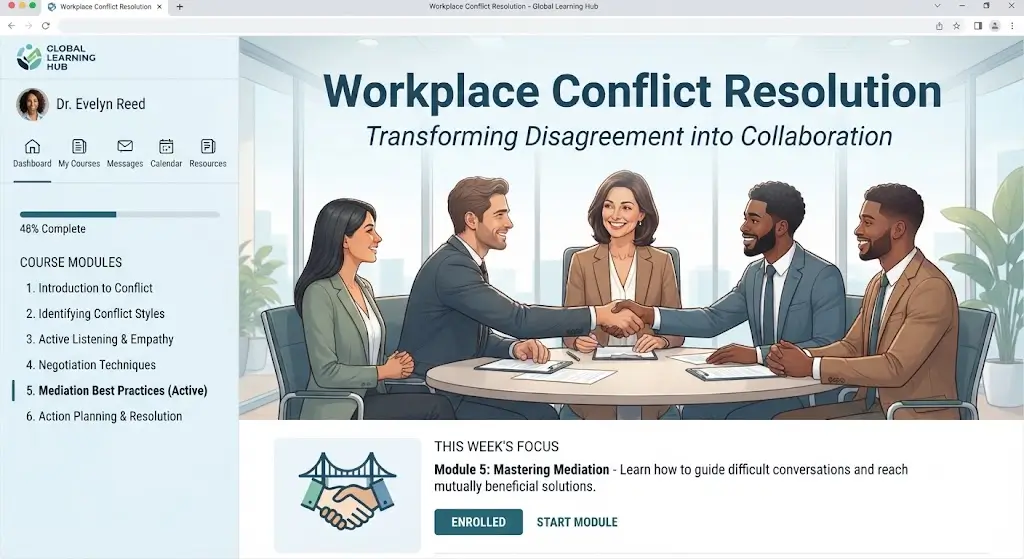
Course Overview
The Workplace Conflict Resolution Course provides practical knowledge and skills required to understand, manage, and resolve conflicts that occur in professional environments. Workplace disagreements are a common challenge for organizations, but effective conflict management helps maintain healthy relationships, improve communication, and support better team performance.
This course explains how individuals, managers, and HR professionals can identify the causes of workplace conflicts, apply appropriate resolution techniques, and create a collaborative work environment. Learners will gain insights into communication methods, negotiation approaches, emotional intelligence, and problem-solving strategies that support positive workplace interactions.
Understanding Workplace Conflict Resolution
Workplace Conflict Resolution focuses on managing disagreements through effective communication, understanding different perspectives, and finding solutions that support both employees and organizational goals.
Learners will explore:
- Types of workplace conflicts
- Causes of employee disagreements
- Conflict prevention methods
- Communication challenges
- Resolution frameworks
- Professional conflict handling
Causes and Types of Workplace Conflicts
Understanding the source of conflict is the first step toward finding effective solutions.
Topics include:
- Communication gaps
- Role confusion
- Different expectations
- Personality differences
- Resource conflicts
- Workplace stress
- Team disagreements
Communication Skills for Conflict Management
Clear communication plays an important role in preventing and resolving workplace issues.
This section covers:
- Active listening
- Constructive conversations
- Feedback techniques
- Emotional awareness
- Professional discussions
- Open communication practices
Negotiation and Mediation Techniques
Successful conflict management often requires negotiation and mediation skills.
Learners will understand:
- Negotiation approaches
- Finding common solutions
- Mediation processes
- Agreement building
- Problem-solving techniques
- Fair decision-making
Role of Leadership in Conflict Management
Leaders play a key role in maintaining workplace harmony and supporting effective resolution.
Topics covered include:
- Leadership responsibilities
- Managing team disagreements
- Building trust
- Supporting employees
- Creating a respectful culture
- Conflict prevention strategies
Emotional Intelligence and Workplace Relationships
Emotional intelligence helps professionals understand emotions, manage reactions, and improve workplace relationships.
Learners will explore:
- Self-awareness
- Empathy
- Relationship management
- Stress control
- Positive interactions
Skills You Will Gain
After completing this course, learners will be able to:
- Apply Workplace Conflict Resolution techniques
- Identify causes of workplace conflicts
- Improve professional communication
- Handle difficult conversations
- Use negotiation methods
- Support teamwork
- Build positive workplace relationships
- Promote a respectful work culture
Who Should Enroll?
This course is suitable for:
- HR Professionals
- Managers
- Team Leaders
- Supervisors
- Business Owners
- Entrepreneurs
- Project Managers
- Students
- Working Professionals
Career Opportunities
Completing this course supports careers such as:
- HR Manager
- Employee Relations Specialist
- Team Leader
- Conflict Resolution Specialist
- Organizational Development Executive
- Workplace Relations Consultant
- People Manager
- Leadership Development Professional
Certification Benefits
Completing this course demonstrates practical knowledge of conflict management, workplace communication, employee relations, negotiation, and professional problem-solving. These skills help professionals handle workplace challenges and create productive team environments.
Conclusion
The Workplace Conflict Resolution Course equips learners with the skills needed to manage disagreements, improve communication, strengthen workplace relationships, and support organizational success. By developing effective conflict management abilities, professionals can create healthier, more collaborative, and productive work environments.
Frequently Asked Questions (FAQs)
1. What is Workplace Conflict Resolution?
Workplace Conflict Resolution is the process of identifying, managing, and resolving professional disagreements through effective communication, problem-solving, negotiation, and collaboration.
2. Who should enroll in this course?
This course is suitable for HR professionals, managers, supervisors, team leaders, project managers, business owners, entrepreneurs, students, and working professionals who want to improve conflict management skills.
3. Is this course suitable for beginners?
Yes. The course starts with basic concepts of workplace conflicts and gradually explains practical methods for communication, negotiation, mediation, and professional problem-solving.
4. What topics are covered in this course?
The course covers conflict identification, communication techniques, negotiation skills, mediation methods, emotional intelligence, employee relations, leadership responsibilities, and workplace harmony.
5. Why is conflict resolution important in the workplace?
Effective conflict management helps organizations improve teamwork, reduce misunderstandings, strengthen professional relationships, increase productivity, and create a positive work environment.
6. Will I learn how to handle difficult conversations?
Yes. The course explains practical approaches for managing difficult discussions, listening effectively, providing feedback, understanding different viewpoints, and finding balanced solutions.
7. What skills will I gain after completing this course?
You will develop skills in communication, negotiation, problem-solving, emotional intelligence, mediation, employee relations, teamwork, and professional conflict handling.
8. Does the course include leadership conflict management?
Yes. The course explains how leaders and managers can identify team issues, support employees, prevent conflicts, and maintain a respectful workplace culture.
9. What career opportunities are available after completing this course?
After completing this course, learners can pursue roles such as HR Manager, Employee Relations Specialist, Team Leader, Conflict Resolution Specialist, Organizational Development Executive, Workplace Relations Consultant, People Manager, and Leadership Development Professional.
10. How will this course support my professional growth?
This course helps professionals improve workplace communication, strengthen relationship management skills, handle challenging situations confidently, and contribute to a collaborative organizational environment.


Reviews
There are no reviews yet.