
Introduction
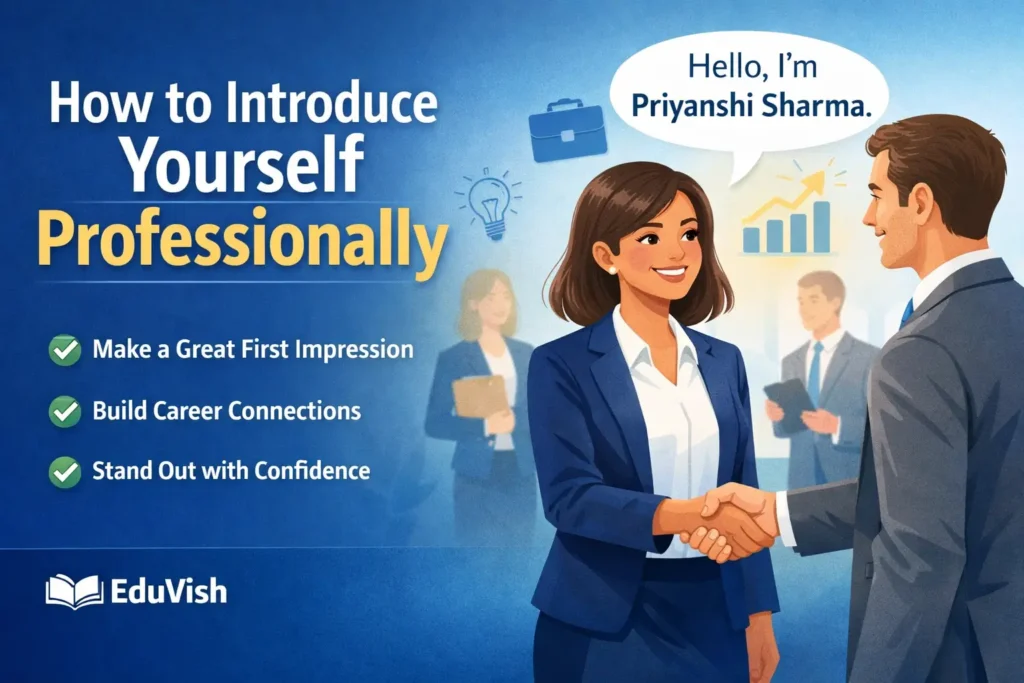
How to Introduce Yourself Professionally is an essential skill for students, freshers, and working professionals. Knowing how to introduce yourself professionally can help you create a positive first impression during interviews, meetings, presentations, and networking events. A confident and structured introduction highlights your background, skills, and goals while demonstrating strong communication skills.
This guide will help you master the art of introducing yourself professionally in different settings.
1. Why Professional Introductions Matter
- Builds credibility and trust.
- Creates positive first impressions.
- Opens doors to opportunities.
- Reflects confidence and communication skills.
SEO Keywords: professional self-introduction tips, how to introduce yourself in interviews, effective communication skills
2. Basic Structure of a Professional Introduction
A strong introduction usually includes:
- Greeting – Polite and respectful.
- Name – Clear and confident.
- Background – Education, role, or expertise.
- Purpose – Why you’re there or what you seek.
- Closing – Polite transition to conversation.
Example: “Good morning, my name is Priyanshi Sharma. I am a psychology student at EduVish University, currently focusing on research in communication skills. I’m excited to collaborate on this project and learn from your expertise.”
3. Introduce Yourself in Academic Settings
When meeting professors or classmates:
- Mention your name and course.
- Share your academic interest.
- Be polite and respectful.
Example: “Hello, I’m Priyanshi Sharma, a second-year psychology student. I’m particularly interested in communication and research participation.”
4. Introduce Yourself in Job Interviews
Interviews require confidence and clarity.
- Start with your name and background.
- Highlight relevant skills.
- Keep it concise.
Example: “Good morning, I’m Priyanshi Sharma. I recently completed my degree in psychology, with a focus on communication skills. I have experience in research projects and teamwork, and I’m eager to contribute to your organization.”
5. Introduce Yourself in Networking Events
Networking is about building connections.
- Share your name and role.
- Mention your interest or goal.
- Keep it friendly yet professional.
Example: “Hi, I’m Priyanshi Sharma. I’m currently working on communication research and looking to connect with professionals in the education sector.” 6. Introduce Yourself in Team Projects
Teamwork thrives on clear communication.
- State your name and role.
- Mention your strengths.
- Show willingness to collaborate.
Example: “Hello everyone, I’m Priyanshi Sharma. I’ll be focusing on research and analysis for this project. I look forward to working together and sharing ideas.”
7. Tips for a Strong Introduction
- Smile and maintain eye contact.
- Speak clearly and confidently.
- Avoid slang or casual language.
- Keep it short and relevant.
- Adapt your introduction to the situation.
8. Common Mistakes to Avoid
- Speaking too fast or too softly.
- Giving too much unnecessary detail.
- Using informal greetings like “Hey.”
- Forgetting to mention your purpose.
Conclusion
Understanding how to introduce yourself professionally can improve communication skills, boost confidence, and create positive first impressions. Whether you are attending an interview, joining a new workplace, or networking with professionals, knowing how to introduce yourself professionally can help you build meaningful connections and career opportunities.
Remember: Be confident, be clear, and be concise.
FAQ SECTION
How do you introduce yourself professionally?
Start with your name, educational background or experience, key skills, and career goals while keeping the introduction concise and relevant.
Why is professional self-introduction important?
A professional introduction creates a positive first impression and improves communication in interviews, meetings, and networking events.
How long should a professional introduction be?
A professional introduction should generally be between 30 and 60 seconds.
Can students use professional self-introductions?
Yes. Students can use professional introductions during interviews, presentations, internships, and networking opportunities.

