
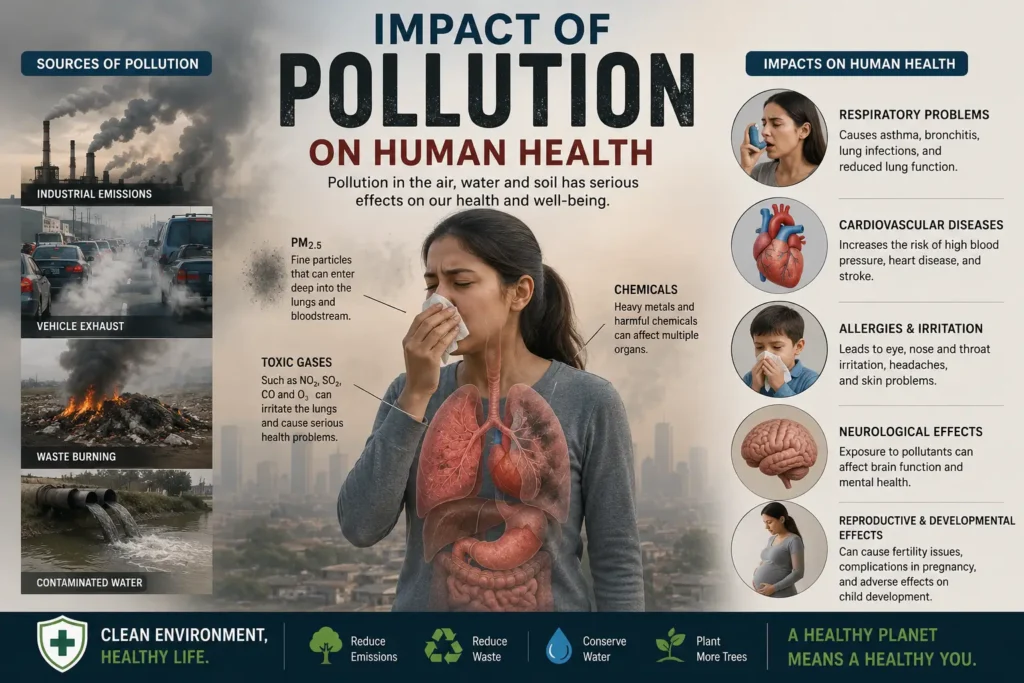
Introduction
The impact of pollution on human health has become a major global concern. Air pollution, water pollution, soil contamination, and noise pollution affect millions of people every year and contribute to respiratory diseases, cardiovascular problems, infections, and reduced quality of life. Understanding the impact of pollution on human health is essential for protecting individuals and communities from long-term health risks.
1. Types of Pollution and Their Effects
- Air Pollution Causes respiratory diseases like asthma, bronchitis, and lung cancer. Long-term exposure increases risks of cardiovascular problems.
- Water Pollution Leads to gastrointestinal infections, kidney damage, and hormonal disorders due to heavy metals and toxins.
- Soil Pollution Contaminated crops can cause chronic poisoning and cancers.
- Noise Pollution Triggers stress, hypertension, sleep disorders, and cognitive decline.
- Light Pollution Disrupts circadian rhythms, leading to insomnia and anxiety.
2. Major Health Impacts
- Respiratory Diseases: Asthma, COPD, lung cancer.
- Cardiovascular Disorders: Heart attacks, hypertension.
- Neurological Effects: Dementia, anxiety, depression.
- Cancers: Linked to toxic chemicals in air, water, and soil.
- Reproductive & Developmental Issues: Birth defects, reduced fertility.
3. Vulnerable Populations
- Children: Developing organs are more sensitive.
- Elderly: Weaker immune systems increase risks.
- Urban Residents: Higher exposure to industrial and vehicular emissions.
- Low-income Communities: Often live near polluted areas.
4. Preventive Measures
- Clean Energy adoption to reduce fossil fuel use.
- Waste Management to prevent soil and water contamination.
- Green Spaces in cities to improve air quality.
- Public Awareness campaigns to encourage eco-friendly practices.

