
Introduction
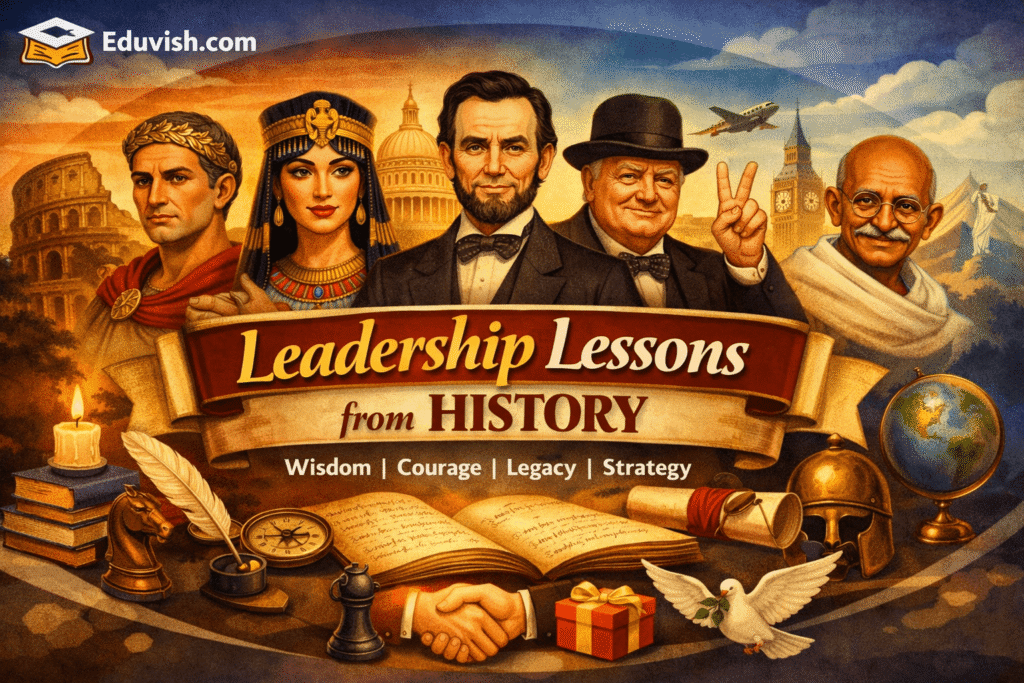
Leadership is not just about power—it’s about vision, courage, and the ability to inspire others. Throughout history, great leaders have shaped nations, transformed societies, and left behind timeless lessons. From Julius Caesar’s strategic brilliance to Mahatma Gandhi’s moral leadership, history offers invaluable insights for modern professionals and aspiring leaders.
What Leadership Means
Leadership is the art of guiding people toward a shared goal. It involves decision‑making, empathy, and resilience. Historical leaders demonstrated that true leadership is rooted in integrity, vision, and service.
Lessons from Ancient Leaders
Julius Caesar
Caesar’s strategic mind and ability to inspire loyalty made him one of Rome’s most influential figures. His lesson: lead with confidence, but balance ambition with humility.
Cleopatra
Cleopatra mastered diplomacy and communication. She teaches us that emotional intelligence and adaptability are key to sustaining influence.
Alexander the Great
Alexander’s vision of a unified world shows the power of ambition and cultural understanding in leadership.
Lessons from Modern History
Abraham Lincoln
Lincoln’s empathy and moral courage during America’s Civil War remind us that leadership requires compassion and conviction.
Winston Churchill
Churchill’s resilience during World War II exemplifies perseverance under pressure. His lesson: never give up, even when odds seem impossible.
Mahatma Gandhi
Gandhi’s non‑violent approach revolutionized leadership ethics. He proved that moral strength can be more powerful than military might.
Universal Leadership Principles
| Principle | Historical Example | Modern Application |
|---|---|---|
| Vision | Alexander the Great | Setting long‑term organizational goals |
| Integrity | Abraham Lincoln | Building trust in teams |
| Resilience | Winston Churchill | Overcoming business challenges |
| Empathy | Mahatma Gandhi | Understanding employee needs |
| Strategy | Julius Caesar | Planning for sustainable growth |
Applying Historical Lessons Today
- Lead with purpose – Define your mission clearly.
- Communicate effectively – Inspire through words and actions.
- Empower others – Share responsibility and celebrate success.
- Adapt to change – Stay flexible in dynamic environments.
- Practice ethical leadership – Integrity builds lasting respect.

