
Introduction
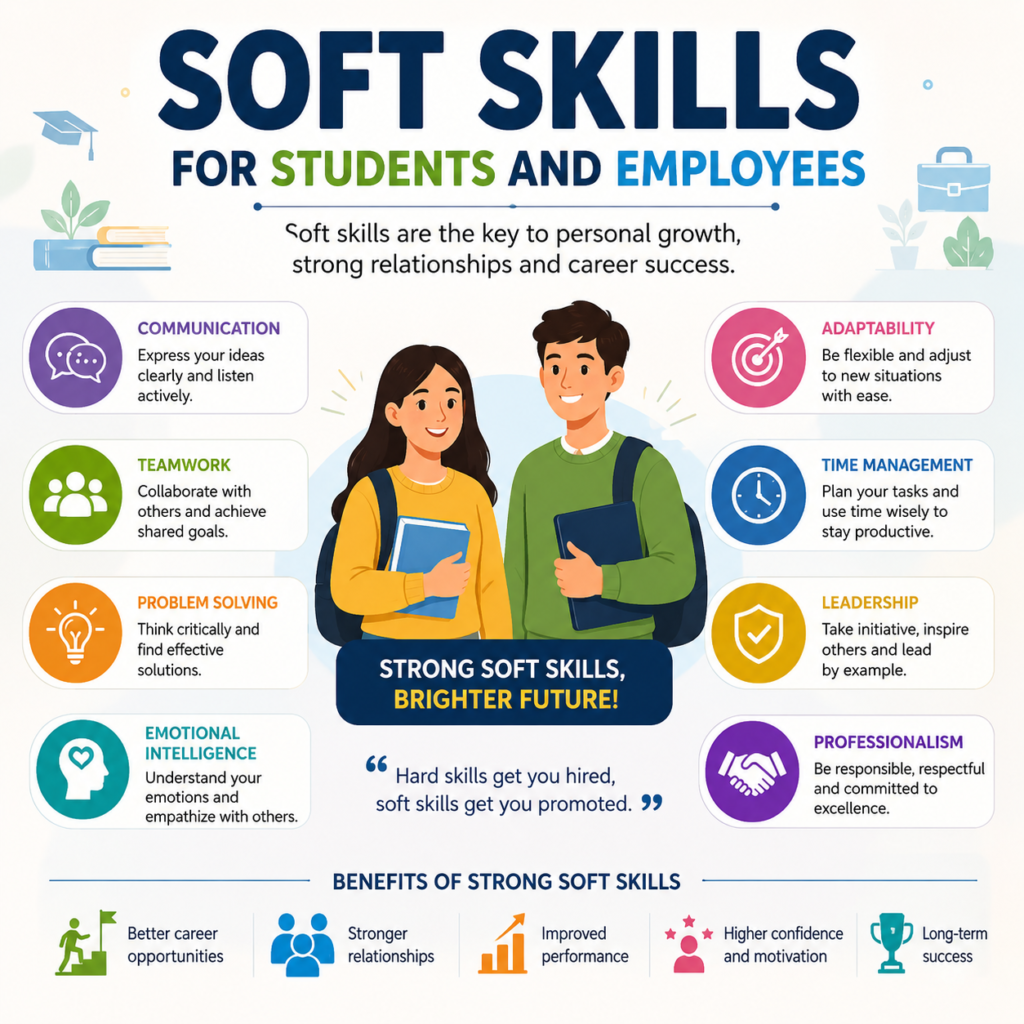
In today’s competitive world, soft skills are just as important as technical knowledge. For students, they enhance learning and career readiness; for employees, they improve workplace performance and leadership potential. Soft skills such as communication, teamwork, adaptability, and emotional intelligence are critical for success in both academic and professional settings.
What are Soft Skills?
- Definition: Personal attributes that enable individuals to interact effectively with others.
- Examples: Communication, teamwork, problem‑solving, adaptability, leadership, and time management.
- Importance: Employers value soft skills as much as technical expertise.
Soft Skills for Students
- Communication: Improves presentations, group projects, and academic writing.
- Teamwork: Encourages collaboration in classroom activities.
- Critical Thinking: Helps in research and problem‑solving.
- Time Management: Balances studies, assignments, and extracurriculars.
- Adaptability: Prepares students for changing academic environments.
Soft Skills for Employees
- Leadership: Inspires teams and drives organizational success.
- Conflict Resolution: Maintains harmony in the workplace.
- Emotional Intelligence: Enhances relationships and decision‑making.
- Problem-Solving: Tackles challenges with innovative solutions.
- Work Ethics: Builds trust and professionalism.
Comparison Table
| Soft Skill | For Students | For Employees |
|---|---|---|
| Communication | Presentations, group projects | Meetings, client relations |
| Teamwork | Classroom collaboration | Workplace collaboration |
| Critical Thinking | Research, assignments | Strategic decision‑making |
| Time Management | Study schedules | Project deadlines |
| Adaptability | Academic changes | Industry changes |
| Leadership | Student clubs | Team management |
| Emotional Intelligence | Peer relationships | Workplace harmony |
Strategies to Develop Soft Skills
- Practice public speaking through debates and presentations.
- Engage in teamwork via group projects and office collaborations.
- Seek mentorship for guidance and feedback.
- Use technology like online courses and apps.
- Reflect and improve through journaling and self‑assessment.
Benefits of Soft Skills
- Career growth
- Better relationships
- Improved productivity
- Global opportunities

