
Introduction
The steps to create a career plan are essential for students and professionals who want to achieve long-term success. A career plan provides direction, helps set realistic goals, identifies skill gaps, and creates a roadmap for professional growth. Understanding the steps to create a career plan can help individuals make informed career decisions and stay focused on their objectives.
Why Career Planning Matters
- Clarity of goals: Helps define short‑term and long‑term objectives.
- Skill alignment: Ensures your abilities match industry demands.
- Motivation: Keeps you focused and driven.
- Adaptability: Prepares you for changes in the job market.
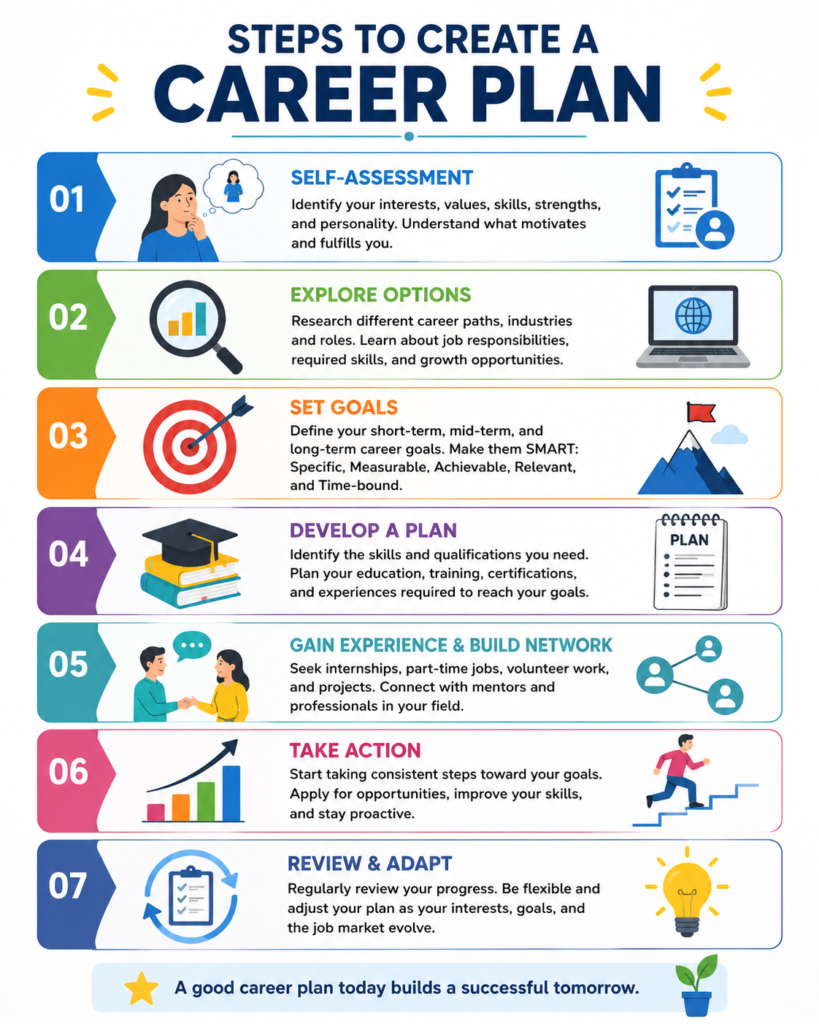
Steps to Create a Career Plan
1. Self-Assessment
Identify strengths, weaknesses, interests, and values. Use personality tests or skill assessments.
2. Set Career Goals
Define short‑term (1–2 years) and long‑term (5–10 years) goals.
3. Research Opportunities
Explore industries, roles, and growth prospects. Stay updated with market trends.
4. Develop Skills
Enroll in courses, certifications, and workshops to enhance technical and soft skills.
5. Create an Action Plan
Break goals into actionable steps with timelines.
6. Seek Mentorship
Learn from experienced professionals who can guide your journey.
7. Gain Experience
Internships, volunteering, and part‑time jobs provide practical exposure.
8. Track Progress
Regularly review achievements and adjust plans as needed.
9. Stay Flexible
Adapt to industry changes and be open to new opportunities.
Comparison Table
| Step | Action | Outcome |
|---|---|---|
| Self‑Assessment | Identify strengths | Clear direction |
| Set Goals | Define short & long term | Focused career path |
| Research | Explore industries | Informed decisions |
| Develop Skills | Training & certifications | Competitive edge |
| Action Plan | Break into steps | Achievable milestones |
| Mentorship | Guidance from experts | Faster growth |
| Experience | Internships & jobs | Practical knowledge |
| Track Progress | Regular reviews | Continuous improvement |
| Flexibility | Adapt to changes | Long‑term success |
Benefits of Career Planning
- Confidence in decision‑making.
- Better opportunities in competitive industries.
- Work-life balance through structured growth.
- Sustainable success with long‑term vision.
FAQ SECTION
What is a career plan?
A career plan is a structured roadmap that outlines professional goals, required skills, and the steps needed to achieve career success.
Why is career planning important?
Career planning helps individuals set clear goals, make informed decisions, identify growth opportunities, and stay focused on long-term success.
How do I start a career plan?
Start by assessing your interests, strengths, values, and career aspirations before setting specific goals.
How often should a career plan be updated?
A career plan should be reviewed and updated regularly, especially when goals, interests, or industry trends change.
Can students create a career plan?
Yes. Career planning is highly beneficial for students because it helps them choose the right education, skills, and career pathways.

