
Introduction
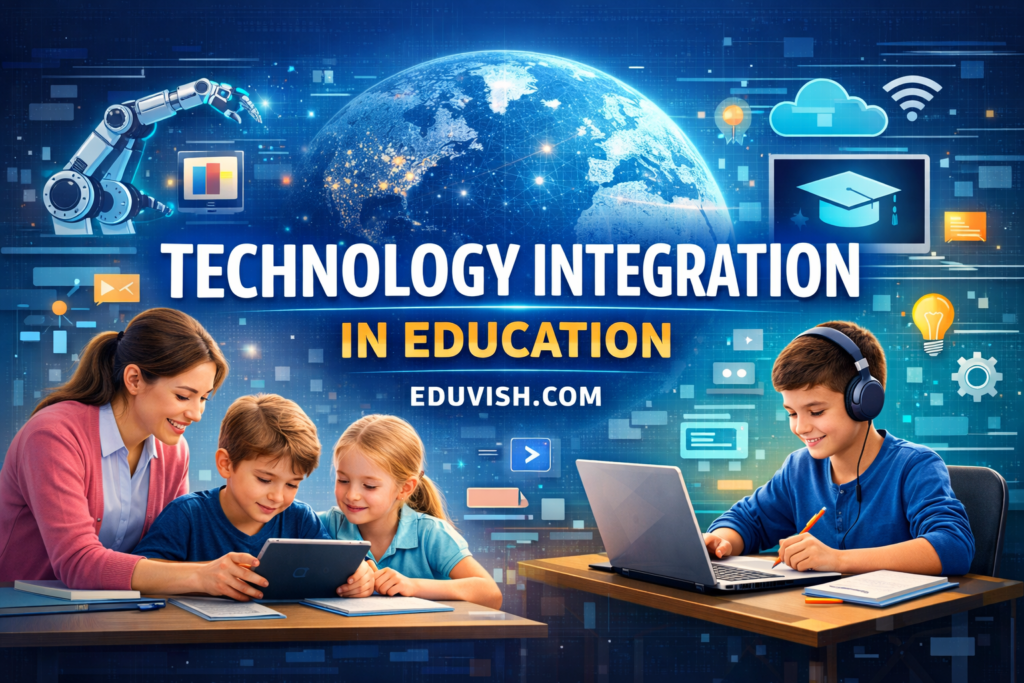
Technology integration in education is transforming the way students learn and teachers deliver instruction. Digital tools, online platforms, smart classrooms, and educational applications have improved accessibility, engagement, and learning outcomes. Effective technology integration in education helps create interactive learning environments and prepares students for a technology-driven future.
1. Evolution of Educational Technology
- From chalkboards to smart classrooms.
- Rise of online learning platforms.
- Role of AI in education and personalized learning.
2. Benefits of Technology Integration
- Improved student engagement through interactive tools.
- Access to global resources via the internet.
- Collaboration tools like Google Classroom, Microsoft Teams.
- Adaptive learning systems for personalized education.
3. Challenges in Technology Integration
- Digital divide in rural vs. urban areas.
- Teacher training and resistance.
- Cybersecurity concerns in EdTech platforms.
- Cost of infrastructure.
4. Key Technologies in Education
- Artificial Intelligence (AI) – personalized learning paths.
- Virtual Reality (VR) & Augmented Reality (AR) – immersive learning.
- Gamification – making learning fun.
- Learning Management Systems (LMS) – Moodle, Blackboard.
- Cloud computing – easy access to resources.
5. Case Studies
- Smart classrooms in India.
- Use of EdTech apps like Byju’s, Khan Academy.
- Government initiatives like Digital India.
6. Future of Technology in Education
- Growth of AI‑driven platforms.
- Expansion of remote learning.
- Integration of blockchain for certifications.
- Predictive analytics for student success.

