
Introduction
Facial expressions in communication play a crucial role in conveying emotions, intentions, and reactions. Understanding facial expressions in communication helps individuals improve nonverbal communication skills, build stronger relationships, and communicate more effectively in personal, academic, and professional settings.
In this article, we’ll explore how facial expressions influence communication, why they matter, and how students can use them to improve their interpersonal skills and success.
1. What Are Facial Expressions?
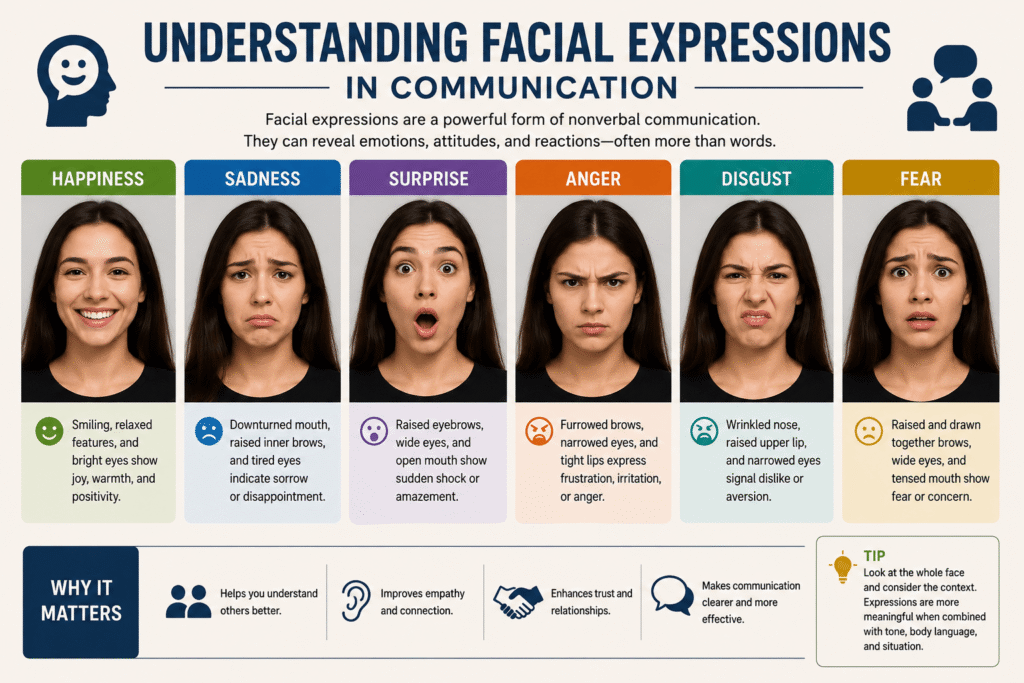
Facial expressions are movements of facial muscles that reflect emotions such as happiness, sadness, anger, surprise, fear, or disgust. They are universal and often understood across cultures.
Why They Matter:
- Help express feelings clearly.
- Strengthen emotional connections.
- Support verbal communication.
- Build trust and understanding.
SEO Keywords: facial expressions in communication, non-verbal communication skills, understanding emotions through expressions
2. The Science Behind Facial Expressions
Psychologists like Paul Ekman identified six basic facial expressions that are universally recognized:
- Happiness
- Sadness
- Anger
- Surprise
- Fear
- Disgust
These expressions are controlled by facial muscles and often occur automatically in response to emotions.
Result: Understanding these helps decode people’s feelings and reactions.
3. Facial Expressions as a Communication Tool
Facial expressions complement spoken words. They add emotion and meaning to communication.
Examples:
- A smile shows friendliness and openness.
- Raised eyebrows indicate curiosity or surprise.
- Frowning signals confusion or disagreement.
SEO Keywords: importance of facial expressions, non-verbal cues in communication, emotional intelligence for students
4. Facial Expressions in Education
In classrooms, facial expressions play a key role in learning and teaching.
For Students:
- Smiling shows interest and positivity.
- Nodding indicates understanding.
- Confused expressions help teachers know when to explain further.
For Teachers:
- Encouraging smiles motivate students.
- Eye contact builds connection.
- Concerned expressions show empathy.
Result: Better communication leads to improved learning outcomes.
5. How Facial Expressions Affect Relationships
Facial expressions help build trust and emotional bonds.
Tips:
- Smile genuinely to create warmth.
- Maintain relaxed facial muscles to appear approachable.
- Avoid negative expressions like eye-rolling or frowning unnecessarily.
SEO Keywords: facial expressions and relationships, positive communication techniques, empathy through expressions
6. Reading Facial Expressions Accurately
Understanding others’ facial cues improves emotional intelligence.
Tips:
- Observe eyes, mouth, and eyebrows carefully.
- Notice micro-expressions—brief emotional flashes.
- Consider context before interpreting emotions.
Example: A person may smile politely but still feel nervous or uncomfortable.
7. Using Facial Expressions Effectively
Your face can be your best communication tool.
Tips:
- Practice smiling naturally.
- Use expressions that match your words.
- Avoid blank or tense expressions.
- Mirror positive expressions to build rapport.
Result: You’ll appear confident, empathetic, and engaging.
8. Facial Expressions in Group Communication
In group discussions or team projects, facial expressions help maintain harmony.
Tips:
- Show attentiveness by nodding and smiling.
- Use encouraging expressions when others speak.
- Avoid showing boredom or frustration.
SEO Keywords: group communication skills, teamwork and facial expressions, student collaboration tips
9. Cultural Differences in Facial Expressions
While basic emotions are universal, cultural norms affect how expressions are displayed.
Examples:
- In some cultures, smiling too much may seem insincere.
- Eye contact may be considered rude in certain regions.
Tip: Be culturally aware and respectful when interpreting facial cues.
10. Facial Expressions and Confidence
Confident people use facial expressions effectively to convey assurance and positivity.
Tips:
- Maintain a calm and pleasant expression.
- Smile when greeting others.
- Avoid nervous habits like biting lips or frowning.
Result: You’ll appear more self-assured and professional.
11. Facial Expressions in Digital Communication
Even in virtual meetings or online classes, facial expressions matter.
Tips:
- Keep your camera at eye level.
- Smile and nod during discussions.
- Avoid looking distracted or disinterested.
SEO Keywords: facial expressions in online communication, virtual meeting etiquette, digital communication skills
12. Improving Emotional Intelligence Through Facial Awareness
Recognizing and managing facial expressions enhances emotional intelligence.
Tips:
- Reflect on how your expressions affect others.
- Practice empathy by observing people’s emotions.
- Stay mindful of your reactions in stressful situations.
Result: You’ll communicate more thoughtfully and effectively.
13. Common Mistakes to Avoid
- Overusing exaggerated expressions.
- Showing negative emotions unintentionally.
- Ignoring others’ facial cues.
Solution: Practice self-awareness and control your expressions consciously.
14. Facial Expressions and Leadership
Leaders use facial expressions to inspire and motivate others.
Tips:
- Smile to create a positive environment.
- Maintain calm expressions during challenges.
- Show empathy through attentive listening.
SEO Keywords: leadership communication skills, facial expressions for motivation, student leadership tips
15. How to Practice Facial Expression Awareness
Steps:
- Observe your expressions in a mirror.
- Record yourself during conversations.
- Ask for feedback from friends or mentors.
- Practice expressing emotions naturally.
Result: You’ll develop better control and awareness of your non-verbal communication.
Conclusion
Facial expressions are a vital part of communication. They help express emotions, build relationships, and enhance understanding. For students, mastering facial expressions can lead to better classroom participation, stronger connections, and greater confidence.
Remember: Your face is the mirror of your emotions—use it wisely to communicate effectively.

