
Introduction
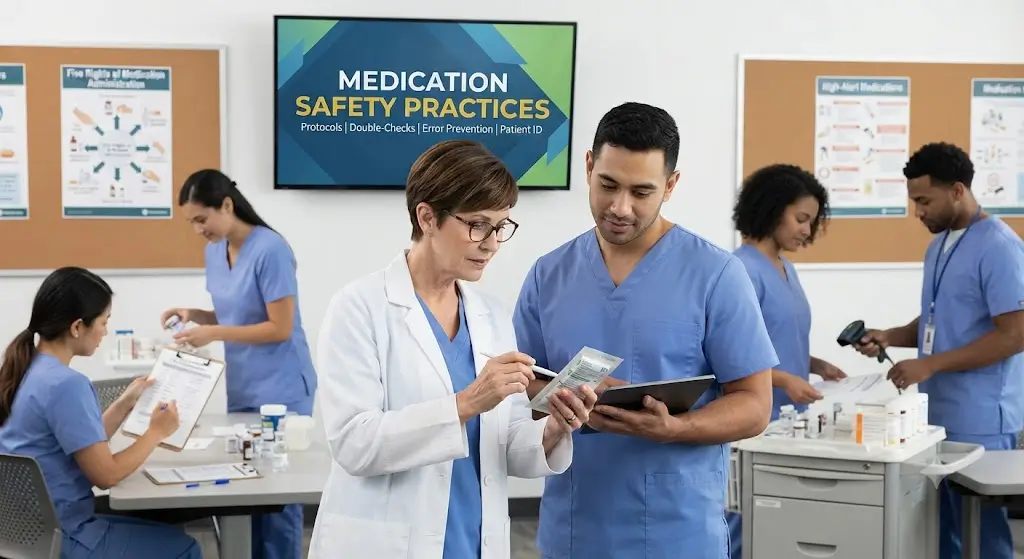
Medication Safety Practices focuses on the knowledge, procedures, and professional responsibilities required to ensure medications are prescribed, prepared, administered, and monitored safely. Medication errors can affect patient health, increase healthcare costs, and reduce the quality of care. Therefore, healthcare professionals must follow standardized safety procedures to minimize risks and improve patient outcomes.
This course provides practical knowledge of medication administration, patient identification, dosage calculations, prescription verification, medication documentation, storage guidelines, adverse drug reaction monitoring, infection prevention, communication, and ethical healthcare practices.
Understanding Medication Safety
Safe medication management begins with understanding how medications are handled throughout the healthcare process. Every stage, from prescribing to administration and monitoring, requires accuracy, attention to detail, and effective communication.
Learners explore important concepts including:
- Medication administration
- Medication verification
- Patient identification
- Dosage calculations
- Prescription interpretation
- Safe documentation
These concepts establish a strong foundation for medication safety in clinical practice.
Safe Medication Administration
Healthcare professionals must follow established procedures before administering any medication. Verifying patient information, checking prescriptions, confirming dosage accuracy, and documenting medication administration all contribute to reducing medication-related risks.
The course introduces practical procedures for:
- Patient assessment
- Medication preparation
- Route of administration
- Medication scheduling
- Clinical observation
- Documentation practices
These procedures support accurate and safe medication delivery.
Preventing Medication Errors
Medication safety depends on recognizing potential risks before they affect patient care. Healthcare professionals learn to identify common causes of medication errors and implement preventive strategies that improve patient safety.
Learners gain an understanding of:
- Error prevention techniques
- Medication reconciliation
- Adverse drug reaction reporting
- Clinical communication
- Safety protocols
- Risk management
These practices strengthen healthcare quality and patient confidence.
Patient Safety and Professional Responsibility
Patient safety remains the primary objective of medication management. Healthcare professionals must maintain confidentiality, follow ethical standards, communicate effectively with patients and colleagues, and comply with healthcare regulations.
The course also explains the importance of teamwork, continuous monitoring, and quality improvement in medication safety programs.
Technology in Medication Management
Modern healthcare organizations use electronic prescribing systems, barcode medication administration, electronic health records, and digital documentation tools to improve medication accuracy and reduce clinical errors.
Learners discover how healthcare technology supports safe medication practices and enhances patient care.
Skills You Will Develop
After completing this course, learners will understand:
- Medication safety practices
- Safe medication administration
- Dosage calculations
- Patient identification
- Medication documentation
- Prescription verification
- Error prevention
- Adverse drug reaction awareness
- Clinical communication
- Patient safety principles
Who Should Enroll?
This course is suitable for:
- Nursing students
- Registered nurses
- Healthcare assistants
- Pharmacists
- Pharmacy technicians
- Medical professionals
- Hospital staff
- Anyone interested in medication safety
No previous clinical experience is required.
Career Opportunities
Completing this course can support careers such as:
- Staff Nurse
- Medication Safety Officer
- Clinical Nurse
- Pharmacy Technician
- Healthcare Assistant
- Patient Safety Coordinator
- Clinical Support Professional
- Hospital Quality Officer
The knowledge gained through this course helps healthcare professionals improve medication safety, enhance patient care, and contribute to safer clinical environments.
Frequently Asked Questions
1. What is the Medication Safety Practices course about?
This course teaches the principles of safe medication management, helping learners understand how to administer medications accurately, reduce medication errors, and improve patient safety in healthcare settings.
2. Who should enroll in this course?
The course is suitable for nursing students, registered nurses, healthcare assistants, pharmacists, pharmacy technicians, medical professionals, hospital staff, and anyone interested in safe medication management.
3. Is this course suitable for beginners?
Yes. The course starts with the fundamentals of medication safety and gradually introduces practical procedures used in hospitals, clinics, and other healthcare facilities.
4. What topics are covered during the training?
Learners study medication administration, dosage calculations, patient identification, prescription verification, medication documentation, adverse drug reactions, error prevention, infection control, communication, and patient safety.
5. Why are medication safety practices important?
Medication safety practices help reduce medication errors, improve treatment outcomes, protect patients from harm, ensure accurate documentation, and support high-quality healthcare services.
6. What professional skills will I develop?
You will strengthen medication administration skills, patient assessment, clinical communication, documentation, attention to detail, teamwork, critical thinking, and safety awareness.
7. Which healthcare settings use these skills?
These skills are valuable in hospitals, clinics, pharmacies, nursing homes, rehabilitation centers, community healthcare facilities, home healthcare services, and long-term care organizations.
8. What career opportunities can this course support?
The course supports roles such as Staff Nurse, Medication Safety Officer, Pharmacy Technician, Clinical Nurse, Healthcare Assistant, Patient Safety Coordinator, Clinical Support Professional, and Hospital Quality Officer.
9. Does this course explain medication error prevention?
Yes. Learners gain knowledge of common medication errors, risk factors, reporting procedures, safety protocols, and best practices that reduce the likelihood of medication-related incidents.
10. How will this course benefit my healthcare career?
Completing this course improves your understanding of medication safety, strengthens clinical confidence, enhances patient care skills, and supports career development in hospitals, clinics, pharmacies, and other healthcare environments.



Reviews
There are no reviews yet.