
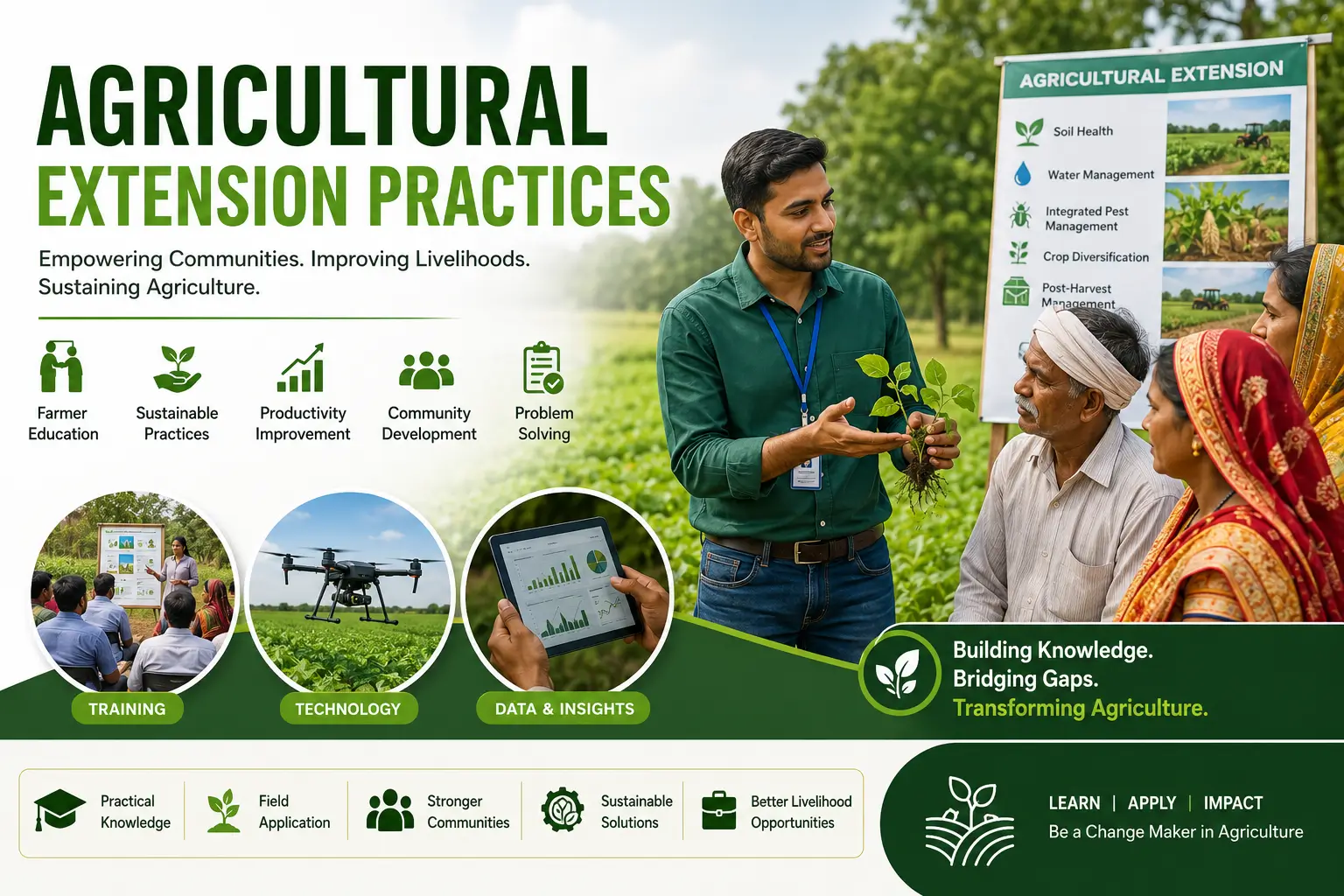
Agricultural Extension Practices Course
The Agricultural Extension Practices Course is designed to help agricultural professionals, extension officers, farmers, educators, rural development practitioners, agribusiness professionals, students, consultants, and policymakers develop the knowledge and practical skills needed to promote agricultural innovation and improve farming communities. Agricultural extension plays a vital role in transferring knowledge, improving farming techniques, increasing productivity, and supporting sustainable rural development.
This course introduces the core concepts of agricultural extension practices, including extension principles, rural development, farmer education, agricultural communication, advisory services, technology transfer, community participation, sustainable agriculture, digital extension tools, monitoring and evaluation, leadership, and capacity building. Learners will gain practical knowledge of designing and delivering effective agricultural extension programs that empower farmers and rural communities.
Whether you work in agriculture, agribusiness, government agencies, non-governmental organizations (NGOs), research institutions, educational organizations, or rural development programs, this course provides a comprehensive foundation in agricultural extension practices.
Course Overview
The course explores the complete agricultural extension process, from identifying farmers’ needs and delivering educational programs to promoting modern farming technologies, strengthening community participation, evaluating program outcomes, and supporting sustainable agricultural development. Learners will understand how extension services improve livelihoods and contribute to food security.
The curriculum combines extension education principles with practical examples, field-based case studies, community engagement strategies, and modern digital tools to prepare learners for agricultural development initiatives.
What You Will Learn
By completing this course, you will be able to:
- Understand agricultural extension principles.
- Plan effective farmer education programs.
- Apply agricultural communication techniques.
- Deliver agricultural advisory services.
- Promote sustainable farming practices.
- Facilitate technology transfer in agriculture.
- Engage rural communities effectively.
- Support agricultural innovation adoption.
- Use digital extension tools.
- Monitor and evaluate extension projects.
- Develop leadership and facilitation skills.
- Strengthen rural development initiatives.
- Improve stakeholder collaboration.
- Build farmer capacity.
- Support agricultural productivity and sustainability.
Course Curriculum
The curriculum begins with agricultural extension fundamentals before progressing through rural development, farmer education, communication, advisory services, technology transfer, digital extension, monitoring and evaluation, leadership, case studies, and industry best practices.
Practical examples help learners understand how agricultural extension services support farmers, improve agricultural productivity, and strengthen rural economies.
Skills You Will Gain
After completing the course, you will develop skills in:
- Agricultural Extension Practices
- Farmer Education
- Agricultural Communication
- Rural Development
- Advisory Services
- Technology Transfer
- Community Engagement
- Sustainable Agriculture
- Agricultural Innovation
- Extension Program Planning
- Monitoring and Evaluation
- Leadership
- Capacity Building
- Stakeholder Collaboration
- Agricultural Development
Benefits of the Course
This course helps learners improve communication skills, strengthen farmer engagement, promote sustainable agricultural practices, support technology adoption, enhance rural development programs, improve agricultural productivity, and contribute to stronger farming communities.
Agricultural extension skills are increasingly valuable as governments, NGOs, research institutions, and agribusinesses focus on sustainable agriculture and rural development.
These competencies are highly valued across government agricultural departments, research organizations, universities, agribusiness companies, NGOs, cooperatives, and international development agencies.
Who Should Enroll
This course is ideal for:
- Agricultural Extension Officers
- Farmers
- Farm Managers
- Agricultural Consultants
- Agribusiness Professionals
- Rural Development Officers
- Researchers
- Students
- Agricultural Educators
- NGO Professionals
- Community Development Workers
- Government Agricultural Officers
- Sustainability Professionals
- Cooperative Managers
- Anyone interested in agricultural development
Career Opportunities
After completing the Agricultural Extension Practices Course, learners may strengthen their qualifications for roles such as:
- Agricultural Extension Officer
- Agricultural Development Officer
- Farm Advisor
- Rural Development Specialist
- Agricultural Consultant
- Community Development Officer
- Agribusiness Advisor
- Agricultural Trainer
- Sustainability Coordinator
- Agricultural Program Manager
These skills are valuable across government agriculture departments, agribusiness companies, NGOs, research institutions, universities, cooperatives, international development organizations, and rural development agencies.
Certification Details
Upon successful completion, learners receive a Certificate of Completion recognizing their expertise in Agricultural Extension Practices. This certification enhances your professional profile and supports career advancement in agricultural development, rural extension, agribusiness, farmer education, sustainability, consulting, and community development.
If you want to empower farming communities, improve agricultural productivity, promote sustainable practices, and strengthen rural development, the Agricultural Extension Practices Course provides practical, industry-relevant knowledge for modern agriculture.
9. FAQ SECTION
1. What is the Agricultural Extension Practices Course?
It teaches how to provide agricultural education, advisory services, and technology transfer to farmers while supporting sustainable rural development.
2. Is this course suitable for beginners?
Yes. The course begins with agricultural extension fundamentals and is suitable for beginners as well as experienced agricultural professionals.
3. What topics are covered?
Agricultural extension principles, farmer education, rural development, agricultural communication, advisory services, technology transfer, community engagement, monitoring, and evaluation.
4. Do I need prior agricultural experience?
No. The course is designed for beginners, students, and professionals interested in agriculture and rural development.
5. Is the course online?
Yes. The course is fully online and self-paced.
6. Will I receive a certificate?
Yes. A certificate is awarded after successfully completing the course.
7. Who should enroll?
Agricultural extension officers, farmers, educators, agribusiness professionals, consultants, students, NGO professionals, government officers, and anyone interested in agricultural development.
8. What skills will I gain?
Farmer education, agricultural communication, advisory services, technology transfer, community engagement, leadership, extension planning, and rural development.
9. Can this course help my career?
Yes. Agricultural extension skills are highly valued across government agencies, agribusinesses, NGOs, research institutions, universities, cooperatives, and international development organizations.
10. Why are Agricultural Extension Practices important?
Agricultural Extension Practices help farmers adopt modern technologies, improve productivity, strengthen food security, promote sustainable agriculture, enhance rural livelihoods, and support long-term agricultural and community development.





Reviews
There are no reviews yet.