
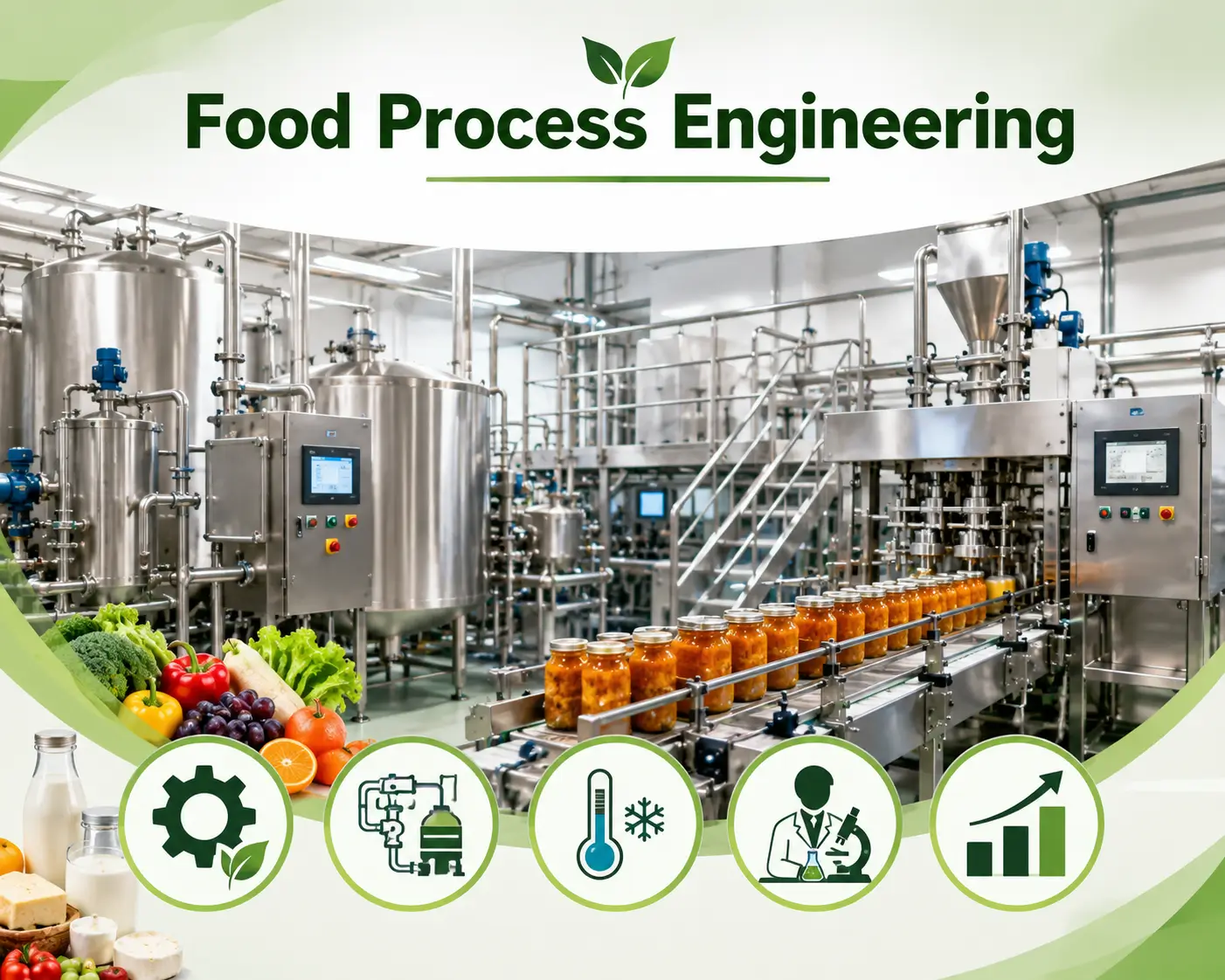
Introduction to Food Process Engineering
The Food Process Engineering Course is a comprehensive technical program designed to bridge the gap between food science and engineering principles. It focuses on the application of engineering concepts in designing, operating, and optimizing food processing systems. Food process engineering plays a critical role in ensuring that raw food materials are converted into safe, nutritious, stable, and commercially viable products for consumers.
This course provides a strong foundation in the physical, chemical, and biological transformations that occur during food processing. It also explains how engineering principles are used to design efficient food production systems that maintain quality, reduce waste, and improve productivity.
Importance of Food Process Engineering
Food processing is essential to feed the growing global population. Without proper engineering systems, food spoilage, wastage, and inefficiency would increase significantly. Food process engineering ensures:
- Safe and hygienic food production
- Extended shelf life of food products
- Efficient use of raw materials
- Energy and cost optimization
- Consistent product quality
- Compliance with food safety standards
This course prepares learners to contribute effectively to modern food industries that rely heavily on automation and advanced processing technologies.
Course Overview
The Food Process Engineering Course introduces learners to core engineering principles applied in food manufacturing. It begins with basic transport phenomena and gradually progresses to advanced processing operations used in industrial food systems.
Learners will study how heat, mass, and momentum transfer affect food materials during processing. The course also covers design and operation of food processing equipment used in large-scale production facilities.
Core Engineering Principles Covered
1. Heat Transfer in Food Processing
- Conduction, convection, and radiation
- Pasteurization and sterilization
- Thermal processing of foods
2. Mass Transfer Operations
- Drying and dehydration
- Osmosis and diffusion processes
- Evaporation systems
3. Fluid Flow in Food Systems
- Liquid food behavior
- Pumping systems
- Rheology of food materials
4. Mechanical Operations
- Mixing and blending
- Size reduction
- Filtration and separation
Food Processing Technologies
Learners will study major industrial processing techniques such as:
- Thermal processing (canning, sterilization)
- Refrigeration and freezing systems
- Drying and dehydration technologies
- Fermentation processes
- Extrusion technology
- Packaging and preservation methods
Food Preservation Techniques
The course explains how food is preserved using:
- Temperature control (cold storage, freezing)
- Chemical preservation methods
- Moisture removal techniques
- Vacuum and modified atmosphere packaging
- Irradiation and modern preservation methods
Food Plant Design and Equipment
Learners will gain knowledge of:
- Food plant layout design
- Equipment selection and sizing
- Process flow design
- Automation in food industries
- Hygiene and sanitation systems
Process Optimization
The course includes techniques to improve efficiency such as:
- Energy optimization in food processing
- Waste reduction strategies
- Process control systems
- Quality improvement methods
- Cost reduction techniques
Food Quality and Safety
Learners will understand:
- HACCP principles
- GMP (Good Manufacturing Practices)
- Food hygiene standards
- Quality assurance systems
- Regulatory compliance
Industrial Applications
Food process engineering is widely used in:
- Dairy industry
- Bakery and confectionery
- Beverage manufacturing
- Meat and poultry processing
- Frozen food industries
- Ready-to-eat food production
Skills You Will Gain
After completing this course, learners will be able to:
- Understand food engineering principles
- Design food processing systems
- Optimize industrial food operations
- Improve product quality and safety
- Analyze heat and mass transfer systems
- Work with food processing equipment
- Apply food safety standards
- Improve production efficiency
Conclusion
The Food Process Engineering Course provides strong technical expertise in food manufacturing systems. It prepares learners to work in modern food industries by combining engineering fundamentals with practical food processing applications.
FAQ SECTION
1. What is Food Process Engineering?
It is the application of engineering principles to food processing and manufacturing systems.
2. Who should take this course?
Food engineers, food technologists, and food science students.
3. Does it include practical industrial knowledge?
Yes, it focuses on real food processing systems and operations.
4. What topics are covered?
Heat transfer, mass transfer, fluid flow, and food processing technologies.
5. Is food safety included?
Yes, HACCP, GMP, and hygiene standards are included.
6. Will I learn equipment design?
Yes, food plant and equipment design concepts are covered.
7. Is this course technical?
Yes, it is engineering-based and highly technical.
8. Where is this used?
In dairy, bakery, beverage, meat, and processed food industries.
9. Does it cover automation?
Yes, basic automation and process control are included.
10. Can this help in jobs?
Yes, it is useful for careers in food engineering and manufacturing.





Reviews
There are no reviews yet.