
Introduction
Education is evolving, and traditional rote learning is giving way to more interactive and practical approaches. One of the most effective methods gaining popularity worldwide is Project-Based Learning (PBL). This approach focuses on hands-on experiences, critical thinking, and collaboration — preparing students not just for exams, but for life beyond the classroom.
In this article, we’ll explore the benefits of project-based learning, how it enhances student engagement, and why it’s becoming a cornerstone of modern education.
What Is Project-Based Learning?
Project-Based Learning (PBL) is an instructional method where students learn by actively engaging in real-world and meaningful projects. Instead of memorizing facts, they apply knowledge to solve problems, create products, or present solutions.
Example:
Students might design a sustainable city model, develop a mobile app, or create a marketing campaign — all while learning science, technology, and communication skills.
Key Features of Project-Based Learning
- Student-centered approach
- Real-world relevance
- Collaboration and teamwork
- Critical thinking and creativity
- Reflection and feedback
Top Benefits of Project-Based Learning
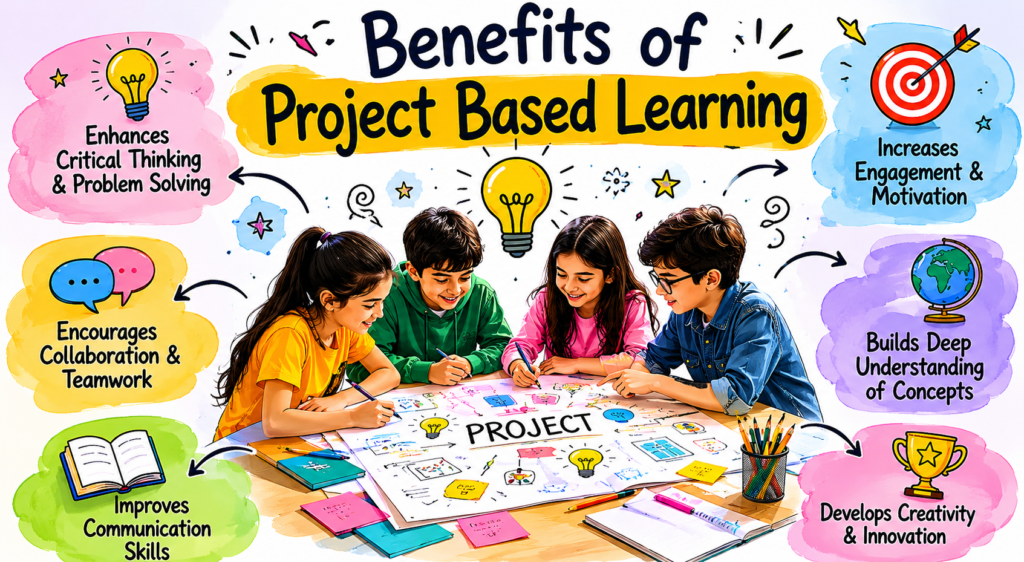
1. Enhances Critical Thinking
PBL encourages students to analyze, evaluate, and create solutions. They learn to think independently and make informed decisions — essential skills for future success.
2. Improves Problem-Solving Skills
By tackling real-world challenges, students learn how to identify problems, brainstorm ideas, and implement solutions effectively.
3. Boosts Collaboration and Communication
Working in teams teaches students how to communicate clearly, share responsibilities, and respect diverse perspectives.
4. Increases Engagement and Motivation
Hands-on projects make learning exciting. Students feel ownership of their work, which increases motivation and participation.
5. Develops Creativity and Innovation
PBL allows students to explore new ideas and think outside the box. They learn to innovate and express creativity through their projects.
6. Builds Real-World Skills
Students gain practical skills like time management, research, presentation, and digital literacy — all valuable in professional life.
7. Encourages Lifelong Learning
PBL fosters curiosity and self-directed learning. Students learn how to learn — a skill that stays with them forever.
8. Improves Academic Performance
Studies show that students engaged in project-based learning perform better in assessments because they understand concepts deeply.
9. Promotes Reflection and Self-Assessment
Students evaluate their own progress, identify strengths and weaknesses, and learn from mistakes — building confidence and accountability.
10. Connects Learning to Real Life
PBL bridges the gap between theory and practice. Students see how classroom lessons apply to real-world situations.
How Teachers Benefit from Project-Based Learning
- Better classroom engagement
- Improved student-teacher relationships
- Opportunities for creative teaching
- Enhanced assessment methods
Teachers become facilitators rather than lecturers, guiding students through exploration and discovery.
Examples of Project-Based Learning in Action
- Designing eco-friendly homes in science class
- Creating a business plan in economics
- Developing a community service project in social studies
- Building a robot in technology class
These projects combine multiple subjects, encouraging interdisciplinary learning.
Challenges and Solutions
While PBL offers numerous benefits, it also requires planning and support.
| Challenge | Solution |
|---|---|
| Time management | Create structured timelines and milestones |
| Assessment difficulties | Use rubrics and peer evaluations |
| Resource limitations | Utilize digital tools and community partnerships |
| Group conflicts | Teach teamwork and conflict resolution skills |

