
Introduction
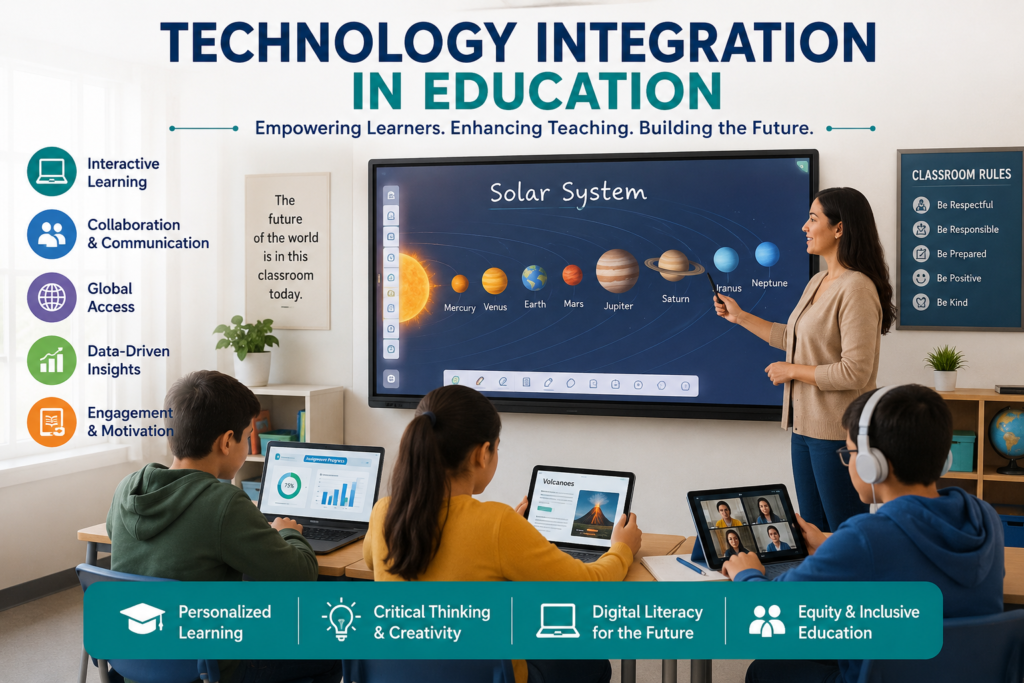
Technology integration in education has transformed the way students learn and teachers deliver instruction. From smart classrooms and online learning platforms to digital collaboration tools and educational apps, technology integration in education helps improve engagement, accessibility, and academic outcomes while preparing learners for a digital future.
1. Evolution of Technology in Education
- From chalkboards to smart classrooms.
- Rise of digital learning platforms.
- Impact of COVID‑19 on online education.
2. Benefits of Technology Integration
- Personalized learning through AI tools.
- Interactive learning with AR/VR.
- Collaboration tools like Google Classroom, Microsoft Teams.
- Accessibility for students with disabilities.
3. Challenges in Technology Integration
- Digital divide in rural vs. urban areas.
- Teacher training gaps.
- Cybersecurity concerns in EdTech platforms.
4. Key Technologies Transforming Education
- Learning Management Systems (LMS).
- Gamification in education.
- Artificial Intelligence in classrooms.
- Virtual reality labs.
- Mobile learning apps.
5. Case Studies
- Smart classrooms in India.
- Global examples: Khan Academy, Coursera, BYJU’s.
6. Future of Technology in Education
- Growth of AI‑powered adaptive learning.
- Blockchain in education for secure certificates.
- Metaverse classrooms.
7. Conclusion
- Technology is not a replacement but a support system for teachers.
- Balanced integration ensures student engagement and better outcomes.
FAQ SECTION
What is technology integration in education?
Technology integration in education involves using digital tools and technologies to improve teaching methods, learning experiences, and educational outcomes.
Why is technology important in education?
Technology enhances access to information, supports personalized learning, improves collaboration, and develops digital literacy skills.
What are examples of technology integration in education?
Examples include smart classrooms, learning management systems, educational apps, virtual learning environments, and digital assessment tools.
What are the challenges of technology integration?
Common challenges include infrastructure limitations, digital inequality, teacher training needs, and cybersecurity concerns.
How does technology improve student learning?
Technology can increase engagement, provide interactive learning experiences, support personalized instruction, and improve access to educational resources.