
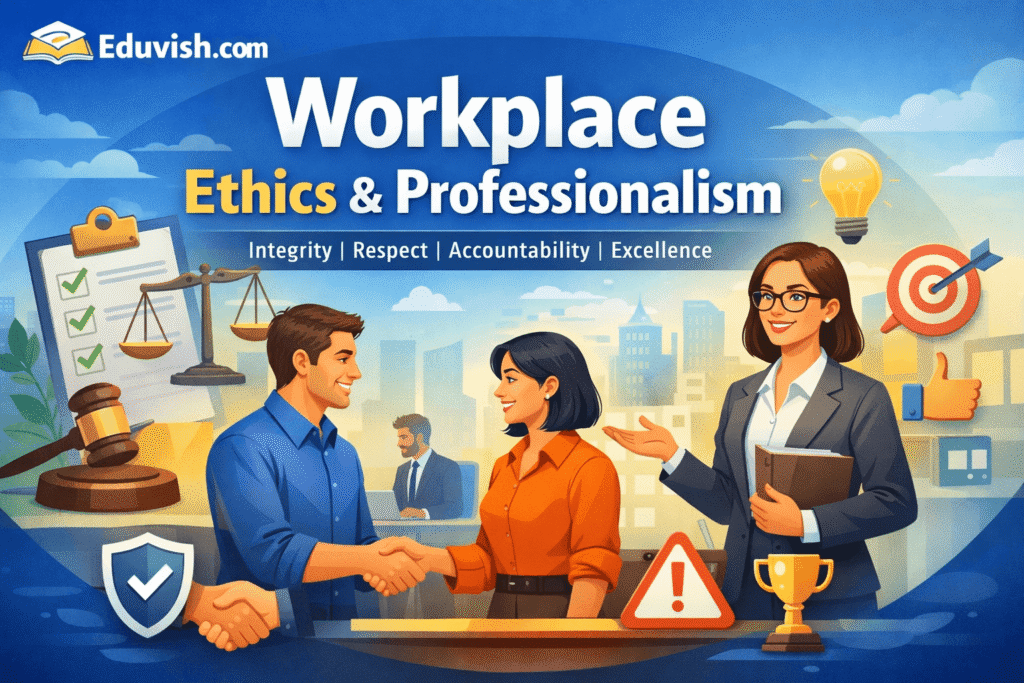
Introduction to Workplace Ethics
Workplace ethics refers to the moral principles and values that guide behavior in professional settings. Professionalism is the practice of maintaining competence, respect, and accountability in the workplace.
- Integrity at work: Honesty and transparency in all actions.
- Respect for colleagues: Treating everyone fairly regardless of role.
- Accountability: Owning decisions and outcomes.
- Excellence: Striving for high standards in performance.
Importance of Workplace Ethics
- Trust building: Creates a safe and reliable environment.
- Employee engagement: Motivates staff to perform better.
- Reputation management: Enhances brand image.
- Legal compliance: Prevents lawsuits and penalties.
Applications of Professionalism
- Communication skills: Clear, respectful, and effective dialogue.
- Time management: Meeting deadlines and respecting schedules.
- Conflict resolution: Handling disagreements constructively.
- Leadership ethics: Leading by example with fairness.
Challenges in Workplace Ethics
- Bias and discrimination
- Harassment issues
- Unethical practices
- Work pressure
Future of Workplace Ethics
- AI in workplace ethics
- Remote work professionalism
- Global workplace standards