
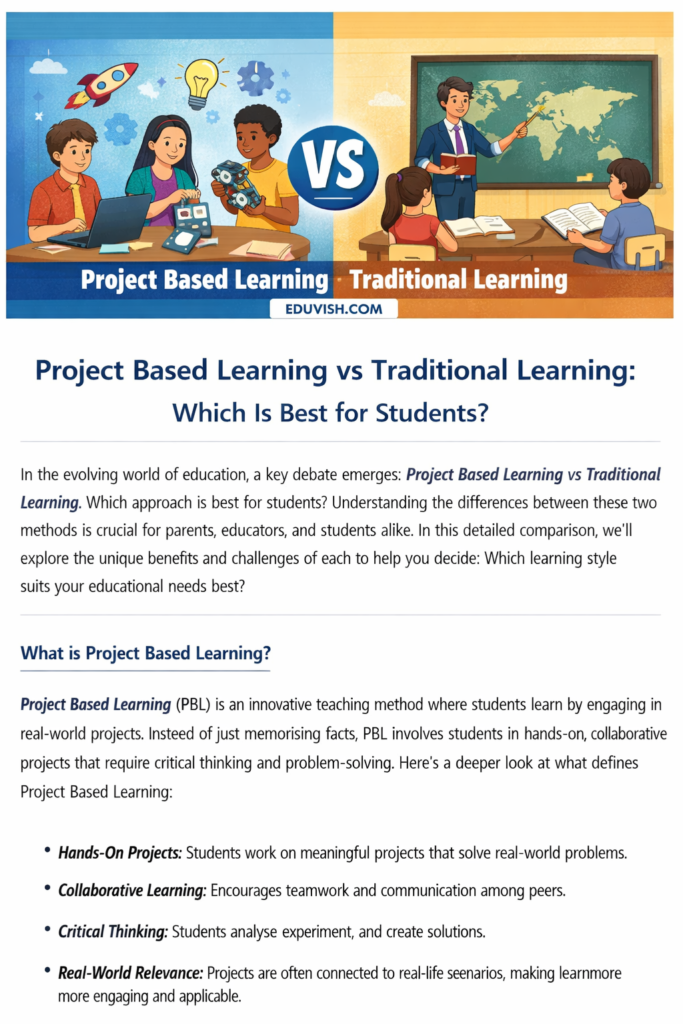
Introduction
Education is evolving rapidly, and one of the most debated topics today is Project Based Learning (PBL) vs Traditional Learning. Parents, teachers, and students often wonder: Which method is more effective? This article explores both approaches, their strengths, weaknesses, and impact on student success.
What is Project Based Learning?
Project Based Learning is a student-centered approach where learners gain knowledge by working on real-world projects.
- Hands-on projects that solve real problems
- Collaboration and teamwork among peers
- Critical thinking and creativity encouraged
- Real-world relevance making learning engaging
What is Traditional Learning?
Traditional Learning is a teacher-centered approach focused on lectures, textbooks, and exams.
- Structured lessons with clear syllabus
- Textbook-based learning and standardized tests
- Discipline and routine emphasized
- Best for rote learning and theoretical subjects
Key Differences: PBL vs Traditional Learning
| Aspect | Project Based Learning | Traditional Learning |
|---|---|---|
| Student Role | Active participant, problem solver | Passive recipient of knowledge |
| Teacher Role | Facilitator, mentor | Instructor, authority figure |
| Assessment | Based on projects, presentations | Exams, tests, assignments |
| Skills Developed | Creativity, collaboration, critical thinking | Memorization, discipline, theoretical knowledge |
| Engagement | High, due to real-world relevance | Moderate, often limited to classroom |
Benefits of Project Based Learning
- Real-world skills development
- Independent learning and ownership of knowledge
- Improved retention compared to rote memorization
- Future readiness for careers and innovation
Benefits of Traditional Learning
- Structured learning ensures syllabus completion
- Discipline and routine instilled in students
- Effective for exams and standardized testing
- Strong theoretical foundation for academic subjects
Challenges of Each Approach
- Project Based Learning: Requires resources, time, and teacher training.
- Traditional Learning: Can lead to disengagement, lack of creativity, and stress from exams.
Conclusion
Both methods have unique strengths. A blended approach—combining structured lessons with project-based activities—often works best for holistic student development.

