
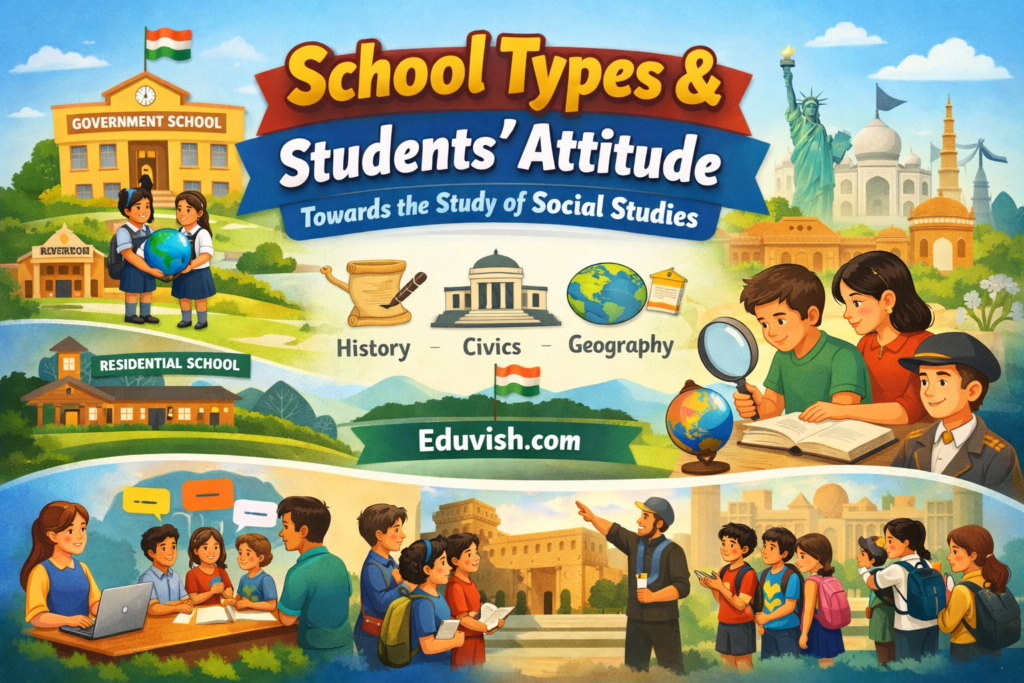
School Types and Students’ Attitude Towards the Study of Social Studies
Introduction
Education is the backbone of any nation, and social studies plays a vital role in shaping responsible citizens. In India and across the world, schools differ in their structure, curriculum, and teaching methods. These differences often influence how students perceive and engage with social studies. Understanding the types of schools and the student attitude towards social studies helps educators, parents, and policymakers improve learning outcomes.
Types of Schools in India and Globally
1. Government Schools
- Funded and managed by the state.
- Affordable, accessible to rural and urban populations.
- Social studies taught with emphasis on civic responsibility and national integration.
2. Private Schools
- Run by individuals or organizations.
- Focus on modern teaching methods, extracurriculars, and global exposure.
- Students often view social studies as a subject for competitive exams.
3. International Schools
- Offer IB, IGCSE, or Cambridge curriculum.
- Social studies linked to global citizenship, cultural diversity, and critical thinking.
4. Residential Schools
- Students live on campus.
- Strong emphasis on discipline and holistic education.
- Social studies taught with practical exposure through debates, projects, and excursions.
5. Alternative Schools
- Focus on experiential learning, creativity, and social responsibility.
- Students often develop a positive attitude towards social studies due to real‑life applications.
Students’ Attitude Towards Social Studies
Positive Attitudes
- Civic Awareness: Many students recognize social studies as essential for understanding rights, duties, and democracy.
- Cultural Appreciation: Students enjoy learning about history, heritage, and traditions.
- Career Relevance: Aspirants for civil services, law, and teaching value social studies highly.
Negative Attitudes
- Perception of Difficulty: Some students find memorization of dates and facts boring.
- Exam Pressure: Focus on rote learning reduces interest.
- Lack of Practical Exposure: Students often fail to connect theory with real life.
Importance of Social Studies in Modern Education
- Builds critical thinking and problem‑solving skills.
- Encourages social responsibility and community participation.
- Promotes global awareness in a rapidly changing world.
- Strengthens national identity and unity.
Conclusion
The type of school a student attends significantly shapes their attitude towards social studies. While some see it as a gateway to civic responsibility and career opportunities, others struggle with rote learning and exam pressure. By adopting innovative teaching methods and linking social studies to real‑life experiences, educators can transform student perceptions and make the subject more engaging and impactful.

