
Introduction
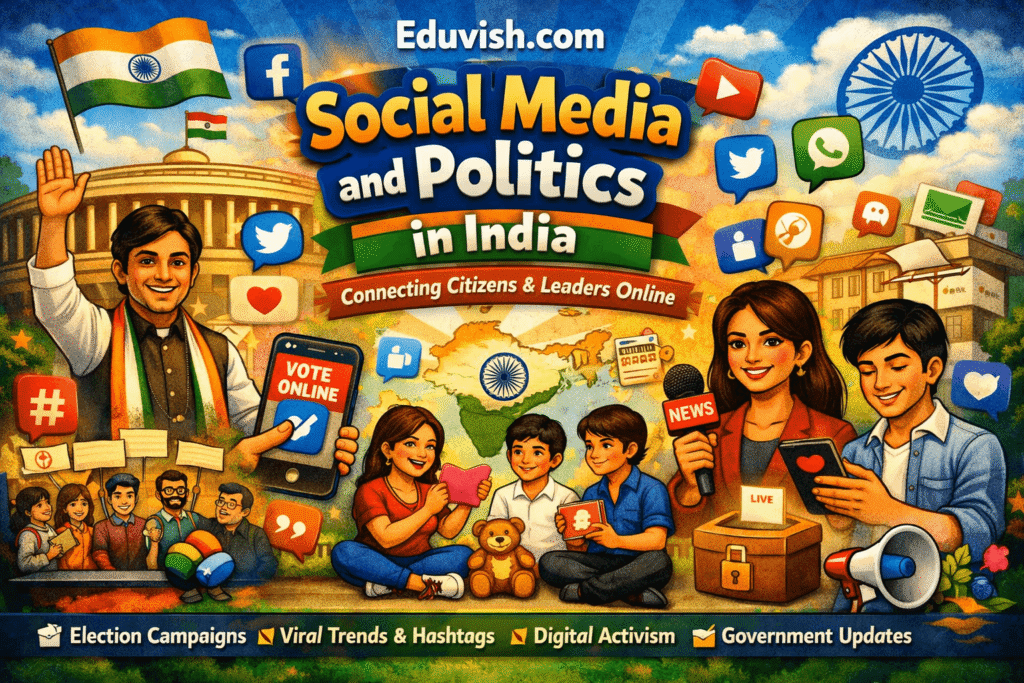
Social media has revolutionized how people communicate, share opinions, and engage with politics. In India — the world’s largest democracy — platforms like Facebook, Twitter (X), Instagram, and YouTube have become powerful tools for political discourse, campaigning, and citizen participation. At Eduvish.com, we explore how social media shapes political narratives, influences elections, and empowers citizens to voice their opinions.
The Rise of Social Media in Indian Politics
India’s digital transformation has been remarkable. With over 800 million internet users, social media has become a virtual public square. Political parties, leaders, and activists use these platforms to:
- Connect with voters
- Share campaign messages
- Respond to public issues
- Shape public opinion
From local elections to national debates, social media has become a key player in India’s political ecosystem.
How Social Media Influences Political Communication
- Direct engagement – Politicians interact directly with citizens through posts, live sessions, and comments.
- Real‑time updates – News spreads instantly, influencing public perception.
- Viral campaigns – Hashtags and videos amplify messages across demographics.
- Citizen journalism – Ordinary users share ground realities, shaping narratives.
- Digital activism – Movements like #MeTooIndia and #FarmersProtest gained momentum online.
The Role of Political Parties on Social Media
Major political parties in India have embraced social media as a strategic communication tool. They use it to:
- Announce policies and achievements
- Mobilize supporters
- Counter misinformation
- Engage youth voters
Social media teams analyze trends, monitor sentiment, and craft messages tailored to different audiences.
Impact on Elections
Social media has changed how elections are fought and won.
- Campaign reach: Digital ads and influencer collaborations reach millions.
- Voter engagement: Interactive polls and Q&A sessions encourage participation.
- Information dissemination: Platforms spread manifestos and speeches widely.
- Debate amplification: Online discussions shape mainstream media coverage.
⚠️ Disclaimer: Political outcomes and election results should always be verified through official sources such as the Election Commission of India.
Challenges and Concerns
While social media empowers democracy, it also presents challenges:
- Misinformation and fake news
- Echo chambers that reinforce biases
- Trolling and hate speech
- Data privacy concerns
- Manipulation through bots
Balancing free expression with responsible use is essential for healthy political dialogue.
Positive Effects of Social Media on Indian Politics
| Aspect | Impact |
|---|---|
| Transparency | Citizens can directly question leaders. |
| Participation | Youth and marginalized groups find a voice. |
| Awareness | Political education spreads faster. |
| Accountability | Public scrutiny keeps leaders answerable. |
| Innovation | Digital campaigns encourage creative outreach. |