
Introduction
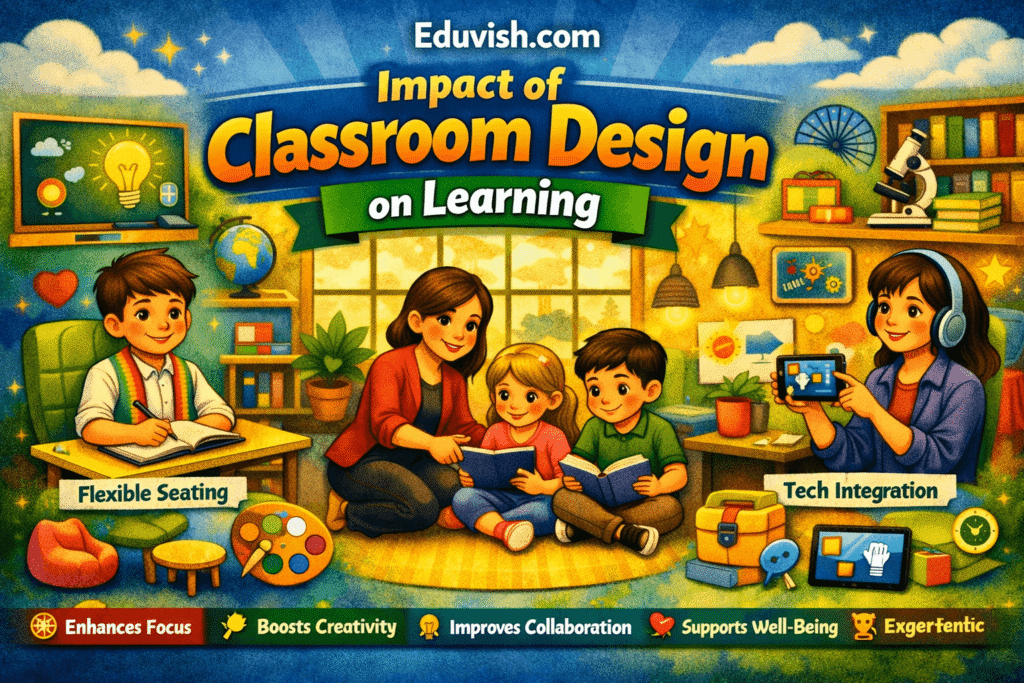
The classroom is more than just a space — it’s a learning environment that shapes how students think, interact, and perform. In India and around the world, educators are realizing that classroom design plays a crucial role in academic success. From lighting and seating arrangements to color schemes and technology integration, every element influences student engagement and motivation. At Eduvish.com, we explore how thoughtful classroom design enhances learning outcomes and creates a positive educational experience.
What Is Classroom Design?
Classroom design refers to the physical layout, aesthetics, and functionality of a learning space. It includes:
- Seating arrangements
- Lighting and ventilation
- Wall colors and décor
- Furniture ergonomics
- Technology integration
- Accessibility and movement flow
A well‑designed classroom encourages collaboration, creativity, and focus — essential ingredients for effective learning.
Why Classroom Design Matters
- Boosts concentration: Comfortable seating and proper lighting reduce distractions.
- Encourages participation: Flexible layouts promote group discussions and teamwork.
- Improves mood: Colors and natural light create a welcoming atmosphere.
- Supports inclusivity: Accessible spaces cater to diverse learning needs.
- Enhances creativity: Interactive zones inspire innovation and exploration.
Key Elements of Effective Classroom Design
| Element | Impact on Learning |
|---|---|
| Lighting | Natural light improves focus and reduces fatigue. |
| Seating Arrangement | Flexible seating supports collaboration and comfort. |
| Color Scheme | Warm colors energize; cool tones calm the mind. |
| Technology Integration | Smart boards and digital tools make lessons interactive. |
| Acoustics | Good sound quality ensures clarity and engagement. |
| Ventilation | Fresh air enhances alertness and well‑being. |
The Psychology Behind Classroom Design
Research shows that physical environments affect cognitive performance.
- Spatial layout influences how students interact.
- Color psychology impacts mood and motivation.
- Lighting effects regulate attention and energy levels.
- Furniture comfort affects posture and concentration.
A well‑balanced design nurtures emotional safety and intellectual curiosity.
Classroom Design Trends in Indian Schools
Indian schools are embracing modern design principles:
- Smart classrooms with digital boards and projectors.
- Collaborative spaces for group learning.
- Eco‑friendly designs using sustainable materials.
- Open layouts that reduce hierarchy and promote equality.
- Colorful walls with educational murals and motivational quotes.
These innovations align with the National Education Policy (NEP 2020), which emphasizes holistic and experiential learning.
Impact of Classroom Design on Student Performance
- Academic achievement – Students in well‑designed classrooms perform better in tests.
- Behavioral improvement – Organized spaces reduce stress and misbehavior.
- Attendance and engagement – Comfortable environments encourage regular attendance.
- Teacher efficiency – Teachers manage lessons more effectively in optimized spaces.
Designing for Different Age Groups
- Preschool classrooms: Bright colors, playful furniture, and safe materials.
- Primary schools: Interactive zones and flexible seating.
- Secondary schools: Tech‑enabled learning and collaborative setups.
- Colleges: Minimalist design with digital integration and discussion pods.
Each age group requires a unique approach to balance comfort, creativity, and focus.
Technology and Modern Classroom Design
Digital tools have transformed learning spaces:
- Smart boards for interactive lessons.
- Virtual reality corners for immersive experiences.
- Online collaboration zones for hybrid learning.
- Charging stations and Wi‑Fi hubs for device accessibility.
Technology enhances engagement and prepares students for the digital future.
Sustainable Classroom Design
Eco‑friendly classrooms promote environmental awareness:
- Use of natural light and solar panels.
- Recycled furniture and non‑toxic paints.
- Indoor plants for air purification.
- Energy‑efficient ventilation systems.
Sustainability teaches responsibility and respect for nature