
Introduction
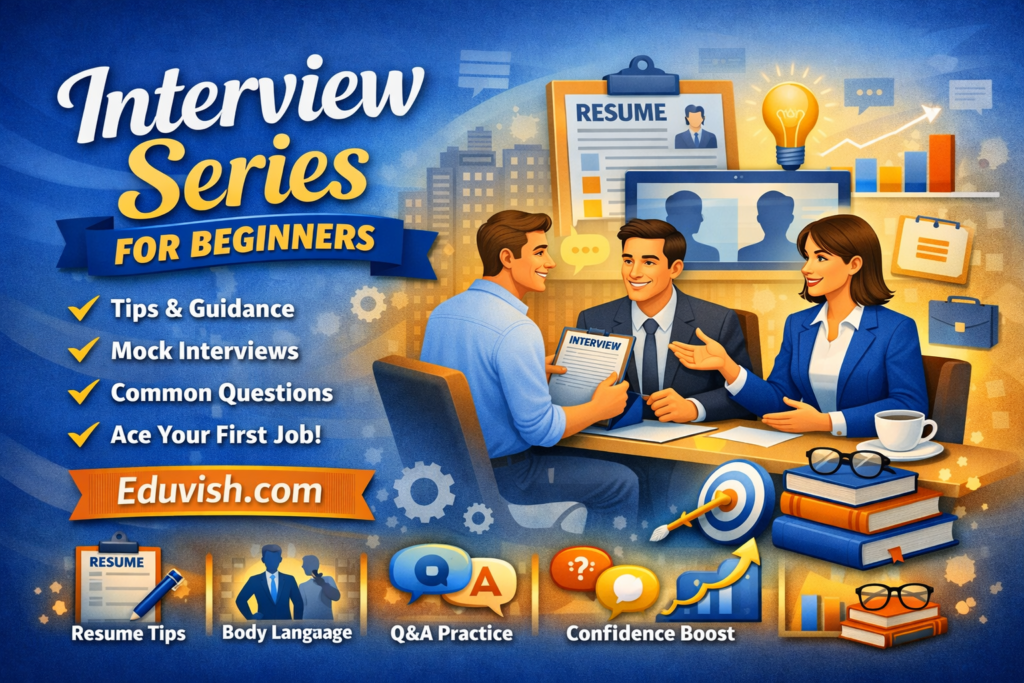
Starting your career journey can be both exciting and nerve‑wracking. The first big challenge most beginners face is the job interview. It’s the moment where your education, personality, and confidence meet opportunity. Interview Series for Beginners is crafted to help you navigate this crucial stage with ease.
This guide covers everything — from understanding interview types to mastering communication, handling tricky questions, and building confidence. Whether you’re a student, fresher, or early professional, this series will prepare you to shine in every interview.
Why Interviews Matter
Interviews are not just about answering questions; they’re about showcasing your potential. Employers use interviews to assess your skills, attitude, and cultural fit. For beginners, interviews serve as:
- Career gateways – Your entry point into the professional world.
- Skill showcases – A chance to highlight your strengths.
- Confidence boosters – Each interview builds resilience.
- Learning experiences – Every interaction teaches you something new.
Understanding Interview Types
Different companies use different interview formats. Knowing what to expect helps you prepare better.
| Interview Type | Purpose | Preparation Tip |
|---|---|---|
| HR Interview | Tests personality and communication | Be honest and confident |
| Technical Interview | Evaluates subject knowledge | Revise fundamentals |
| Group Discussion | Assesses teamwork and leadership | Speak clearly and listen actively |
| Case Study Interview | Tests analytical thinking | Structure your answers logically |
| Panel Interview | Multiple interviewers assess you | Maintain eye contact with all |
Step‑by‑Step Interview Preparation
1. Research the Company
Before any interview, learn about the organization:
- Company mission and values
- Products and services
- Recent achievements This shows genuine interest and helps tailor your answers.
2. Build a Strong Resume
Your resume is your first impression. Tips:
- Keep it concise and professional.
- Highlight academic achievements and internships.
- Use action verbs like “developed,” “managed,” “created.”
- Avoid spelling errors — proofread twice.
3. Practice Common Questions
Prepare answers for frequently asked questions:
- “Tell me about yourself.”
- “Why should we hire you?”
- “What are your strengths and weaknesses?”
- “Where do you see yourself in five years?” Use the STAR method — Situation, Task, Action, Result — to structure your responses.
4. Improve Communication Skills
- Join public speaking clubs.
- Record yourself answering questions.
- Practice with friends or mentors.
- Focus on clarity, tone, and confidence.
5. Dress Professionally
Your appearance reflects your seriousness.
- Choose formal attire.
Building Confidence
Confidence is key to success.
- Positive mindset – Believe in your abilities.
- Body language – Sit upright, smile, and maintain eye contact.
- Mock interviews – Simulate real scenarios to reduce anxiety.
- Visualization – Imagine yourself succeeding.
Handling Difficult Questions
Interviewers often test your composure with tricky questions. Examples:
- Weakness question: Frame weaknesses as learning opportunities.
- Salary expectations: Research industry standards.
- Gap in resume: Be honest and explain positively.
- Failure experiences: Focus on lessons learned.
Common Mistakes Beginners Make
Avoid these pitfalls:
- Poor preparation – Not researching the company.
- Overconfidence – Ignoring feedback.
- Underconfidence – Doubting your worth.
- Weak communication – Rambling or unclear answers.
Post‑Interview Etiquette
Your job isn’t done after the interview.
- Send a thank‑you email within 24 hours.
- Reflect on your performance.
- Connect with recruiters on LinkedIn.
- Stay patient — follow up politely if you don’t hear back.
Advanced Strategies for Beginners
- Networking – Attend career fairs and webinars.
- Continuous learning – Take online courses.
- Portfolio building – Showcase projects and achievements.
- Follow‑up communication – Keep the conversation professional.
Real‑World Examples
Example 1: The Fresher’s First Interview
Riya, a computer science graduate, prepared using mock interview module. She practiced technical questions, improved her confidence, and landed her first job at a tech startup.
Example 2: The Career Switcher
Amit, shifting from sales to digital marketing, used Eduvish’s interview series to learn how to present transferable skills. His structured answers impressed the panel.
Conclusion
Interviews are stepping stones to success. With Interview Series for Beginners, you’ll gain the confidence, knowledge, and skills to excel. Remember — every interview is a learning opportunity that brings you closer to your dream career.

