
Introduction
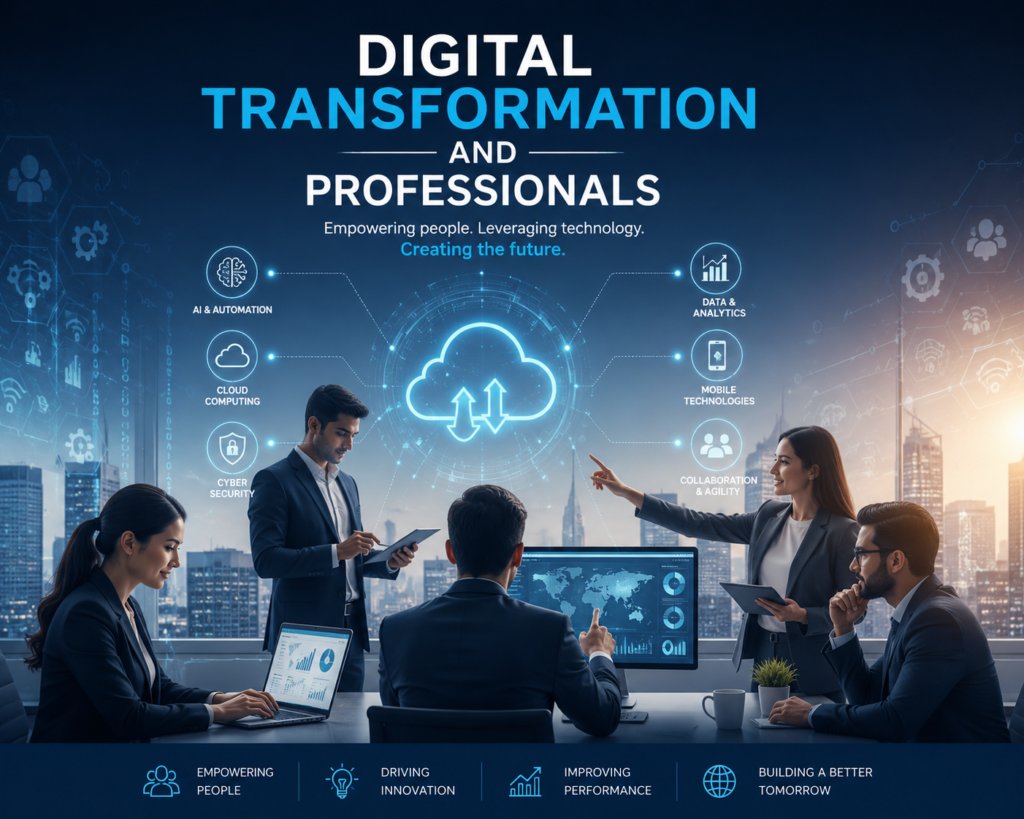
Digital transformation is reshaping industries, workplaces, and careers. For professionals, it’s no longer optional—it’s essential. Embracing digital tools, automation, and data‑driven strategies helps individuals stay competitive, improve productivity, and unlock new career opportunities.
What is Digital Transformation?
- Definition: Integration of digital technologies into all areas of business and work.
- Impact: Changes how professionals work, communicate, and deliver value.
- Goal: Enhance efficiency, innovation, and adaptability.
Why Digital Transformation Matters for Professionals
- Skill relevance: Keeps professionals updated with modern tools.
- Career growth: Opens opportunities in tech‑driven industries.
- Productivity: Automates repetitive tasks.
- Global collaboration: Enables remote teamwork across borders.
Key Strategies for Professionals in Digital Transformation
1. Upskilling and Reskilling
Learn new digital tools, coding, data analytics, and AI applications.
2. Adopting Remote Work Tools
Use platforms like Zoom, Slack, and Microsoft Teams for collaboration.
3. Leveraging Data Analytics
Make informed decisions using insights from big data.
4. Cybersecurity Awareness
Protect sensitive information and maintain trust.
5. Embracing Automation
Use AI and machine learning to streamline workflows.
6. Personal Branding Online
Build a strong digital presence through LinkedIn, blogs, and thought leadership.
Comparison Table
| Strategy | Why It Matters | Outcome |
|---|---|---|
| Upskilling | Keeps skills relevant | Career advancement |
| Remote tools | Enables collaboration | Flexible work |
| Data analytics | Informed decisions | Better performance |
| Cybersecurity | Protects data | Builds trust |
| Automation | Saves time | Higher efficiency |
| Personal branding | Improves visibility | Professional recognition |
Benefits of Digital Transformation for Professionals
- Career advancement
- Global opportunities
- Work flexibility
- Innovation

