
1. Introduction
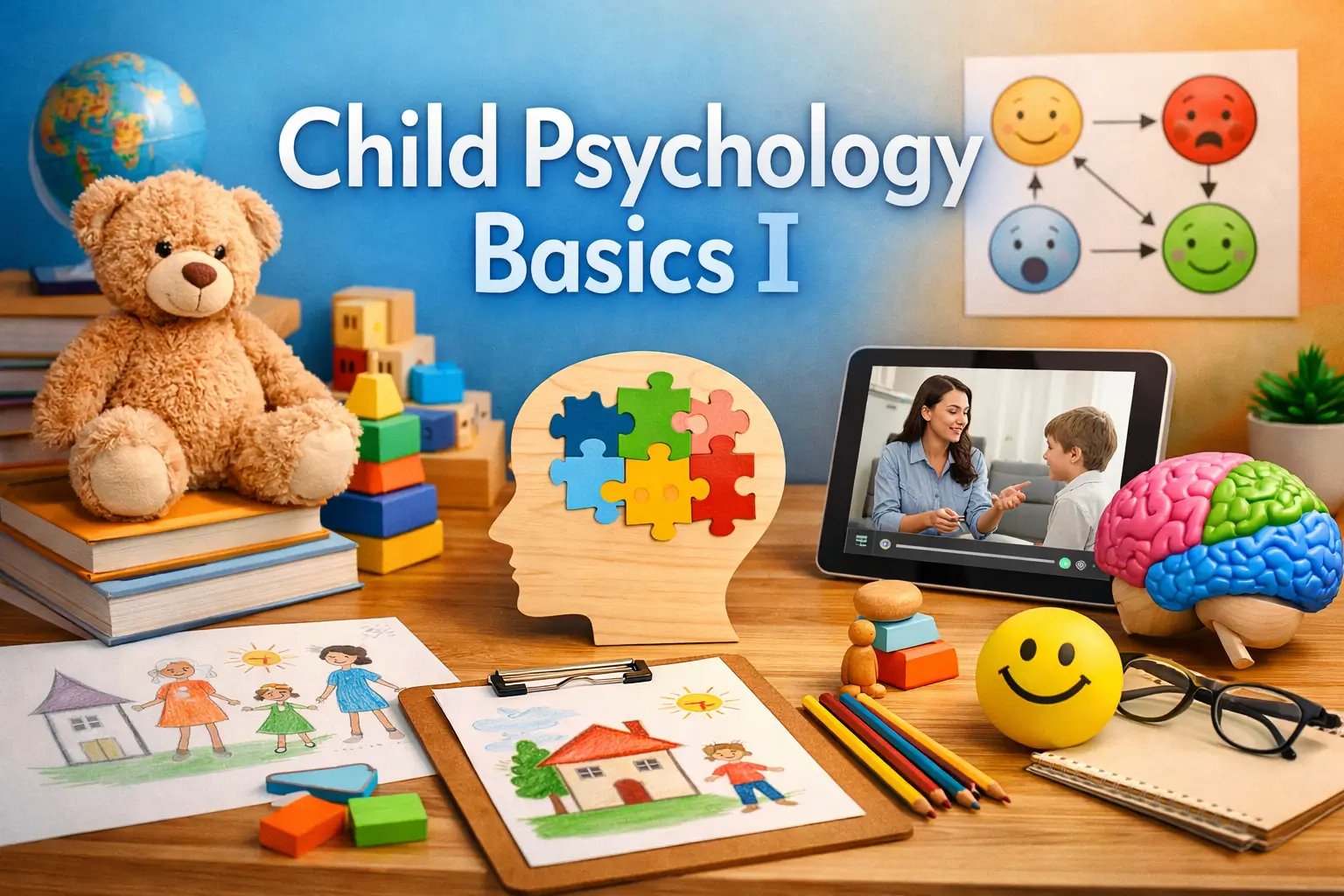
The Child Psychology Basics Course is a comprehensive foundational program designed to provide deep insight into how children think, behave, learn, and develop from infancy through adolescence. This course is structured to help learners understand the psychological, emotional, cognitive, and social development of children in a scientific and practical way.
In today’s world, understanding child psychology is extremely important for parents, teachers, caregivers, counselors, and anyone involved in child development or education. Every child is unique, and their behavior is shaped by multiple internal and external factors. This course helps learners decode those behaviors and respond in a more informed and effective manner.
2. Course Objective
The primary objective of this course is to build a strong foundational understanding of child psychology and development. It aims to help learners:
- Understand how children grow physically, mentally, and emotionally
- Analyze behavioral patterns in different age groups
- Identify factors influencing learning and personality development
- Develop skills to support healthy emotional and cognitive growth in children
The course focuses on both theoretical understanding and practical awareness so learners can apply concepts in real-life situations.
3. Understanding Child Development Stages
Child development is a continuous process that occurs in different stages. This course provides detailed knowledge of:
- Infancy Stage (0–2 years): Early bonding, sensory development, attachment formation
- Early Childhood (2–6 years): Language development, emotional expression, social interaction
- Middle Childhood (6–12 years): Cognitive development, school learning, peer influence
- Adolescence (12–18 years): Identity formation, emotional changes, independence development
Each stage has unique psychological needs and behavioral patterns, which are explained in detail to help learners understand developmental milestones.
4. Cognitive Development in Children
Cognitive development refers to how children think, learn, and solve problems. In this section, learners will study:
- Development of memory and attention span
- Language acquisition and communication skills
- Problem-solving and decision-making abilities
- Role of education and environment in intelligence growth
- Importance of curiosity and play in learning
Understanding cognitive development helps in improving teaching methods and parenting approaches.
5. Emotional Development in Children
Emotional development is a crucial aspect of child psychology. This course covers:
- Formation of emotions in early childhood
- Understanding happiness, anger, fear, and anxiety in children
- Emotional bonding with parents and caregivers
- Development of self-esteem and confidence
- Handling emotional stress in children
Learners will understand how emotional support plays a major role in shaping a child’s personality.
6. Behavioral Psychology of Children
This section focuses on understanding why children behave the way they do. It includes:
- Common behavioral patterns across age groups
- Influence of family, school, and society
- Positive and negative behavior reinforcement
- Handling aggression, tantrums, and emotional outbursts
- Developing discipline without harming emotional health
This knowledge helps in managing children in a healthy and constructive way.
7. Learning and Educational Psychology
Children learn in different ways, and this course explores:
- Different learning styles (visual, auditory, kinesthetic)
- Role of teachers in child psychological development
- Importance of motivation and encouragement
- Impact of environment on academic performance
- Techniques to improve learning outcomes
This section is especially useful for educators and trainers.
8. Social Development in Children
Social behavior plays a major role in personality formation. Learners will understand:
- Development of social skills and friendships
- Peer influence on behavior
- Family role in social development
- Communication skills in children
- Building empathy and cooperation
9. Practical Applications of Child Psychology
This course is not just theoretical; it focuses heavily on practical understanding such as:
- Observing and interpreting child behavior
- Supporting positive parenting techniques
- Handling children in school or learning environments
- Identifying emotional and behavioral needs
- Creating a supportive environment for growth
10. Importance of Child Psychology
Understanding child psychology is essential because:
- It helps improve parenting and teaching methods
- It supports emotional and mental well-being of children
- It helps prevent behavioral and emotional issues
- It strengthens communication between adults and children
- It builds a healthy foundation for future personality development
11. Skills You Will Gain
After completing this course, learners will develop:
- Strong understanding of child behavior and development
- Observation and analytical skills
- Emotional intelligence and empathy
- Communication and guidance abilities
- Basic psychological awareness of children
12. Career Opportunities
This course can help learners explore entry-level opportunities such as:
- Child care assistant roles
- Teaching assistant positions
- Early childhood education support roles
- Parenting consultant support roles
- NGO child development programs
- Foundation for advanced psychology studies
13. Conclusion
The Child Psychology Basics Course is a powerful foundational program that helps learners understand the complex world of child behavior, emotions, and development. It is designed for beginners who want to build a strong base in psychology, education, or child development fields.
With a combination of scientific concepts and practical insights, this course prepares learners to positively influence children’s growth and development in everyday life.
FAQ SECTION
Q1. What is Child Psychology Basics Course?
It is a beginner course that teaches child behavior, development, and psychology basics.
Q2. Who should join this course?
Students, teachers, parents, and psychology beginners can join.
Q3. Do I need psychology background?
No, it is designed for beginners.
Q4. What will I learn in this course?
You will learn child behavior, emotions, learning, and development stages.
Q5. Is this course useful for teachers?
Yes, it helps teachers understand student behavior better.
Q6. Does it include practical learning?
Yes, it includes real-life child behavior understanding.
Q7. Can parents benefit from this course?
Yes, it is very useful for parenting and child understanding.
Q8. Is certification provided?
Yes, a completion certificate is included.
Q9. Is this course difficult?
No, it is simple and beginner-friendly.
Q10. Can I pursue psychology career after this?
Yes, it is a foundation course for psychology studies.


Reviews
There are no reviews yet.