
Introduction
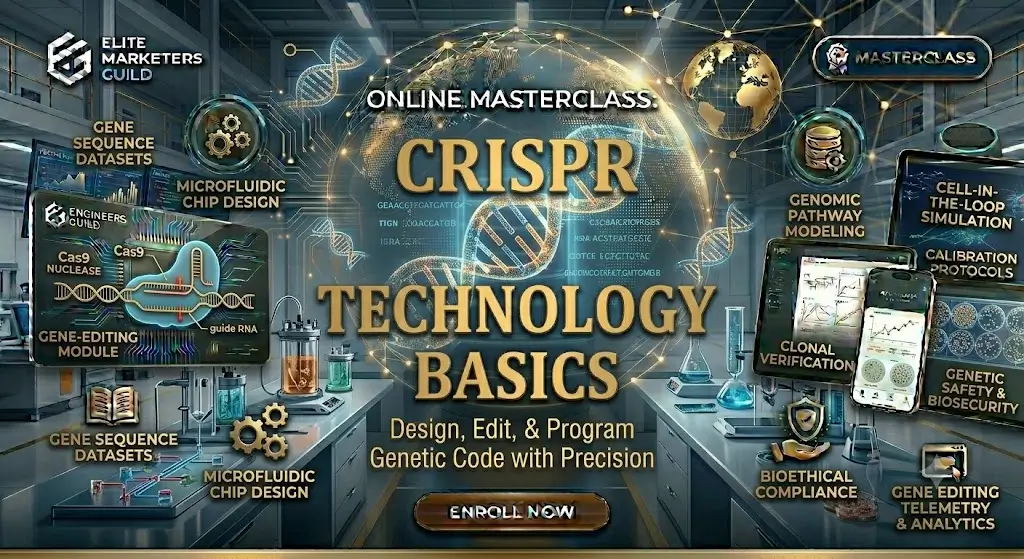
The CRISPR Technology Basics Course is a comprehensive introductory program designed to help learners understand how gene editing works using CRISPR technology. In modern biotechnology, CRISPR has revolutionized how scientists modify DNA with precision and efficiency.
CRISPR (Clustered Regularly Interspaced Short Palindromic Repeats) is a powerful gene-editing tool that allows targeted changes in genetic material. Therefore, understanding its mechanism is essential for students in biology and biotechnology.
This course introduces learners to molecular biology, DNA structure, CRISPR-Cas9 systems, and genetic modification techniques. Moreover, participants gain practical knowledge of how gene editing is applied in science and medicine.
Whether you are a student, researcher, or science enthusiast, this course provides essential skills for understanding CRISPR technology basics.
Course Overview
In modern science, genetic engineering is transforming medicine, agriculture, and biological research. Consequently, CRISPR has become one of the most important tools in biotechnology.
The CRISPR Technology Basics Course provides learners with a structured understanding of DNA editing, gene targeting mechanisms, CRISPR systems, and molecular biology concepts. Additionally, participants explore how gene editing is used in real-world applications.
The course combines biology, genetics, and biotechnology to help learners understand modern genetic engineering techniques.
What You Will Learn
The CRISPR Technology Basics Course covers a wide range of biological and genetic topics. First, learners study the fundamentals of DNA, genes, and molecular biology.
Next, participants explore CRISPR-Cas9 mechanism, gene targeting, genome editing methods, and genetic modification processes. Furthermore, the course explains how scientists use CRISPR to correct genetic disorders.
In addition, learners gain knowledge of biotechnology applications in medicine, agriculture, and research. These topics provide a complete understanding of gene editing systems.
Moreover, learners also explore ethical issues and safety considerations in genetic engineering.
Skills You Will Gain
Upon successful completion of the course, learners will develop valuable skills, including:
- CRISPR gene editing basics
- DNA and genetic structure understanding
- Molecular biology fundamentals
- Gene targeting techniques
- Genome editing concepts
- Biotechnology applications
- CRISPR-Cas9 mechanism knowledge
- Genetic research interpretation
- Biomedical science awareness
- Ethical understanding of gene editing
Moreover, these skills are highly valuable across biotechnology companies, medical research institutes, pharmaceutical industries, and academic research fields.
Benefits of the Course
The CRISPR Technology Basics Course offers numerous benefits for learners interested in biology and biotechnology. First, it builds strong understanding of gene editing science.
Additionally, the course improves biological and scientific reasoning skills. Furthermore, participants gain foundational knowledge that helps in advanced genetics and biomedical studies.
Because CRISPR is a groundbreaking technology, professionals with genetics knowledge are highly in demand. As a result, learners can improve career opportunities in biotechnology, medicine, and research fields.
The course also develops analytical thinking, scientific curiosity, and research understanding.
Who Should Enroll?
This course is ideal for:
- Biology students
- Biotechnology learners
- Medical students
- Researchers
- Science enthusiasts
- Genetic engineering beginners
- Pharmaceutical students
- Healthcare professionals
- Academic learners
- Life science aspirants
No advanced biology experience is required. Therefore, beginners can confidently enroll and build foundational CRISPR knowledge.
Career Opportunities
After completing the course, learners may pursue opportunities such as:
- Biotechnology Assistant
- Genetic Research Assistant
- Biomedical Scientist
- Laboratory Technician
- Genetics Analyst
- Pharmaceutical Researcher
- Bioinformatics Assistant
- Molecular Biology Technician
- Clinical Research Assistant
- Life Sciences Researcher
Additionally, learners can apply these skills across biotech companies, research labs, pharmaceutical industries, and academic institutions.
Certification
Upon successful completion of the CRISPR Technology Basics Course, participants receive a certification recognizing their understanding of gene editing technology, molecular biology, and CRISPR systems.
This certification can strengthen academic profiles and support career growth in biotechnology and life sciences.
Why Choose This Course?
The CRISPR Technology Basics Course combines genetics, molecular biology, and biotechnology to provide a practical, future-focused learning experience. Moreover, it equips learners with foundational knowledge of modern gene editing systems.
The curriculum focuses on CRISPR mechanisms, DNA editing, and real-world applications. Furthermore, learners gain insights into ethical and scientific challenges in genetic engineering.
Whether your goal is to become a researcher, biotech professional, or medical scientist, this course provides the knowledge and confidence needed to succeed.
Conclusion
The CRISPR Technology Basics Course provides a strong foundation in gene editing, molecular biology, and biotechnology. Through topics such as CRISPR-Cas9 systems, DNA structure, and genetic modification, learners gain valuable knowledge applicable across modern life sciences.
Moreover, as gene editing continues to transform science and medicine, professionals with CRISPR knowledge are becoming highly valuable. Therefore, this course serves as an excellent starting point for individuals seeking careers in biotechnology, genetics, and biomedical research.
FAQ SECTION
1. What is the CRISPR Technology Basics Course?
It teaches how gene editing works using CRISPR-Cas9 technology.
2. Is this course suitable for beginners?
Yes. Beginners can easily understand basic biology concepts.
3. What topics are covered in this course?
It includes DNA, CRISPR systems, and gene editing techniques.
4. Will I receive a certificate?
Yes. A certificate is provided after completion.
5. Do I need biology experience?
No. The course starts from basic concepts.
6. Who should enroll in this course?
Students, biology learners, and science enthusiasts.
7. Is this course practical?
Yes. It includes real-world biotechnology applications.
8. What skills will I gain?
You will gain skills in genetics and gene editing basics.
9. Can this course help my career?
Yes. It improves opportunities in biotech and research fields.
10. Why is CRISPR important?
It allows precise editing of DNA for medicine and science.




Reviews
There are no reviews yet.