
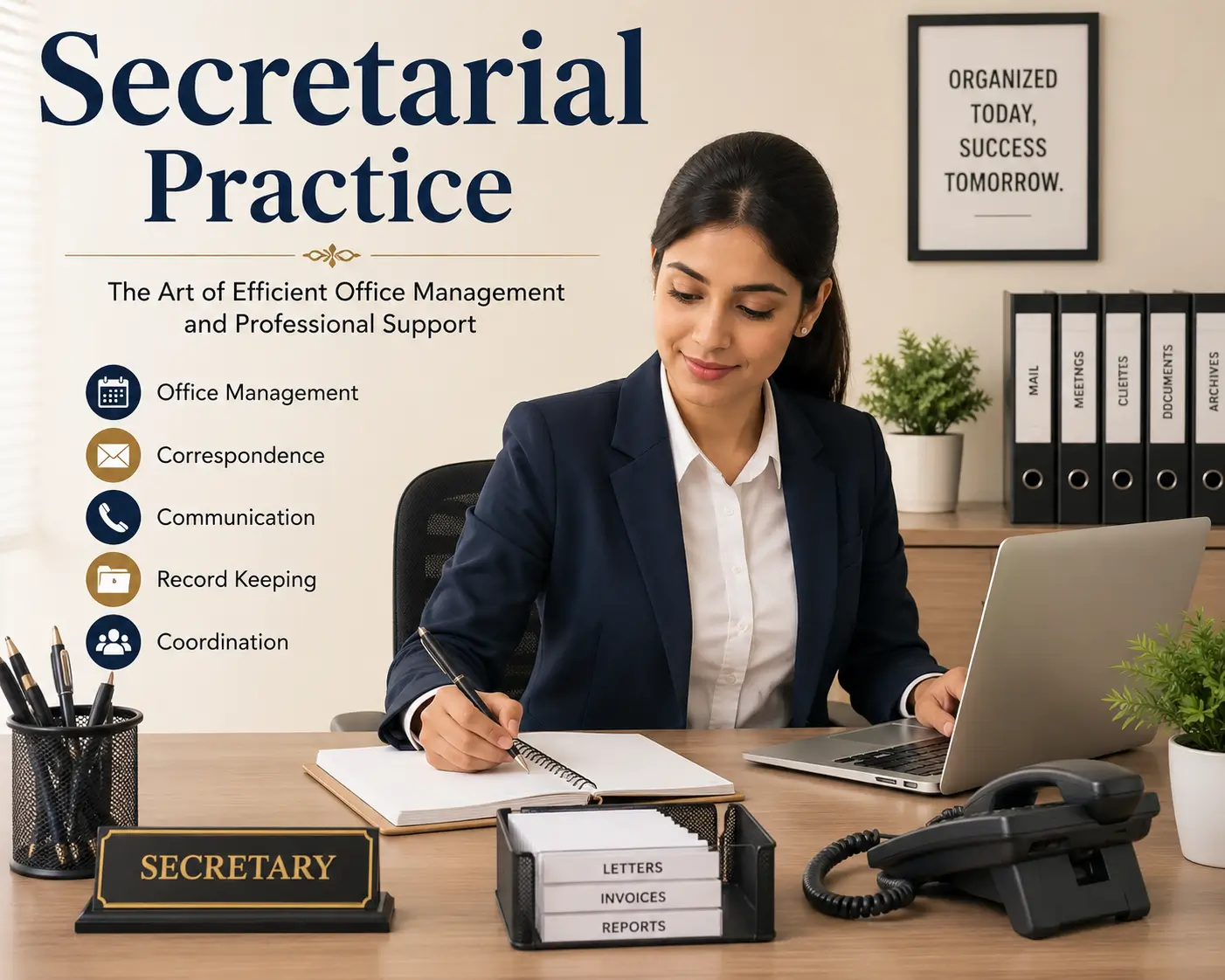
Introduction to Secretarial Practice
Secretarial Practice is an essential administrative discipline that focuses on supporting executives, coordinating office activities, managing business documentation, and ensuring smooth day-to-day operations. Modern organizations depend on skilled secretarial professionals to improve communication, organize information, schedule meetings, and maintain efficient office systems.
This course provides practical knowledge of office administration, professional communication, record management, document preparation, business correspondence, and executive support. Learners gain the confidence to perform administrative responsibilities effectively in both public and private organizations.
Understanding Office Administration
Every successful organization relies on organized administrative processes. Secretarial professionals help maintain office efficiency by managing information, coordinating schedules, preparing reports, and supporting daily business activities.
Key learning areas include:
- Office administration
- Business correspondence
- Record management
- Filing systems
- Office documentation
- Administrative coordination
These concepts help learners understand the responsibilities of modern administrative professionals.
Communication and Executive Support
Professional communication is a key responsibility in administrative roles. Secretarial staff regularly communicate with clients, colleagues, managers, and external stakeholders while maintaining accuracy and professionalism.
The course explains practical approaches for:
- Business communication
- Email and letter drafting
- Meeting coordination
- Calendar management
- Telephone etiquette
- Executive assistance
These skills improve workplace efficiency and professional relationships.
Document and Records Management
Organizations generate large volumes of information every day. Proper document management ensures that records remain secure, accessible, and well organized.
Learners explore:
- Document preparation
- Record maintenance
- Digital filing systems
- Confidential information handling
- Office documentation standards
- Administrative reporting
These practices support compliance and operational efficiency.
Time Management and Workplace Organization
Effective administrative professionals manage multiple responsibilities while meeting deadlines. Strong organizational skills improve productivity and help maintain smooth office operations.
The course also introduces techniques for prioritizing tasks, organizing workloads, coordinating meetings, and improving workflow management.
Skills You Will Develop
After completing this course, learners will understand:
- Secretarial Practice principles
- Office administration
- Business communication
- Executive support
- Document management
- Record keeping
- Meeting coordination
- Scheduling and time management
- Office organization
- Professional workplace etiquette
Who Should Enroll?
This course is suitable for:
- Students
- Office assistants
- Administrative professionals
- Executive assistants
- Receptionists
- Business support staff
- Entrepreneurs
- Anyone interested in office administration
No previous administrative experience is required.
Career Opportunities
This course supports careers such as:
- Secretary
- Executive Assistant
- Administrative Assistant
- Office Administrator
- Office Coordinator
- Reception Executive
- Administrative Executive
- Business Support Officer
FAQ Section (Frequently Asked Questions)
Who should enroll in this course?
This course is ideal for students, office assistants, administrative professionals, reception staff, executive assistants, entrepreneurs, and anyone interested in office administration.
What will I learn during the program?
You will learn office administration, business correspondence, document management, scheduling, meeting coordination, filing systems, professional communication, and workplace organization.
Is this course suitable for beginners?
Yes. The course begins with basic administrative concepts and gradually introduces practical office management techniques used in modern workplaces.
Why are administrative skills important in organizations?
Strong administrative skills help organizations improve communication, maintain accurate records, coordinate daily activities, support executives, and increase workplace efficiency.
Which topics are covered in this training?
The course covers office administration, business communication, document preparation, record management, scheduling, meeting management, time management, and professional office practices.
How can these skills be applied in the workplace?
The knowledge gained helps professionals organize office operations, manage documents, coordinate meetings, communicate effectively, and support business activities efficiently.
What professional skills will I develop?
You will strengthen communication, organization, document preparation, record keeping, time management, customer service, administrative coordination, and professional workplace etiquette.
Which industries require these skills?
Administrative and secretarial skills are valuable in healthcare, education, banking, legal services, manufacturing, retail, hospitality, government, consulting, and corporate organizations.
Can this course help with career growth?
Yes. It supports career opportunities in office administration, executive assistance, administrative support, business operations, customer service, and office management.
What can I achieve after completing this course?
After completing the program, you will be able to manage office tasks efficiently, support executive operations, maintain professional documentation, and contribute to the smooth functioning of any organization.


Reviews
There are no reviews yet.