
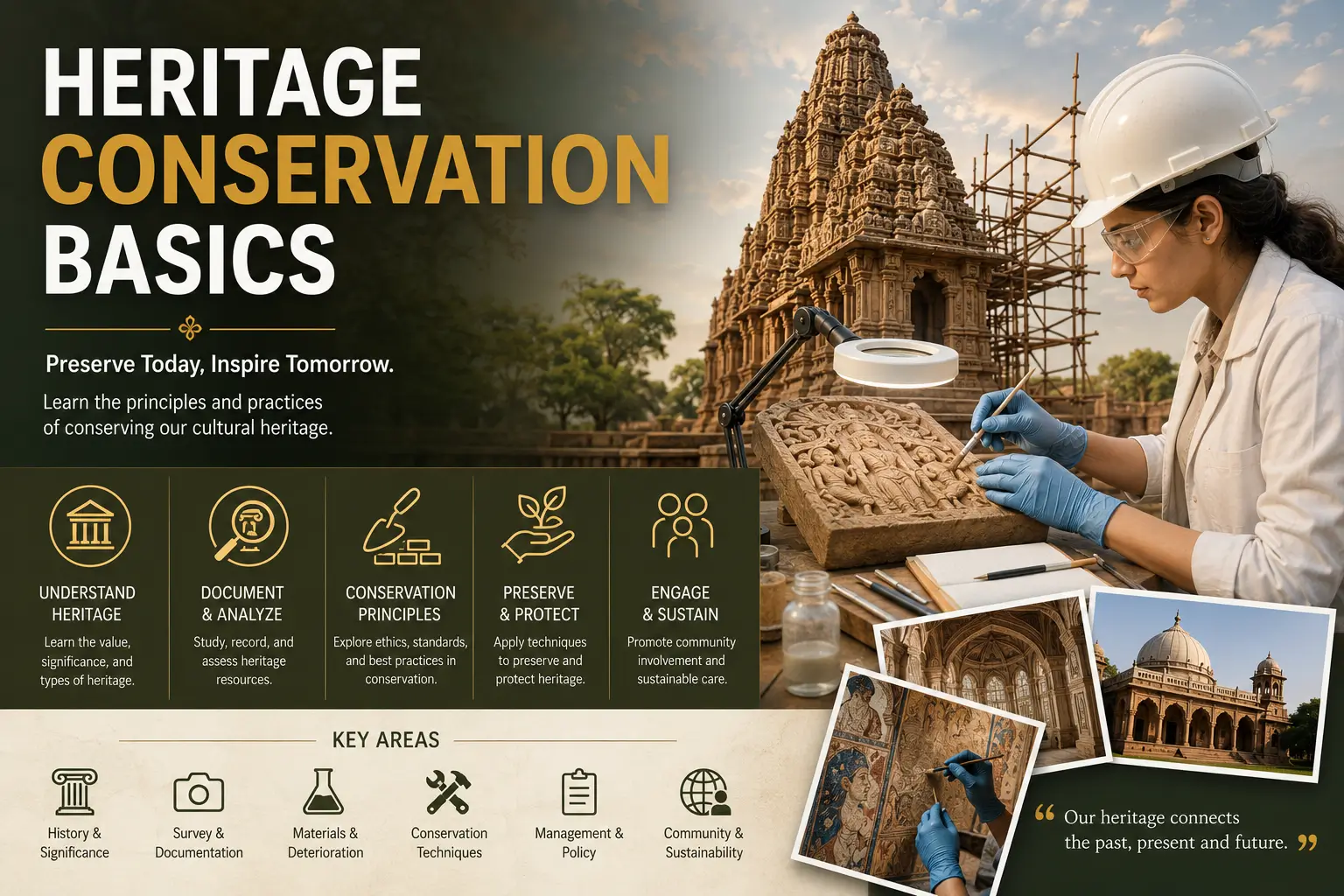
Heritage Conservation Basics Course
The Heritage Conservation Basics Course provides learners with a comprehensive introduction to the principles and practices of preserving cultural and historical heritage. Heritage conservation plays a vital role in protecting monuments, historic buildings, archaeological sites, traditional architecture, artifacts, and cultural landscapes for future generations.
This course introduces learners to cultural heritage management, conservation techniques, restoration principles, documentation methods, heritage laws, sustainable tourism, and community participation in heritage preservation. Whether you are a student, history enthusiast, museum professional, architect, tourism professional, researcher, or conservation volunteer, this course offers a solid foundation in heritage conservation.
Why Learn Heritage Conservation Basics?
Preserving cultural heritage helps protect historical identity, promotes education, supports tourism, and strengthens community pride. Heritage conservation professionals contribute to safeguarding valuable cultural resources while balancing preservation with modern development.
Understanding conservation principles opens career opportunities in museums, archaeology, tourism, architecture, heritage organizations, government agencies, and nonprofit institutions.
What You Will Learn
This course covers essential topics, including:
- Introduction to heritage conservation
- Types of cultural and natural heritage
- Heritage documentation methods
- Conservation and restoration principles
- Historic building preservation
- Archaeological site protection
- Heritage laws and policies
- Museum conservation basics
- Sustainable heritage tourism
- Community involvement in heritage conservation
Practical Learning Experience
Learners will study real-world examples of heritage conservation projects and examine successful preservation initiatives from around the world. Practical case studies help participants understand documentation techniques, restoration planning, risk management, and sustainable conservation practices.
The course also highlights ethical approaches to preserving cultural resources while respecting local traditions and historical significance.
Benefits of the Course
By completing this course, learners will:
- Understand heritage conservation principles
- Learn preservation and restoration techniques
- Improve heritage documentation skills
- Develop knowledge of conservation policies
- Understand sustainable tourism practices
- Build research and analytical skills
- Enhance career opportunities in heritage-related fields
- Gain practical conservation knowledge
- Earn a recognized certification
Who Should Enroll?
This course is ideal for:
- Students
- Historians
- Museum professionals
- Tourism professionals
- Architects
- Archaeology enthusiasts
- Heritage conservation volunteers
- Researchers
- Government employees
- Anyone interested in cultural heritage preservation
No previous experience is required. The course is suitable for beginners.
Career Opportunities
After completing the Heritage Conservation Basics Course, learners can pursue roles such as:
- Heritage Conservation Assistant
- Museum Assistant
- Heritage Project Coordinator
- Cultural Resource Officer
- Heritage Documentation Assistant
- Tourism Heritage Guide
- Conservation Project Assistant
- Archive and Collections Assistant
- Cultural Heritage Research Assistant
- Historic Site Coordinator
These opportunities are available in museums, heritage organizations, tourism departments, archaeological institutions, educational organizations, government agencies, NGOs, and cultural preservation projects.
Certification
Upon successful completion of the course, learners receive a certification demonstrating their understanding of heritage conservation, preservation techniques, restoration principles, and cultural heritage management.
Conclusion
The Heritage Conservation Basics Course equips learners with the practical knowledge and foundational skills needed to preserve and protect cultural heritage. Whether you aspire to work in museums, tourism, conservation, or heritage management, this course provides a valuable pathway toward a meaningful career in cultural preservation.
9. FAQ SECTION
Q1. What is the Heritage Conservation Basics Course?
It is a beginner-friendly course that teaches the fundamentals of heritage preservation, restoration, and cultural heritage management.
Q2. Who should enroll in this course?
Students, historians, museum professionals, tourism professionals, architects, researchers, and anyone interested in heritage conservation.
Q3. Do I need previous experience?
No. The course is designed for beginners.
Q4. What topics are covered?
Heritage conservation, restoration, documentation, cultural heritage management, museum conservation, heritage laws, and sustainable tourism.
Q5. Why is heritage conservation important?
It protects cultural identity, preserves historical sites, supports tourism, and ensures cultural resources are available for future generations.
Q6. Will I learn about restoration techniques?
Yes. The course introduces basic restoration principles and conservation methods.
Q7. Does the course include heritage management?
Yes. Learners will understand heritage documentation, management, and preservation planning.
Q8. Can this course help me work in museums or tourism?
Yes. It provides foundational knowledge for careers in museums, tourism, archaeology, and heritage organizations.
Q9. Will I receive a certificate?
Yes. A certificate is awarded after successful completion.
Q10. Is the course suitable for beginners?
Yes. No prior knowledge or experience is required.




Reviews
There are no reviews yet.