
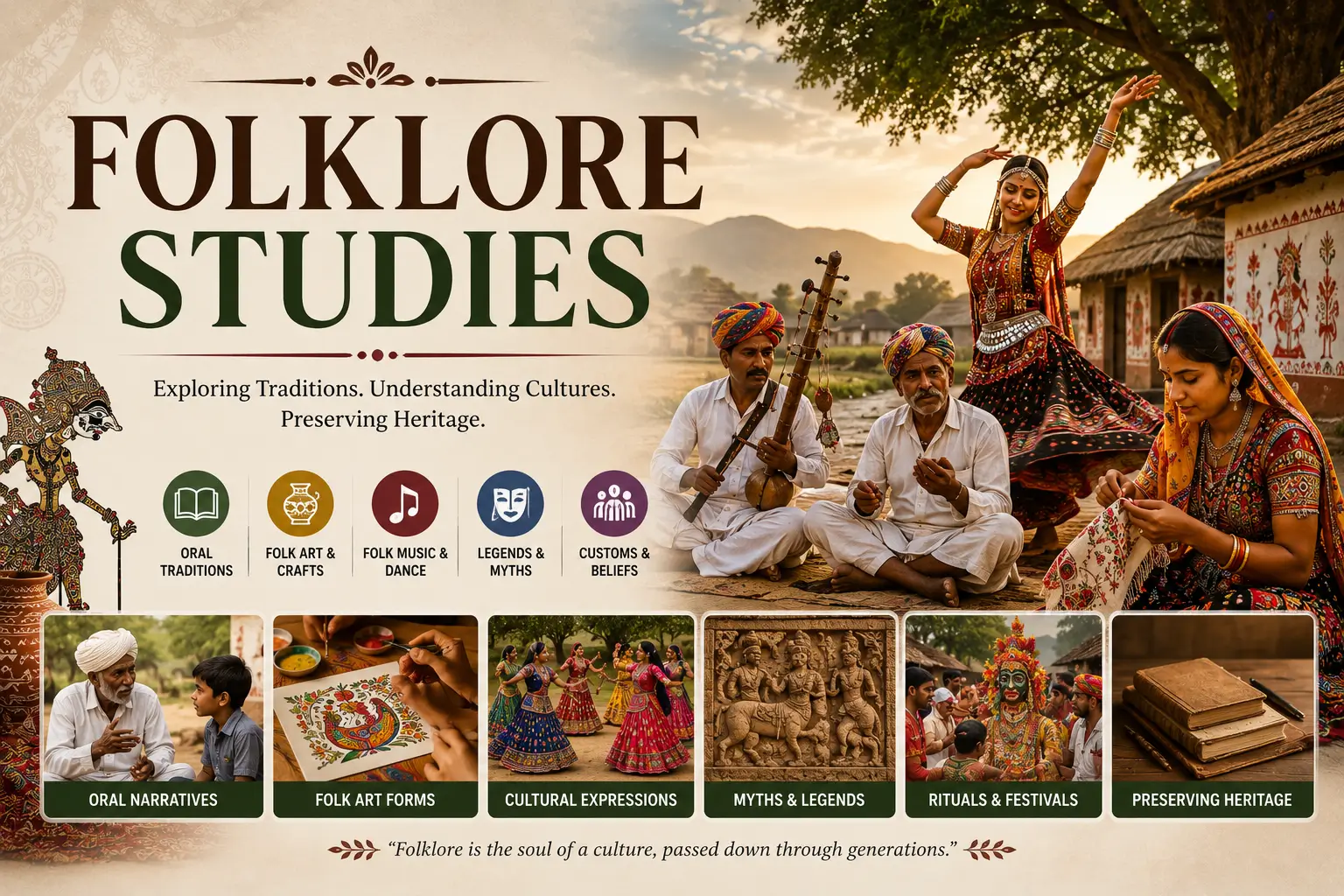
Folklore Studies Course
The Folklore Studies Course is designed to introduce learners to the rich world of traditional stories, customs, beliefs, music, art, festivals, and oral traditions that shape cultures across generations. Folklore reflects the history, values, and identity of communities and plays an important role in preserving cultural heritage.
This course explores the foundations of folklore studies, including folk literature, myths, legends, folktales, oral traditions, cultural practices, rituals, festivals, folk art, and heritage preservation. Whether you are a student, educator, researcher, cultural enthusiast, tourism professional, or lifelong learner, this course provides a comprehensive understanding of folklore and its significance in today’s world.
Why Learn Folklore Studies?
Folklore helps preserve the traditions and cultural identity of communities. Studying folklore provides insight into how societies pass knowledge, beliefs, and values from one generation to another. It also enhances appreciation for cultural diversity and heritage conservation.
The knowledge gained through this course is valuable for careers in education, museums, cultural organizations, tourism, publishing, research, and heritage management.
What You Will Learn
This course covers essential topics, including:
- Introduction to folklore studies
- Folk traditions and customs
- Oral traditions and storytelling
- Myths and legends
- Folk literature and folktales
- Folk music and performing arts
- Cultural heritage preservation
- Indigenous knowledge systems
- Festivals and rituals
- Modern relevance of folklore
Practical Learning Experience
Learners will examine examples of folk traditions from different cultures and analyze how folklore influences language, literature, art, and social practices. Through case studies and cultural examples, participants will understand methods of documenting, preserving, and interpreting folklore in modern society.
The course also encourages appreciation for cultural diversity and responsible heritage conservation.
Benefits of the Course
By completing this course, learners will:
- Understand the foundations of folklore studies
- Explore cultural traditions and heritage
- Improve cultural awareness
- Learn about myths, legends, and oral history
- Develop research and analytical skills
- Understand heritage preservation techniques
- Enhance communication and critical thinking
- Expand career opportunities in cultural fields
- Earn a recognized certification
Who Should Enroll?
This course is ideal for:
- Students
- Teachers
- Researchers
- Historians
- Writers
- Cultural enthusiasts
- Museum professionals
- Tourism professionals
- Heritage conservation workers
- Anyone interested in folklore and culture
No previous experience is required. The course is beginner-friendly.
Career Opportunities
After completing the Folklore Studies Course, learners can pursue roles such as:
- Cultural Research Assistant
- Heritage Project Coordinator
- Museum Assistant
- Cultural Program Coordinator
- Tourism Guide
- Heritage Documentation Assistant
- Education Program Coordinator
- Cultural Content Writer
- Archive Assistant
- Community Heritage Officer
These opportunities are available in museums, educational institutions, tourism organizations, cultural centers, archives, NGOs, publishing companies, and heritage conservation agencies.
Certification
Upon successful completion of the course, learners receive a certification demonstrating their knowledge of folklore, cultural heritage, oral traditions, and heritage preservation.
Conclusion
The Folklore Studies Course provides learners with a strong understanding of traditional cultures, oral history, and heritage conservation. Whether you are interested in cultural research, education, tourism, or heritage management, this course offers valuable knowledge and practical insights into the importance of preserving cultural traditions.
9. FAQ SECTION
Q1. What is the Folklore Studies Course?
It is a beginner-friendly course that explores folk traditions, myths, legends, oral history, and cultural heritage.
Q2. Who should enroll in this course?
Students, teachers, researchers, historians, tourism professionals, cultural enthusiasts, and anyone interested in folklore.
Q3. Do I need previous experience?
No. The course is suitable for beginners.
Q4. What topics are covered?
Folktales, myths, legends, oral traditions, folk literature, cultural heritage, festivals, and heritage preservation.
Q5. Why are folklore studies important?
They help preserve cultural heritage, promote diversity, and deepen understanding of traditional communities.
Q6. Will I learn about cultural heritage?
Yes. Heritage preservation and cultural traditions are key components of the course.
Q7. Does the course include folk literature?
Yes. Learners will explore folk literature, storytelling, myths, and legends.
Q8. Can this course help me work in museums or tourism?
Yes. It provides foundational knowledge for careers in museums, tourism, cultural organizations, and heritage projects.
Q9. Will I receive a certificate?
Yes. Participants receive a certificate after successful completion.
Q10. Is the course beginner-friendly?
Yes. No prior knowledge or experience is required.





Reviews
There are no reviews yet.