
Introduction to Animal Husbandry Basics
Animal husbandry is the branch of agriculture concerned with the care, breeding, feeding, and management of livestock. The Animal Husbandry Basics course provides learners with an introduction to the essential principles and practices involved in raising and caring for farm animals. These practices contribute significantly to agricultural production, food security, and rural livelihoods.
Livestock such as cattle, goats, sheep, poultry, and other farm animals play an important role in providing milk, meat, eggs, wool, and other products. Proper management of these animals is necessary to ensure their health, welfare, and productivity.
This course helps learners understand how livestock are managed in agricultural systems and introduces the responsibilities associated with caring for animals in a safe, ethical, and sustainable manner.
Importance of Animal Husbandry Basics
Livestock farming contributes significantly to agricultural development and rural economies. Effective animal management practices support healthy livestock, improved productivity, and sustainable farming systems.
Understanding animal husbandry helps learners:
- Improve livestock care awareness
- Support animal welfare practices
- Understand agricultural production systems
- Promote responsible livestock management
- Increase awareness of farm operations
- Support sustainable farming methods
- Improve understanding of animal nutrition
- Enhance agricultural knowledge
These concepts form the foundation of successful livestock management.
Understanding Livestock Management
Livestock management involves the planning and supervision of activities related to animal care and production.
Animal Care Practices
Learners understand the daily responsibilities involved in caring for livestock.
Housing Systems
The course explains the importance of providing safe, clean, and comfortable environments for animals.
Farm Operations Awareness
Participants explore routine farm activities that support livestock management.
Productivity and Welfare
Learners gain awareness of how proper care contributes to animal health and farm productivity.
Good livestock management supports both animal welfare and agricultural success.
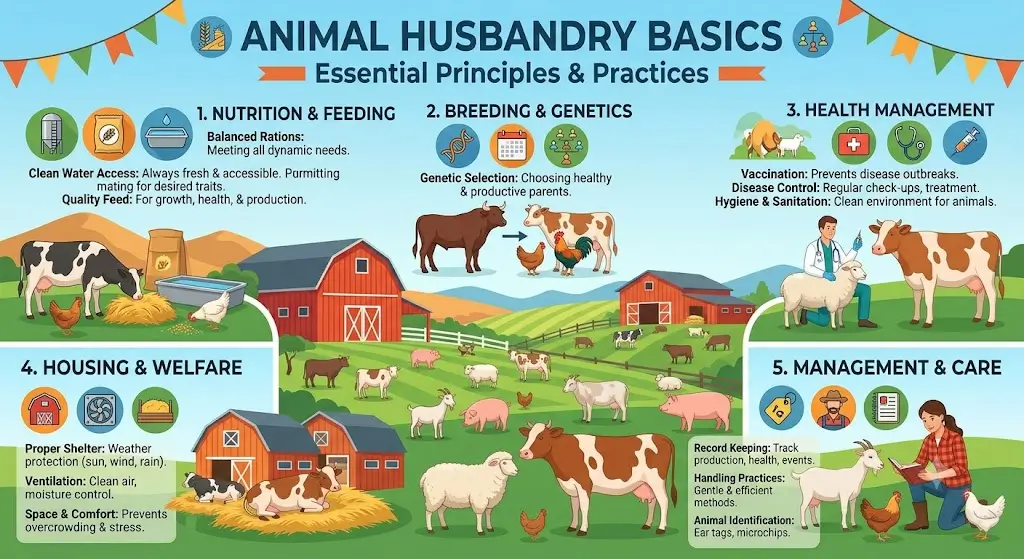
Animal Nutrition and Feeding Practices
Nutrition is a critical component of livestock management.
The course introduces:
Nutritional Requirements
Understanding the importance of balanced diets for different types of livestock.
Feeding Systems
Learning how feeding practices support growth, productivity, and health.
Water Management
Understanding the role of clean water in maintaining animal well-being.
Nutrition and Productivity
Exploring how proper nutrition contributes to healthy livestock and efficient farm operations.
Good feeding practices are essential for successful animal husbandry.
Animal Health and Preventive Care
Healthy animals are more productive and contribute to efficient farming operations.
Learners explore:
Health Monitoring Awareness
Recognizing signs that may indicate changes in animal condition.
Preventive Care Practices
Understanding management practices that support animal well-being.
Veterinary Care Awareness
Learning the role of veterinary services in livestock management.
Disease Prevention Concepts
Developing awareness of practices that help maintain healthy livestock populations.
Preventive care helps support animal welfare and farm productivity.
Breeding and Reproduction Awareness
Breeding management is an important aspect of livestock production.
The course explains:
Breeding Fundamentals
Understanding the purpose of breeding programs in livestock farming.
Reproductive Management Awareness
Learning basic concepts related to animal reproduction.
Livestock Improvement
Exploring how breeding practices contribute to productivity and sustainability.
Responsible Breeding Practices
Understanding ethical and practical considerations in breeding management.
These concepts provide foundational knowledge of livestock reproduction systems.
Animal Welfare and Ethical Practices
Animal welfare is an essential component of responsible livestock management.
Learners gain awareness of:
- Humane treatment practices
- Ethical livestock care
- Safe handling procedures
- Welfare-focused management methods
- Environmental considerations
- Responsible farming practices
Promoting welfare supports healthier animals and sustainable agricultural systems.
Sustainable Livestock Farming
Modern agriculture increasingly emphasizes sustainability and responsible resource management.
The course introduces:
Resource Utilization Awareness
Understanding how resources are managed within livestock operations.
Environmental Responsibility
Learning practices that support environmentally responsible farming.
Farm Sustainability Concepts
Exploring methods that contribute to long-term agricultural success.
Community and Rural Development
Understanding the role livestock farming plays in supporting rural communities.
These concepts help learners appreciate the broader impact of animal husbandry.
Skills You Will Gain
Upon completing this course, learners may develop:
- Livestock management awareness
- Animal care knowledge
- Nutrition understanding
- Farm operation awareness
- Animal welfare knowledge
- Health monitoring awareness
- Breeding fundamentals understanding
- Sustainable farming concepts
- Resource management awareness
- Agricultural development knowledge
These skills support both personal learning and agricultural career development.
Benefits of Studying Animal Husbandry Basics
This course offers several advantages:
- Improved understanding of livestock care
- Increased agricultural awareness
- Better knowledge of nutrition and welfare
- Understanding of farm management principles
- Awareness of sustainable livestock practices
- Support for responsible animal care
- Enhanced agricultural knowledge
- Preparation for livestock-related opportunities
The knowledge gained can support a variety of agricultural and livestock-related activities.
Who Should Join
This course is suitable for:
- Students
- Farmers
- Livestock owners
- Rural entrepreneurs
- Agricultural enthusiasts
- Veterinary support learners
- Animal welfare advocates
- Farm workers
- Beginners interested in agriculture
- Individuals seeking livestock management knowledge
No prior experience is required.
Career Opportunities
After completing this course, learners may explore opportunities such as:
- Livestock Farm Assistant
- Animal Care Worker
- Farm Operations Assistant
- Dairy Farm Assistant
- Poultry Farm Assistant
- Agricultural Support Worker
- Livestock Production Assistant
- Rural Development Support Staff
- Animal Welfare Assistant
- Farm Management Trainee
FAQ Section
1. What is Animal Husbandry Basics?
It is a beginner-friendly course that introduces livestock care and farm management concepts.
2. Who can join this course?
Students, farmers, livestock owners, and beginners can join.
3. Do I need prior experience?
No, prior experience is not required.
4. What will I learn?
You will learn livestock care, nutrition, welfare, breeding awareness, and farm management concepts.
5. Why is animal husbandry important?
It supports food production, agriculture, animal welfare, and rural development.
6. Does the course cover animal nutrition?
Yes, learners gain awareness of feeding practices and livestock nutrition.
7. What skills will I gain?
You will gain livestock management awareness, animal care knowledge, and agricultural understanding.
8. Is this course suitable for farmers?
Yes, it is useful for both new and experienced farmers.
9. Can this course support agricultural careers?
Yes, it provides foundational knowledge for livestock and agriculture-related opportunities.
10. Is Animal Husbandry Basics beginner friendly?
Yes, the course is specifically designed for beginners.




Reviews
There are no reviews yet.