
Introduction
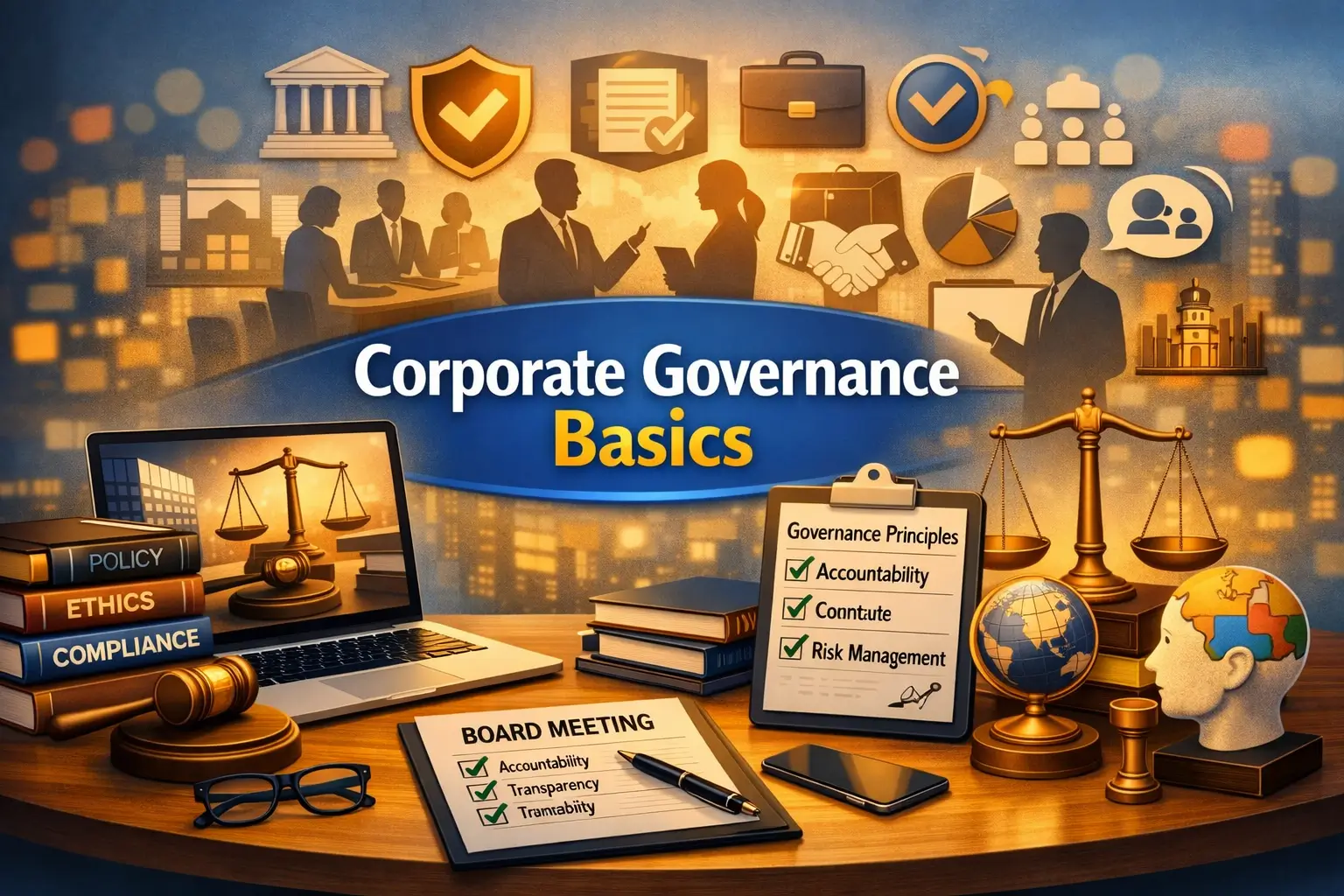
The Corporate Governance Basics Course is a comprehensive training program designed to equip learners with the knowledge and practical skills required to understand the principles of effective corporate governance. Corporate governance refers to the system of rules, policies, processes, and practices through which organizations are directed, managed, and controlled. Strong governance ensures that organizations operate ethically, comply with legal and regulatory requirements, manage risks responsibly, and create long-term value for shareholders and stakeholders.
In today’s business environment, organizations are expected to maintain transparency, accountability, and responsible decision-making. Effective corporate governance helps businesses strengthen investor confidence, improve organizational performance, reduce financial and operational risks, and support sustainable growth. It also encourages ethical leadership, effective oversight, and compliance with corporate policies and regulations.
Whether you are a student, manager, entrepreneur, corporate professional, compliance officer, company secretary, board member, or aspiring business leader, this course provides practical knowledge to build a strong understanding of corporate governance principles and best practices.
Why Corporate Governance is Important
Corporate governance establishes a framework for responsible business management and promotes trust among investors, employees, customers, regulators, and society.
Key benefits of corporate governance include:
- Promotes ethical business practices
- Improves transparency and accountability
- Strengthens organizational decision-making
- Enhances investor confidence
- Supports regulatory compliance
- Improves risk management and internal controls
- Protects shareholder and stakeholder interests
- Encourages sustainable business growth
- Strengthens corporate reputation
- Contributes to long-term organizational success
For example, organizations with effective governance frameworks are generally better equipped to manage risks, respond to regulatory changes, and maintain stakeholder trust.
Course Overview
This course provides a structured understanding of corporate governance principles and organizational accountability.
Learners will explore:
- Introduction to corporate governance
- Principles of good governance
- Corporate governance frameworks
- Roles and responsibilities of the board of directors
- Shareholder rights and responsibilities
- Stakeholder management
- Corporate ethics and integrity
- Corporate compliance fundamentals
- Risk management principles
- Internal control systems
- Transparency and corporate reporting
- Sustainability and Environmental, Social, and Governance (ESG) awareness
- Governance challenges in modern organizations
- Leadership and corporate responsibility
- Best practices in corporate governance
What You Will Learn
By the end of this course, learners will be able to:
- Understand corporate governance principles and frameworks
- Explain the responsibilities of boards, executives, and stakeholders
- Recognize the importance of business ethics and corporate responsibility
- Understand corporate compliance requirements
- Apply governance principles to organizational decision-making
- Identify governance-related risks and internal control measures
- Support transparency and accountability within organizations
- Promote ethical leadership and responsible business practices
- Understand sustainability and ESG considerations
- Contribute to long-term organizational success through good governance
Key Components of Corporate Governance
1. Governance Principles
Learn the core principles of accountability, transparency, fairness, responsibility, and ethical business conduct.
2. Board Governance
Understand the roles, responsibilities, decision-making processes, oversight functions, and leadership responsibilities of boards of directors.
3. Corporate Ethics and Compliance
Explore ethical decision-making, compliance frameworks, codes of conduct, regulatory requirements, and organizational integrity.
4. Risk Management and Internal Controls
Learn how organizations identify, assess, monitor, and manage strategic, operational, financial, and compliance risks.
5. Sustainability and Stakeholder Engagement
Understand how responsible governance supports environmental responsibility, social impact, stakeholder trust, and sustainable business growth.
Skills You Will Gain
After completing this course, learners will develop valuable professional skills, including:
- Corporate governance principles
- Ethical leadership
- Business ethics awareness
- Corporate compliance
- Governance framework understanding
- Risk management fundamentals
- Internal control awareness
- Board governance knowledge
- Stakeholder management
- Corporate accountability
- Decision-making
- Strategic thinking
- Business communication
- Regulatory awareness
- Organizational leadership
Benefits of This Course
Completing this course offers several professional advantages, including:
- Strong understanding of corporate governance principles
- Better career opportunities in business management and compliance
- Improved knowledge of ethical leadership and governance practices
- Practical understanding of corporate accountability and transparency
- Better awareness of regulatory compliance and risk management
- Enhanced organizational decision-making capabilities
- Increased employability across industries
- Competitive advantage in corporate leadership and governance careers
- Strong foundation for advanced governance, compliance, risk management, and business leadership certifications
Who Should Enroll?
This course is suitable for:
- Business students
- Corporate professionals
- Managers and team leaders
- Entrepreneurs and business owners
- Company secretaries
- Compliance officers
- Risk management professionals
- Human resource professionals
- Finance professionals
- Anyone interested in corporate governance and ethical business management
No previous governance experience is required, making this course suitable for beginners and experienced professionals alike.
Career Opportunities
After completing this course, learners may pursue roles such as:
- Corporate Governance Executive
- Compliance Officer
- Risk Management Associate
- Corporate Affairs Executive
- Business Operations Executive
- Governance Analyst
- Internal Control Executive
- Business Consultant
- Corporate Compliance Coordinator
- Management Professional
- Administrative Officer
Certification
Upon successful completion of the Corporate Governance Basics Course, learners receive a professional certificate recognizing their knowledge of corporate governance principles, board governance, corporate ethics, compliance, risk management, internal controls, stakeholder engagement, transparency, accountability, and responsible business practices. This certification enhances career opportunities across multinational corporations, financial institutions, consulting firms, government organizations, nonprofit organizations, regulatory bodies, public sector enterprises, and private businesses.
Conclusion
The Corporate Governance Basics Course provides learners with practical knowledge and professional skills to understand and implement responsible business governance practices. By mastering governance principles, corporate ethics, board responsibilities, compliance, risk management, transparency, stakeholder engagement, and sustainability concepts, learners will be well prepared for rewarding careers in corporate management, compliance, governance, and business leadership.
Whether your goal is to strengthen your business management knowledge, prepare for leadership responsibilities, improve organizational governance practices, or build a successful career in corporate governance and compliance, this course provides a strong foundation for long-term professional success.
FAQ
1. What is the Corporate Governance Basics Course?
It is a course that teaches the principles, frameworks, and best practices of corporate governance, including ethics, compliance, board responsibilities, risk management, and corporate accountability.
2. Who should enroll in this course?
Business students, managers, entrepreneurs, corporate professionals, compliance officers, company secretaries, finance professionals, HR professionals, and anyone interested in corporate governance.
3. Do I need prior business or governance experience?
No. The course is beginner-friendly and designed for learners with little or no prior knowledge of corporate governance.
4. What topics are covered in this course?
The course covers governance principles, board governance, shareholder rights, stakeholder management, business ethics, corporate compliance, risk management, internal controls, transparency, sustainability, and responsible leadership.
5. Will I learn about corporate ethics and compliance?
Yes. The course explains ethical decision-making, compliance frameworks, codes of conduct, corporate responsibility, and regulatory awareness.
6. Does this course include risk management concepts?
Yes. You will learn the fundamentals of identifying, assessing, managing, and monitoring organizational risks along with internal control practices.
7. Will I receive a certificate after completing the course?
Yes. A professional course completion certificate is awarded upon successful completion.
8. Is corporate governance an important business skill?
Yes. Corporate governance is essential for promoting transparency, accountability, ethical leadership, compliance, investor confidence, and sustainable business growth.
9. How does corporate governance benefit organizations?
It improves decision-making, reduces organizational risks, strengthens stakeholder trust, supports legal compliance, enhances corporate reputation, and contributes to long-term business success.
10. What career opportunities are available after this course?
You can pursue roles such as Corporate Governance Executive, Compliance Officer, Risk Management Associate, Corporate Affairs Executive, Governance Analyst, Internal Control Executive, Business Consultant, Corporate Compliance Coordinator, Management Professional, or Administrative Officer.




Reviews
There are no reviews yet.