
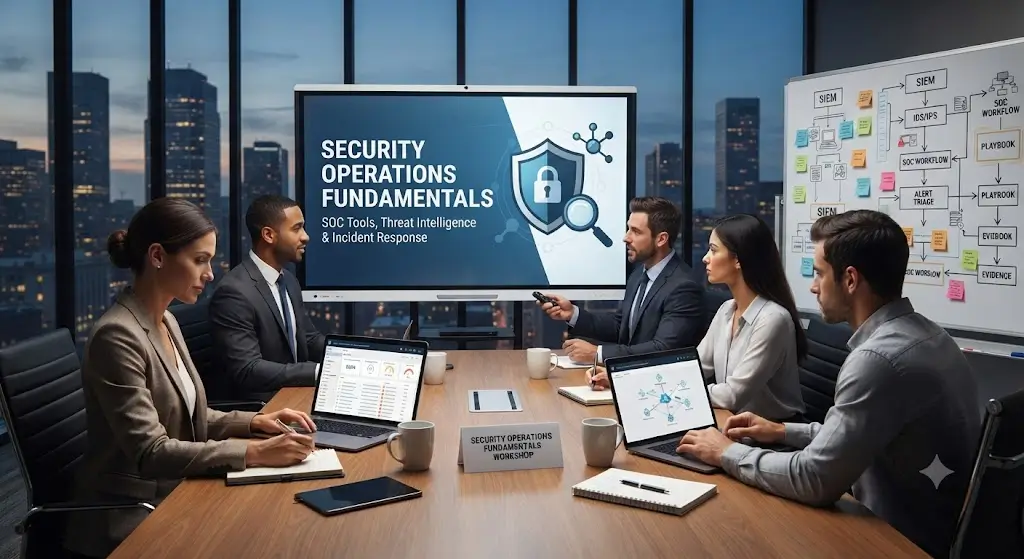
Introduction to Security Operations Fundamentals
Security Operations Fundamentals provides a practical introduction to the daily activities, processes, and technologies used to protect modern organizations from cybersecurity threats. Every organization requires effective security operations to monitor systems, detect suspicious activity, respond to incidents, and maintain business continuity.
This course explains the essential concepts of security operations and demonstrates how organizations build secure environments through continuous monitoring, threat management, and proactive security practices.
Understanding Security Operations
Security operations involve the continuous monitoring, protection, and management of an organization’s digital infrastructure. Security professionals work together to identify vulnerabilities, investigate alerts, respond to cyber incidents, and strengthen overall security posture.
Learners explore topics such as:
- Security monitoring
- Threat detection
- Security controls
- Incident response
- Vulnerability management
- Security governance
These concepts provide a strong foundation for understanding operational cybersecurity.
Threat Detection and Monitoring
Effective security operations rely on continuous monitoring to identify unusual activities before they become major security incidents. Organizations collect security information, analyze events, and investigate alerts to protect critical business systems.
The course explains how monitoring supports early threat detection, faster response times, and improved organizational resilience.
Incident Response and Recovery
Cyber incidents can disrupt business operations if they are not handled efficiently. Therefore, organizations establish incident response procedures to identify, contain, investigate, and recover from security events.
Learners understand the importance of:
- Incident identification
- Security investigations
- Containment strategies
- Recovery planning
- Lessons learned
- Continuous improvement
Security Operations Best Practices
Strong security operations depend on well-defined processes, trained personnel, effective communication, and continuous risk assessment.
Organizations improve their security capabilities by:
- Strengthening security awareness
- Applying security policies
- Managing vulnerabilities
- Monitoring critical systems
- Supporting regulatory compliance
- Improving operational resilience
Skills You Will Develop
After completing this course, learners will understand:
- Security operations principles
- Security monitoring
- Threat detection
- Incident response
- Vulnerability management
- Security controls
- Risk assessment
- Security governance
- Operational cybersecurity
- Business continuity fundamentals
Who Should Enroll?
This course is suitable for:
- Students
- IT professionals
- Cybersecurity beginners
- Security analysts
- Network administrators
- System administrators
- Business professionals interested in cybersecurity
No previous cybersecurity experience is required.
Career Opportunities
This course supports careers such as:
- Security Operations Center (SOC) Analyst
- Cybersecurity Analyst
- Information Security Analyst
- Security Operations Associate
- IT Security Support Specialist
- Incident Response Analyst
- Security Monitoring Analyst
- Cybersecurity Technician
FAQ Section (Frequently Asked Questions)
Who should enroll in the Security Operations Fundamentals course?
This course is suitable for students, IT professionals, cybersecurity beginners, system administrators, network administrators, and anyone interested in learning operational cybersecurity.
What will I learn in this course?
You will learn security monitoring, threat detection, incident response, vulnerability management, security controls, risk assessment, and cybersecurity operations.
Is this course beginner-friendly?
Yes. The course starts with fundamental concepts and gradually introduces practical security operations used in modern organizations.
Do I need programming or hacking experience?
No. This course focuses on security operations concepts and does not require prior programming or ethical hacking knowledge.
Why are security operations important?
Security operations help organizations monitor systems, detect threats, respond to incidents, reduce risks, and maintain secure business operations.
Which topics are covered in this training?
The course covers security monitoring, cyber threats, incident handling, vulnerability management, security governance, operational security, and business continuity.
What practical skills will I gain?
You will develop skills in monitoring security events, understanding incident response processes, analyzing risks, supporting security operations, and improving cybersecurity awareness.
Which industries require security operations professionals?
Security operations professionals are needed in banking, healthcare, government, education, retail, manufacturing, telecommunications, cloud services, and technology organizations.
Can this course help me start a cybersecurity career?
Yes. It provides foundational knowledge that supports entry-level cybersecurity and security operations roles while preparing learners for advanced security studies.
What career opportunities are available after completing this course?
You can pursue roles such as SOC Analyst, Security Operations Associate, Cybersecurity Analyst, Information Security Analyst, Incident Response Analyst, IT Security Specialist, or Security Monitoring Analyst.




Reviews
There are no reviews yet.