
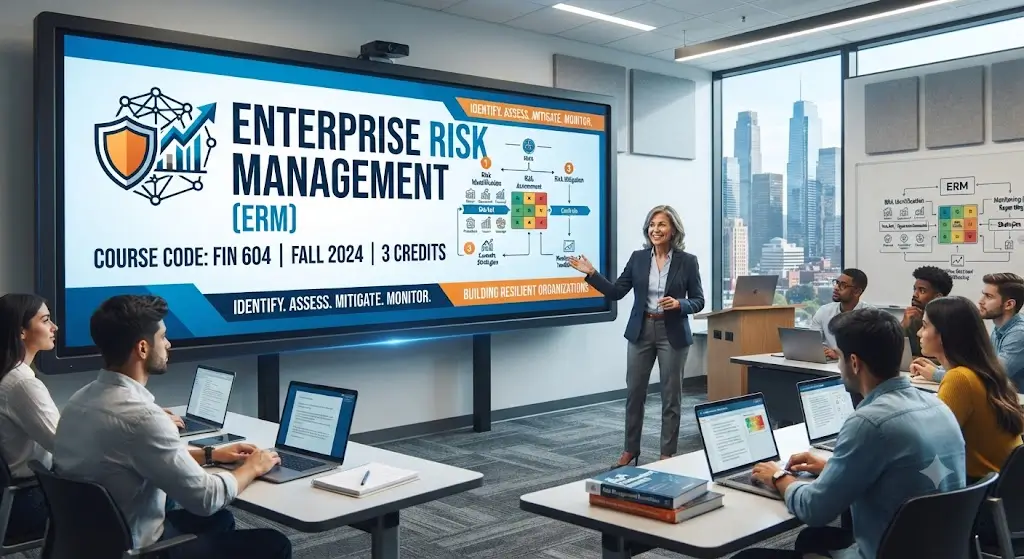
Introduction to Enterprise Risk Management
Enterprise Risk Management is a structured approach that helps organizations identify, assess, manage, and monitor risks that may affect business objectives. Every organization faces financial, operational, strategic, legal, and technological risks. Therefore, businesses need effective risk management practices to reduce uncertainty and improve long-term performance.
This course provides a practical understanding of enterprise-wide risk management and explains how organizations create resilient systems that support sustainable growth.
Understanding Business Risks
Organizations encounter different types of risks during daily operations. Identifying these risks early helps leaders make informed decisions and reduce potential losses.
The course introduces important risk categories, including:
- Strategic risks
- Operational risks
- Financial risks
- Compliance risks
- Technology risks
- Reputational risks
Learners understand how each category influences business performance and organizational stability.
Risk Assessment and Analysis
Risk assessment helps organizations evaluate the likelihood and impact of potential events. Managers analyze available information, prioritize risks, and develop suitable response strategies.
Topics covered include:
- Risk identification
- Risk analysis
- Risk evaluation
- Risk prioritization
- Risk reporting
- Decision support
These activities improve organizational preparedness and support effective business planning.
Risk Response and Control
Organizations reduce risk by implementing appropriate controls, policies, and monitoring systems. Effective risk responses help businesses protect assets, improve compliance, and strengthen operational resilience.
Learners also explore:
- Internal controls
- Risk mitigation strategies
- Business continuity planning
- Incident response
- Governance practices
- Performance monitoring
Enterprise Risk Management and Business Strategy
Risk management supports better strategic planning by helping leaders evaluate opportunities and potential challenges before making important decisions.
Organizations that integrate risk management into business strategy can improve resilience, enhance decision-making, and achieve sustainable growth.
Benefits of Enterprise Risk Management
Organizations that implement effective risk management practices can:
- Improve decision-making
- Reduce operational disruptions
- Strengthen regulatory compliance
- Protect organizational assets
- Increase business resilience
- Support strategic growth
- Improve stakeholder confidence
- Enhance operational efficiency
Skills You Will Develop
After completing this course, learners will understand:
- Enterprise Risk Management principles
- Risk identification methods
- Risk assessment techniques
- Risk mitigation strategies
- Internal controls
- Business continuity planning
- Governance fundamentals
- Compliance management
- Risk reporting
- Strategic decision-making
Who Should Enroll?
This course is suitable for:
- Students
- Business professionals
- Managers
- Entrepreneurs
- Risk analysts
- Compliance professionals
- Operations executives
- Anyone interested in corporate governance and organizational resilience
Frequently Asked Questions
Who is this course designed for?
This course is designed for students, business professionals, managers, entrepreneurs, auditors, compliance teams, and anyone who wants to understand business risk and governance.
What will I learn during this program?
You will learn how to identify business risks, evaluate their impact, apply control measures, support compliance, and improve organizational decision-making.
Do I need previous experience before enrolling?
No. The lessons begin with the fundamentals and gradually introduce more practical concepts using real business scenarios.
How can these skills be applied in the workplace?
Organizations use these practices to improve planning, strengthen internal controls, reduce uncertainty, and support business continuity across different departments.
Which industries benefit from these concepts?
Banking, healthcare, manufacturing, retail, logistics, technology, education, insurance, and government organizations regularly apply these principles.
What professional skills will I develop?
You will strengthen analytical thinking, problem-solving, strategic planning, business analysis, compliance awareness, and decision-making skills.
Can this course support career development?
Yes. The knowledge gained can help prepare you for roles in governance, compliance, operations, auditing, consulting, business analysis, and corporate management.
Will practical examples be included?
Yes. The course explains important concepts through practical business situations so learners can understand how they apply in real organizations.
How does this course improve business decision-making?
It teaches a structured approach for evaluating uncertainty, selecting appropriate responses, and making informed decisions that support business objectives.
What will I achieve after completing the course?
After completing the course, you will understand modern risk management practices and know how organizations build resilience while supporting sustainable business growth.




Reviews
There are no reviews yet.