
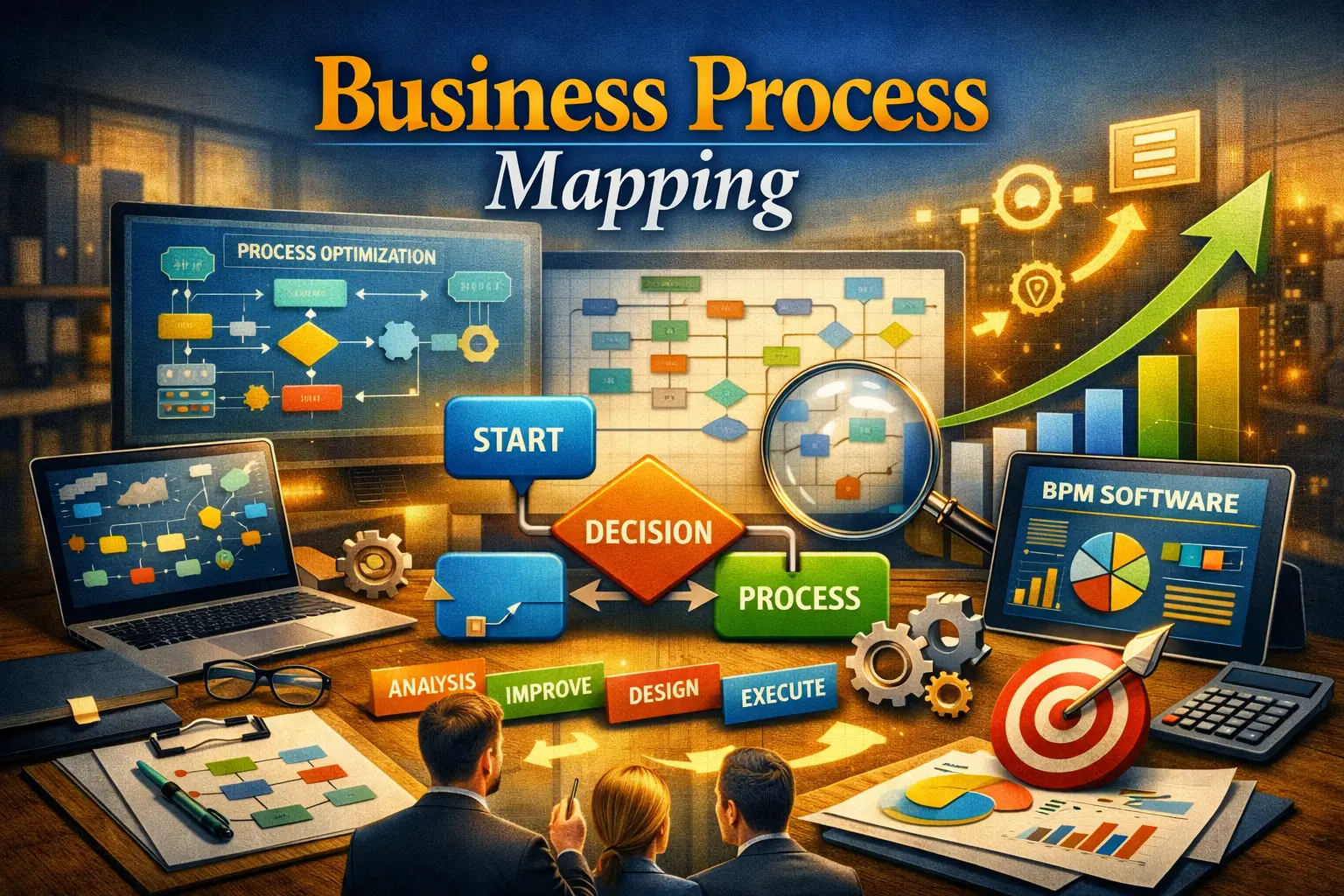
Introduction to Business Process Mapping
Business Process Mapping is a structured method for documenting, analyzing, and improving business workflows. Organizations use process maps to understand how work moves across departments, identify bottlenecks, reduce inefficiencies, and improve operational performance.
This course provides practical knowledge of workflow visualization, process documentation, operational analysis, and continuous improvement. Learners gain the skills needed to create clear process maps that support better communication and informed business decisions.
Understanding Business Processes
Every organization relies on well-defined processes to deliver products and services efficiently. When these processes are clearly documented, teams can understand responsibilities, improve coordination, and identify opportunities for improvement.
Key concepts covered include:
- Process mapping
- Workflow documentation
- Business process analysis
- Activity sequencing
- Process standardization
- Operational improvement
These concepts help organizations improve consistency while reducing unnecessary complexity.
Creating Effective Process Maps
Process maps provide a visual representation of business activities from beginning to end. This course explains how different mapping techniques help organizations simplify workflows and improve collaboration.
Learners explore methods for:
- Identifying process steps
- Mapping workflows
- Recognizing bottlenecks
- Improving process efficiency
- Supporting quality management
- Standardizing operations
Process Analysis and Continuous Improvement
Business process maps are valuable tools for analyzing operational performance. Organizations evaluate existing workflows, compare outcomes, and introduce improvements that increase productivity and service quality.
Continuous improvement encourages organizations to review processes regularly and adapt to changing business requirements.
Business Process Mapping in Modern Organizations
Organizations across manufacturing, healthcare, finance, logistics, retail, education, government, and technology sectors use process mapping to improve efficiency, strengthen compliance, and support digital transformation initiatives.
The course also demonstrates how process mapping contributes to better communication, improved decision-making, and stronger organizational performance.
Skills You Will Develop
After completing this course, learners will understand:
- Business process mapping
- Workflow analysis
- Process documentation
- Process improvement
- Operational analysis
- Workflow optimization
- Quality management
- Business communication
- Continuous improvement
- Problem-solving
Who Should Enroll?
This course is suitable for:
- Students
- Business professionals
- Process analysts
- Operations executives
- Quality professionals
- Team leaders
- Project coordinators
- Entrepreneurs
No previous experience is required.
Career Opportunities
This course supports careers such as:
- Business Process Analyst
- Process Improvement Specialist
- Operations Executive
- Business Analyst
- Quality Management Associate
- Project Coordinator
- Operations Manager
- Continuous Improvement Executive
FAQ Section (Frequently Asked Questions)
Who should enroll in this course?
This course is ideal for students, business professionals, process analysts, operations teams, project coordinators, entrepreneurs, and anyone interested in improving business workflows.
What will I learn during the program?
You will learn workflow documentation, process visualization, operational analysis, workflow improvement, process standardization, and techniques for improving organizational efficiency.
Is this course suitable for beginners?
Yes. The course begins with the fundamentals and gradually introduces practical methods used to document and improve business workflows.
Why is process mapping important in organizations?
It helps organizations understand existing workflows, identify bottlenecks, improve communication, reduce inefficiencies, and support continuous business improvement.
Will practical examples be included?
Yes. The course includes practical business scenarios that demonstrate how workflow diagrams and process documentation are applied in real organizations.
Which industries use these techniques?
Manufacturing, healthcare, finance, retail, logistics, technology, education, consulting, and government organizations regularly use process mapping practices.
What professional skills will I develop?
You will strengthen analytical thinking, workflow analysis, documentation, communication, process improvement, problem-solving, collaboration, and operational planning skills.
Can this course support career growth?
Yes. The knowledge gained can help prepare you for opportunities in business analysis, operations management, quality management, process improvement, and project coordination.
Do I need previous business experience?
No. The course is designed for beginners and explains every concept using practical examples and easy-to-understand language.
What can I achieve after completing this course?
After completing the program, you will be able to document workflows, analyze business processes, recommend improvements, and contribute to better operational performance and organizational efficiency.


Reviews
There are no reviews yet.