
Introduction
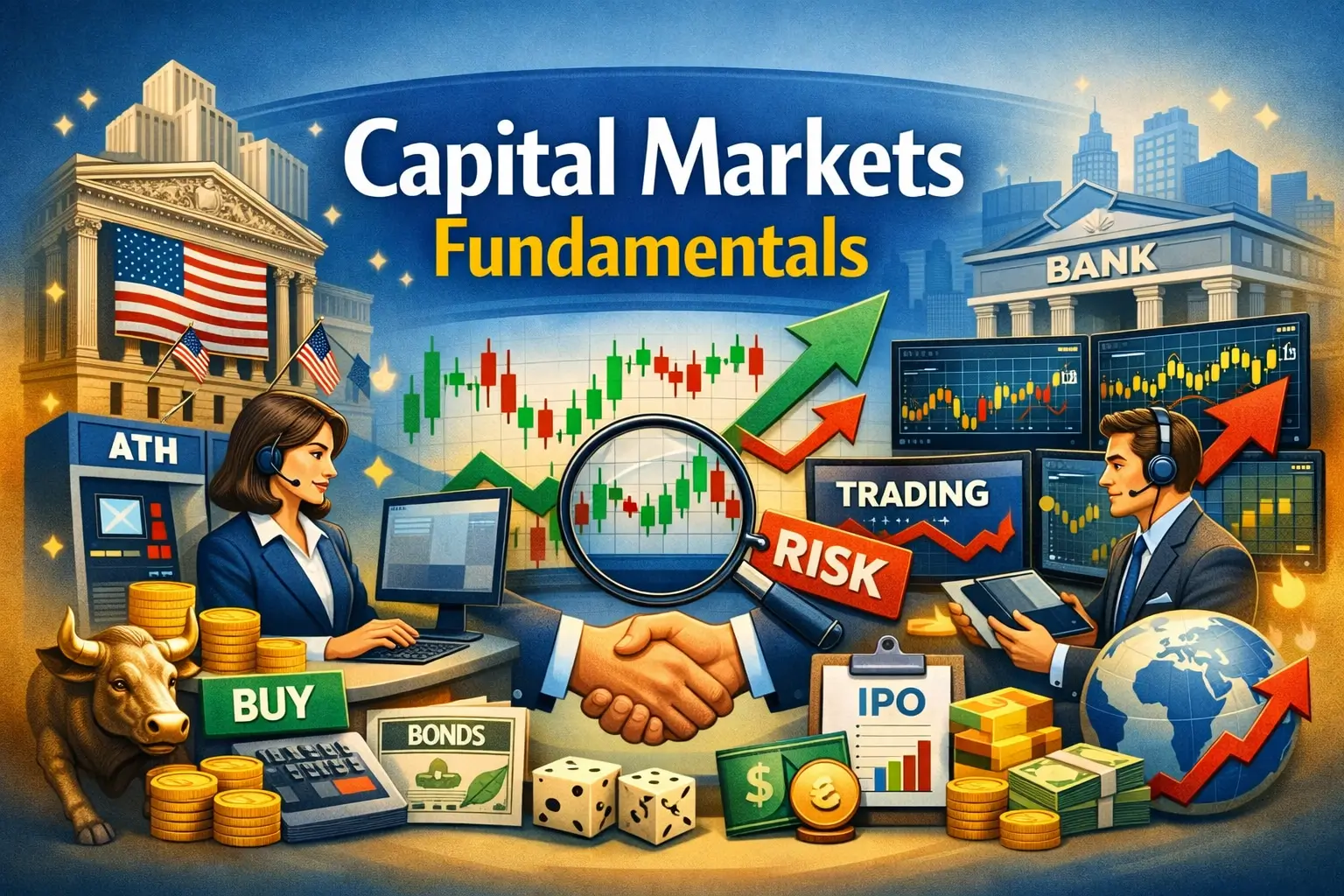
The Capital Markets Fundamentals Course is a comprehensive training program designed to equip learners with the knowledge and practical understanding of how capital markets operate and contribute to economic development. Capital markets are essential components of the global financial system because they enable governments, corporations, and other organizations to raise long-term funds while providing investors with opportunities to grow their wealth. Therefore, understanding the principles of capital markets is valuable for anyone pursuing a career in finance, banking, investment, or corporate management.
Capital markets include various financial instruments such as equities, bonds, mutual funds, exchange-traded products, and other investment securities. These markets facilitate the efficient allocation of capital between investors and organizations while supporting business expansion, infrastructure development, and economic growth.
Whether you are a student, finance professional, entrepreneur, aspiring investor, banker, or business executive, this course provides a strong foundation in capital market concepts and investment principles.
Why Capital Markets are Important
Capital markets play a significant role in supporting businesses, investors, and national economies by improving access to long-term funding and investment opportunities.
Key benefits of capital markets include:
- Supports business expansion through capital raising
- Provides investment opportunities for individuals and institutions
- Promotes economic growth and development
- Improves capital allocation efficiency
- Enhances financial market liquidity
- Encourages savings and long-term investments
- Supports infrastructure and industrial development
- Facilitates price discovery through market mechanisms
- Strengthens financial system stability
- Creates employment and investment opportunities
For example, a company issuing shares through the stock market can raise funds to expand operations, while investors gain an opportunity to participate in the company’s future growth.
Course Overview
This course provides a structured understanding of capital markets, financial instruments, and investment fundamentals.
Learners will explore:
- Fundamentals of capital markets
- Primary and secondary markets
- Equity markets and stock exchanges
- Bond markets and debt securities
- Financial instruments and investment products
- Market participants and intermediaries
- Securities trading basics
- Investment risk and return concepts
- Market indices and benchmarks
- Capital market regulations and compliance
- Corporate fundraising through capital markets
- Investor protection principles
- Portfolio diversification fundamentals
- Capital market trends and developments
- Ethical practices in financial markets
What You Will Learn
By the end of this course, learners will be able to:
- Understand the structure and functions of capital markets
- Differentiate between equity and debt markets
- Identify major financial instruments used in capital markets
- Understand the role of investors, brokers, exchanges, and regulators
- Explain the process of raising capital through financial markets
- Evaluate basic investment risks and returns
- Interpret market indices and financial market information
- Apply investment fundamentals to financial decision-making
- Understand regulatory and ethical principles governing capital markets
- Build a strong foundation for advanced studies in finance and investment
Key Components of Capital Markets
1. Equity Markets
Learn how companies issue shares to raise capital and how investors participate in ownership through stock market investments.
2. Bond Markets
Understand how governments and corporations raise funds through debt securities and how bond investments generate returns.
3. Financial Instruments
Explore different investment products, including equities, bonds, mutual funds, and other marketable securities.
4. Market Participants
Learn about the roles of investors, brokers, investment banks, stock exchanges, regulators, and financial institutions in capital market operations.
5. Investment Principles
Develop an understanding of investment objectives, diversification, risk management, market performance, and long-term wealth creation.
Skills You Will Gain
After completing this course, learners will develop valuable professional skills, including:
- Capital market fundamentals
- Financial market analysis
- Investment principles
- Equity market understanding
- Bond market knowledge
- Financial instrument evaluation
- Risk and return assessment
- Business communication
- Analytical thinking
- Financial decision-making
- Market research fundamentals
- Regulatory awareness
- Portfolio diversification concepts
- Strategic thinking
- Professional ethics in finance
Benefits of This Course
Completing this course offers several professional advantages, including:
- Strong understanding of capital market operations
- Better career opportunities in finance and banking
- Improved investment knowledge and financial awareness
- Practical understanding of financial instruments and securities
- Better analytical and financial decision-making skills
- Enhanced understanding of investment risks and opportunities
- Increased employability in financial services and investment firms
- Competitive advantage in finance-related careers
- Strong foundation for advanced finance and investment certifications
Who Should Enroll?
This course is suitable for:
- Students interested in finance and investment careers
- Banking professionals
- Finance executives
- Investment professionals
- Financial advisors
- Stock market beginners
- Entrepreneurs and business owners
- Corporate finance professionals
- Accounting professionals
- Anyone interested in financial markets and investment fundamentals
No previous experience is required, making this course suitable for beginners and professionals alike.
Career Opportunities
After completing this course, learners may pursue roles such as:
- Capital Markets Executive
- Investment Analyst
- Financial Analyst
- Banking Executive
- Securities Operations Associate
- Wealth Management Associate
- Investment Operations Executive
- Financial Services Executive
- Equity Research Associate
- Corporate Finance Executive
- Client Relationship Executive (Financial Services)
Certification
Upon successful completion of the Capital Markets Fundamentals Course, learners receive a professional certificate recognizing their knowledge of capital markets, financial instruments, investment principles, securities, market operations, and financial regulations. This certification enhances career opportunities across banking, investment firms, brokerage companies, financial institutions, wealth management firms, corporate finance departments, and financial consulting organizations.
Conclusion
The Capital Markets Fundamentals Course provides learners with practical knowledge and essential financial skills to understand how capital markets function, how investments are made, and how businesses raise funds through financial markets. By mastering equity markets, bond markets, investment principles, financial instruments, market participants, and regulatory concepts, learners will be well prepared for careers in finance, banking, investment management, and corporate finance.
Whether your goal is to build a career in financial services, understand investment markets, strengthen your financial knowledge, or prepare for advanced finance studies, this course provides a strong foundation for long-term professional success.
FAQ
1. What is the Capital Markets Fundamentals Course?
It is a course that teaches the basics of capital markets, financial instruments, investment principles, securities, and how financial markets operate.
2. Who should enroll in this course?
Students, finance professionals, banking professionals, aspiring investors, entrepreneurs, financial advisors, and anyone interested in capital markets and investment.
3. Do I need prior finance experience?
No. The course is beginner-friendly and suitable for both new learners and experienced professionals.
4. What topics are covered in this course?
The course covers capital markets, equity markets, bond markets, financial instruments, investment principles, securities trading, market participants, risk and return, regulations, and portfolio diversification.
5. Will I learn about stock and bond markets?
Yes. The course explains the fundamentals of equity markets, bond markets, and how these markets support investment and capital raising.
6. Does this course include investment fundamentals?
Yes. You will learn the basics of investing, financial instruments, risk assessment, diversification, and long-term investment principles.
7. Will I receive a certificate after completing the course?
Yes. A professional course completion certificate is awarded upon successful completion.
8. Is knowledge of capital markets an in-demand skill?
Yes. Capital market knowledge is valuable across banking, investment management, brokerage firms, financial services, corporate finance, consulting, and wealth management industries.
9. How do capital markets benefit businesses and investors?
Capital markets help businesses raise long-term funds for growth while providing investors with opportunities to invest, diversify portfolios, and build wealth over time.
10. What career opportunities are available after this course?
You can pursue roles such as Capital Markets Executive, Investment Analyst, Financial Analyst, Banking Executive, Securities Operations Associate, Wealth Management Associate, Investment Operations Executive, Equity Research Associate, Corporate Finance Executive, or Financial Services Executive.



Reviews
There are no reviews yet.