
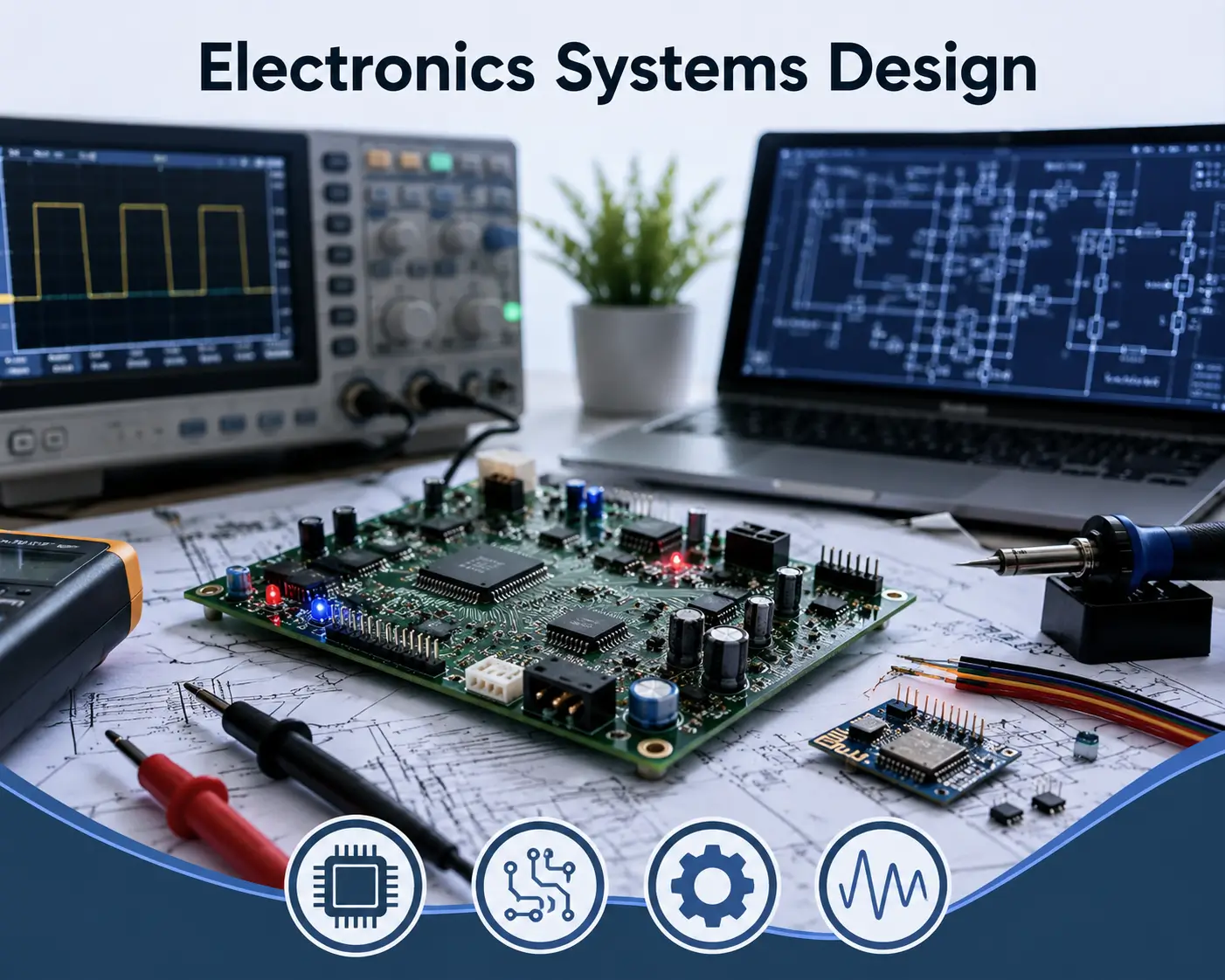
Introduction
The Electronics Systems Design Course is a comprehensive training program designed to help learners develop a strong understanding of how electronic systems are designed, analyzed, integrated, and optimized for real-world applications. In today’s digital and automated world, electronic systems are essential components of almost every modern technology, including smartphones, medical devices, automobiles, industrial machines, communication networks, and smart devices. Therefore, electronics systems design has become a critical discipline in engineering and technology industries.
Electronics systems design involves combining hardware components, circuit design principles, embedded systems, and software logic to create functional, reliable, and efficient electronic systems. It requires knowledge of both analog and digital electronics, system architecture, power management, and integration techniques.
This course provides learners with practical knowledge of electronics systems design by combining circuit theory, system design principles, embedded systems fundamentals, PCB design concepts, signal processing basics, component selection, testing methods, and troubleshooting techniques. Whether you are an electronics engineer, student, technician, embedded systems developer, or aspiring designer, this course provides valuable knowledge that supports technical growth and innovation.
Course Overview
Electronics systems design focuses on creating functional electronic solutions that meet performance, reliability, and efficiency requirements. It involves understanding how individual electronic components work together to form complete systems.
First, learners explore the importance of electronics systems design in modern industries such as automotive, healthcare, telecommunications, aerospace, industrial automation, and consumer electronics. Next, they understand how electronic systems power innovation and digital transformation.
Additionally, the course explains analog and digital electronics, circuit design fundamentals, system architecture, microcontrollers, sensors, actuators, embedded systems, PCB design basics, and signal processing concepts. Learners also gain practical knowledge of system integration, testing, troubleshooting, and performance optimization.
Furthermore, the curriculum combines theoretical electronics concepts with practical engineering applications, helping learners confidently design and analyze electronic systems used in real-world environments.
What You Will Learn
The Electronics Systems Design Course covers a wide range of topics related to designing and developing electronic systems.
First, learners study the fundamentals of electronics systems design and understand how electronic systems are structured, developed, and optimized. They also explore the role of electronics systems in modern engineering applications.
Next, participants learn about circuit design principles. They understand how analog and digital circuits are designed, analyzed, and implemented using electronic components such as resistors, capacitors, diodes, transistors, and integrated circuits.
Additionally, the course introduces system architecture design. Learners discover how electronic systems are structured at a high level, including input, processing, output, and control systems.
Furthermore, participants study embedded systems fundamentals. They learn how microcontrollers and microprocessors are used to control electronic systems and interact with sensors and actuators.
The course also explains PCB (Printed Circuit Board) design basics. Learners explore layout principles, routing techniques, component placement, grounding, and signal integrity considerations.
Moreover, learners gain knowledge of sensors and actuators used in electronics systems, including temperature sensors, motion sensors, pressure sensors, motors, and control mechanisms.
In addition, the curriculum covers signal processing fundamentals, including analog signals, digital signals, filtering, modulation, and data conversion techniques.
Participants also study power management systems, energy efficiency, voltage regulation, and power distribution in electronic systems.
Additionally, the course explains system integration techniques, hardware-software interaction, and interoperability of electronic components.
Furthermore, learners explore testing and troubleshooting methods, including debugging circuits, identifying faults, measuring signals, and validating system performance.
Finally, participants study reliability engineering, design standards, safety considerations, and modern electronics development practices used in industry.
Skills You Will Gain
Upon successful completion of the course, learners will develop valuable professional skills, including:
- Electronics systems design
- Circuit design fundamentals
- Analog and digital electronics
- Embedded systems basics
- PCB design understanding
- Microcontroller applications
- Signal processing basics
- System integration
- Troubleshooting techniques
- Sensor and actuator design
- Power management basics
- Hardware design analysis
- Testing and validation
- Technical problem-solving
- Electronics system optimization
These skills are highly valued across electronics manufacturing companies, automotive industries, aerospace organizations, telecommunications firms, embedded systems companies, IoT startups, medical device manufacturers, and industrial automation companies.
Benefits of the Course
The Electronics Systems Design Course provides learners with practical electronics engineering knowledge that supports modern system development.
First, the course helps learners understand how electronic systems are designed, integrated, and optimized for performance and reliability.
Additionally, participants strengthen their ability to analyze circuits, design electronic systems, and understand embedded system interactions.
Furthermore, learners develop practical skills in PCB basics, signal processing, system integration, testing, and troubleshooting.
The course also enhances analytical thinking, problem-solving, technical reasoning, and engineering design skills that support electronics careers.
As industries continue advancing in automation, IoT, robotics, and smart technologies, professionals with electronics systems design expertise remain in high demand.
Finally, learners gain the confidence to contribute to electronic product development and system engineering projects.
Who Should Enroll?
This course is ideal for:
- Electronics engineers
- Electrical engineers
- Embedded systems engineers
- Engineering students
- Technicians
- IoT developers
- PCB designers (beginners)
- Robotics enthusiasts
- Automation engineers
- Hardware developers
- R&D professionals
- Technical consultants
- Anyone interested in electronics systems
No prior advanced electronics experience is required. Therefore, beginners and intermediate learners can both benefit from this course.
Career Opportunities
After completing the course, learners may pursue opportunities such as:
- Electronics Design Engineer
- Embedded Systems Engineer
- PCB Design Engineer
- Hardware Engineer
- Electronics Technician
- System Design Engineer
- IoT Developer
- Automation Engineer
- Electrical Design Engineer
- R&D Engineer
- Test Engineer
- Product Development Engineer
- Control Systems Engineer
- Technical Support Engineer
- Electronics Systems Analyst
Additionally, learners can apply these skills across electronics manufacturing, automotive, aerospace, telecommunications, IoT companies, medical device firms, robotics companies, and industrial automation sectors.
Certification
Upon successful completion of the Electronics Systems Design Course, participants receive a certification recognizing their understanding of circuit design, embedded systems, PCB basics, signal processing, system integration, testing methods, and electronics engineering principles. This certification strengthens professional credibility and supports career advancement in electronics, embedded systems, and hardware engineering fields.
Why Choose This Course?
The Electronics Systems Design Course combines electronics theory with practical system design applications to provide a comprehensive learning experience.
First, learners develop a strong understanding of circuit design, embedded systems, signal processing, and system architecture.
Additionally, the curriculum focuses on PCB basics, sensors, actuators, testing, troubleshooting, and power management.
Furthermore, participants gain industry-relevant knowledge that supports career development in electronics, embedded systems, IoT, automotive, aerospace, and industrial automation.
Whether your goal is to become an electronics engineer, embedded systems developer, PCB designer, or hardware specialist, this course provides the knowledge, practical skills, and confidence needed to succeed.
Enroll today and build a strong foundation in electronics systems design, circuit engineering, and modern electronic technologies.
FAQ Section
1. What is the Electronics Systems Design Course?
The course teaches how electronic systems are designed, developed, and integrated using circuits, embedded systems, and hardware components.
2. Is this course suitable for beginners?
Yes. The course is designed for beginners and intermediate learners interested in electronics and system design.
3. What topics are covered?
Topics include circuit design, embedded systems, PCB basics, signal processing, sensors, actuators, system integration, and troubleshooting.
4. Will I receive a certificate?
Yes. Participants receive a certificate upon successful completion of the course.
5. Do I need prior electronics experience?
No. The course introduces electronics systems design in a clear and beginner-friendly format.
6. Who should enroll in this course?
Electronics engineers, students, technicians, embedded developers, IoT learners, and hardware enthusiasts can benefit from this course.
7. Is the course fully online?
Yes. The course offers flexible online learning.
8. What skills will I gain?
You will gain skills in circuit design, embedded systems, PCB basics, system integration, testing, and troubleshooting.
9. Can this course help my career?
Yes. Electronics systems design skills are highly valued across electronics, automotive, aerospace, IoT, robotics, and industrial automation industries.
10. Why is electronics systems design important?
It enables the creation of reliable, efficient, and functional electronic systems that power modern technology and innovation.





Reviews
There are no reviews yet.