
Introduction
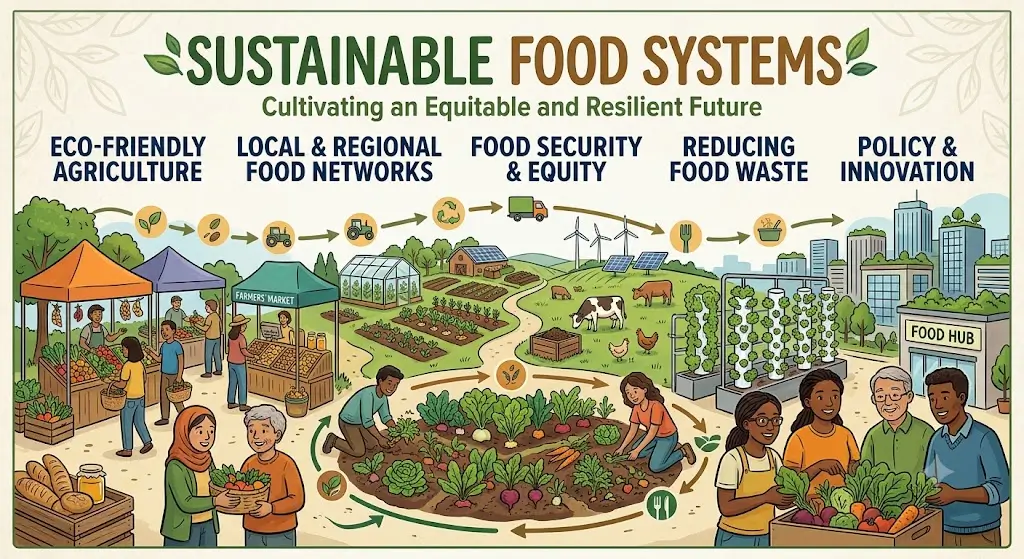
The Sustainable Food Systems Course is a comprehensive training program designed to equip learners with the knowledge and practical skills required to understand and support sustainable food production and distribution. As global demand for food continues to rise alongside environmental challenges and resource limitations, organizations must adopt sustainable approaches that protect ecosystems while ensuring food security. Therefore, sustainable food systems have become a critical focus for governments, businesses, agricultural organizations, and communities worldwide.
A sustainable food system integrates responsible agricultural production, efficient supply chains, environmental stewardship, economic viability, and social well-being. As a result, food producers and businesses can improve productivity, reduce environmental impact, minimize food waste, and strengthen long-term resilience across the food value chain.
Whether you are a student, farmer, agribusiness professional, food industry employee, sustainability practitioner, entrepreneur, or policymaker, this course provides practical knowledge that supports sustainable food production and responsible resource management.
Course Overview
This course provides a practical introduction to sustainable food systems and responsible food production.
Learners will explore:
- Fundamentals of sustainable food systems
- Sustainable agriculture principles
- Food production and processing
- Food supply chain management
- Food security concepts
- Responsible sourcing practices
- Climate-smart agriculture
- Resource conservation and environmental management
- Food waste reduction strategies
- Circular economy principles in food systems
- Sustainable agribusiness management
- Food quality and safety awareness
- Innovation in food production
- Future trends in sustainable food systems
Additionally, the course demonstrates how sustainable practices improve food availability, environmental protection, and long-term agricultural resilience.
What You Will Learn
Throughout this course, learners will develop practical knowledge of sustainable food production and management.
You will learn how to:
- Understand sustainable food system principles
- Improve food production using sustainable practices
- Support food security initiatives
- Apply responsible sourcing and procurement methods
- Reduce food waste throughout the value chain
- Improve resource efficiency in food production
- Understand climate-smart agricultural approaches
- Support sustainable food supply chains
- Promote environmentally responsible food management
- Contribute to long-term agricultural sustainability
By the end of the course, learners will understand how sustainable food systems improve food security while protecting natural resources.
Skills You Will Gain
After completing this course, learners will develop skills including:
- Sustainable food system management
- Sustainable agriculture
- Food supply chain management
- Food security planning
- Environmental sustainability
- Resource management
- Food quality awareness
- Responsible sourcing
- Waste reduction strategies
- Strategic planning
- Problem-solving
- Communication skills
- Collaboration
- Decision-making
- Sustainable business practices
These transferable skills are valuable across agribusiness companies, food processing industries, agricultural cooperatives, retail food businesses, hospitality organizations, government agriculture departments, environmental organizations, NGOs, research institutions, and multinational food companies.
Benefits of the Course
This course offers numerous professional advantages.
Some major benefits include:
- Strong understanding of sustainable food systems
- Improved knowledge of food security and sustainability
- Better awareness of responsible agricultural practices
- Enhanced food supply chain management skills
- Greater understanding of resource conservation techniques
- Improved ability to support sustainable agribusiness operations
- Better career opportunities in agriculture and food industries
- Increased awareness of environmental management principles
- Enhanced decision-making for sustainable food production
- Strong foundation for careers in food sustainability and agribusiness
Furthermore, employers increasingly value professionals who can improve food system resilience while promoting environmentally responsible and economically sustainable practices.
Who Should Enroll?
This course is ideal for:
- Students
- Fresh graduates
- Farmers and farm managers
- Agribusiness professionals
- Food production professionals
- Sustainability practitioners
- Agricultural consultants
- Food supply chain professionals
- Entrepreneurs in agriculture and food businesses
- Anyone interested in sustainable agriculture and food security
No prior experience is required. Therefore, beginners can confidently enroll.
Career Opportunities
After completing this course, learners may pursue or strengthen careers in roles such as:
- Sustainable Agriculture Coordinator
- Food Supply Chain Executive
- Agribusiness Executive
- Sustainability Officer
- Food Production Supervisor
- Agricultural Operations Executive
- Environmental Program Coordinator
- Food Quality Executive
- Procurement Executive
- Agricultural Consultant (Entry Level)
- Sustainability Project Coordinator
- Farm Operations Manager
- Food Safety Associate
- Agribusiness Development Executive
- Operations Executive
These skills are valuable across agribusiness companies, food processing industries, farming enterprises, retail food businesses, hospitality organizations, government agriculture departments, environmental organizations, NGOs, research institutions, and multinational food corporations.
Certification
Upon successful completion of the Sustainable Food Systems Course, learners receive a professional certification recognizing their knowledge of sustainable agriculture, food supply chains, food security, environmental management, and responsible food production practices.
The certification demonstrates your readiness to contribute effectively to sustainable food systems and environmentally responsible agricultural operations.
Conclusion
The Sustainable Food Systems Course equips learners with the practical knowledge and professional skills required to support sustainable food production, responsible resource management, and resilient agricultural systems.
Throughout the course, learners develop expertise in sustainable agriculture, food security, food supply chains, environmental conservation, resource management, waste reduction, and responsible sourcing. These capabilities help professionals improve food system efficiency while supporting long-term environmental, economic, and social sustainability.
Whether you are beginning your career in agriculture or looking to strengthen your expertise in sustainable food production, this course provides valuable knowledge and practical techniques that support long-term success in the agriculture and food industries.
FAQ
1. What is the Sustainable Food Systems Course?
It is a professional course that teaches sustainable agriculture, food production, food security, responsible sourcing, food supply chains, and environmental sustainability practices.
2. Is this course suitable for beginners?
Yes. It is designed for beginners, students, farmers, agribusiness professionals, food industry employees, and sustainability enthusiasts.
3. What topics are covered in this course?
The course covers sustainable agriculture, food production, food supply chains, food security, climate-smart farming, resource conservation, food waste reduction, responsible sourcing, and sustainable agribusiness.
4. Do I need any prior experience?
No. Prior experience in agriculture or food systems is not required to enroll in this course.
5. Will I receive a certificate after completing the course?
Yes. You will receive a professional course completion certificate.
6. Who should take this course?
Students, graduates, farmers, agribusiness professionals, food production workers, sustainability practitioners, agricultural consultants, entrepreneurs, and anyone interested in sustainable food systems should take this course.
7. What skills will I gain from this course?
You will gain sustainable agriculture, food supply chain management, food security planning, resource management, responsible sourcing, environmental sustainability, communication, and strategic planning skills.
8. How will this course help in my career?
It prepares you for careers in agriculture, agribusiness, food production, sustainability, environmental management, food supply chain operations, and responsible resource management.
9. Does this course include food security and sustainable agriculture concepts?
Yes. The course introduces food security, sustainable agriculture, climate-smart farming, food waste reduction, responsible sourcing, environmental conservation, and sustainable food supply chain practices.
10. In which industries are sustainable food system skills valuable?
These skills are valuable across agribusiness companies, food processing industries, farming enterprises, hospitality organizations, retail food businesses, government agriculture departments, environmental organizations, NGOs, research institutions, sustainability consulting firms, and multinational food companies.





Reviews
There are no reviews yet.