
Introduction
A classroom is more than four walls — it’s a dynamic space that shapes how students learn, interact, and grow. The classroom environment plays a vital role in influencing student motivation, concentration, and academic performance. At Eduvish.com, we explore the key factors that make a classroom environment effective, comfortable, and inspiring for learners of all ages.
What Is a Classroom Environment?
Classroom environment refers to the physical, emotional, and social conditions in which learning takes place. It includes everything from lighting and seating to teacher‑student relationships and classroom culture. A positive environment encourages curiosity, creativity, and collaboration — essential for holistic education.
Why Classroom Environment Matters
- Boosts student engagement: A well‑organized space keeps learners attentive.
- Improves academic performance: Comfortable surroundings enhance focus and retention.
- Encourages participation: Open layouts and supportive teachers make students more confident.
- Reduces stress: Calm colors and positive interactions create emotional safety.
- Promotes inclusivity: Accessible designs ensure equal opportunities for all learners.
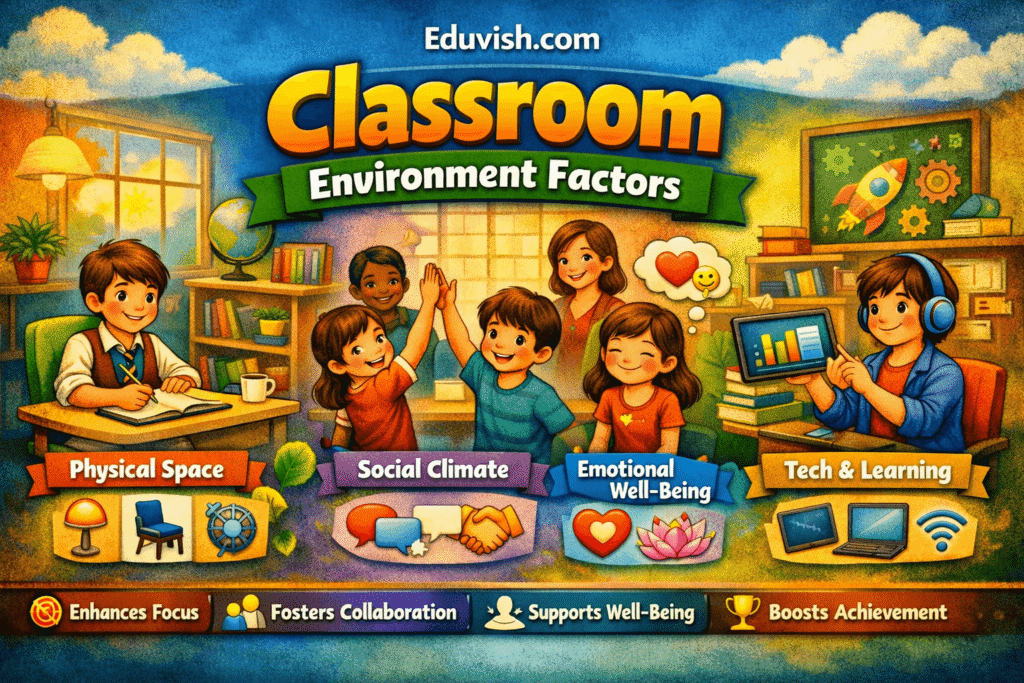
Key Classroom Environment Factors
| Factor | Description |
|---|---|
| Physical Space | Layout, lighting, ventilation, and furniture arrangement. |
| Social Climate | Relationships among students and teachers. |
| Emotional Atmosphere | Feelings of safety, respect, and belonging. |
| Instructional Design | Teaching methods and learning materials. |
| Technological Integration | Use of digital tools and smart boards. |
| Cultural Inclusivity | Representation of diverse backgrounds and perspectives. |
Physical Factors That Influence Learning
- Lighting – Natural light improves mood and concentration.
- Seating arrangement – Flexible seating supports collaboration.
- Ventilation – Fresh air enhances alertness.
- Color scheme – Warm tones energize; cool tones calm.
- Noise control – Proper acoustics reduce distractions.
- Cleanliness – Hygienic spaces promote health and focus.
Social and Emotional Factors
- Teacher‑student relationship: Respectful communication builds trust.
- Peer interaction: Collaboration fosters teamwork and empathy.
- Classroom culture: Encouragement and inclusivity create belonging.
- Emotional safety: Students feel free to express ideas without fear.
- Motivation and recognition: Praise and rewards sustain enthusiasm.
Technological Factors
Modern classrooms integrate technology to enhance learning:
- Smart boards for interactive lessons.
- Tablets and laptops for digital assignments.
- Online collaboration tools for group projects.
- Multimedia content for visual engagement. Technology bridges gaps and prepares students for the digital world.
Cultural and Inclusivity Factors
India’s diverse classrooms require inclusive designs:
- Multilingual support for regional languages.
- Gender equality in participation and leadership.
- Accessibility for differently‑abled students.
- Cultural representation in teaching materials.
Inclusivity ensures every student feels valued and respected.
Psychological Factors
- Motivation: Encouragement and autonomy drive engagement.
- Stress management: Calm environments reduce anxiety.
- Self‑esteem: Positive feedback builds confidence.
- Goal setting: Clear objectives guide learning.
A psychologically supportive classroom nurtures emotional intelligence and resilience.
Teacher’s Role in Shaping the Environment
Teachers are the architects of classroom culture. They influence:
- Discipline and structure
- Communication style
- Feedback and evaluation
- Encouragement and empathy
A teacher’s attitude sets the tone for learning and collaboration.
Classroom Environment in Indian Schools
Indian schools are evolving with modern designs and teaching methods:
- Smart classrooms with digital boards.
- Collaborative learning zones for group activities.
- Eco‑friendly spaces promoting sustainability.
- Inclusive education under NEP 2020 guidelines.
These changes reflect India’s commitment to holistic and experiential learning.