
Introduction
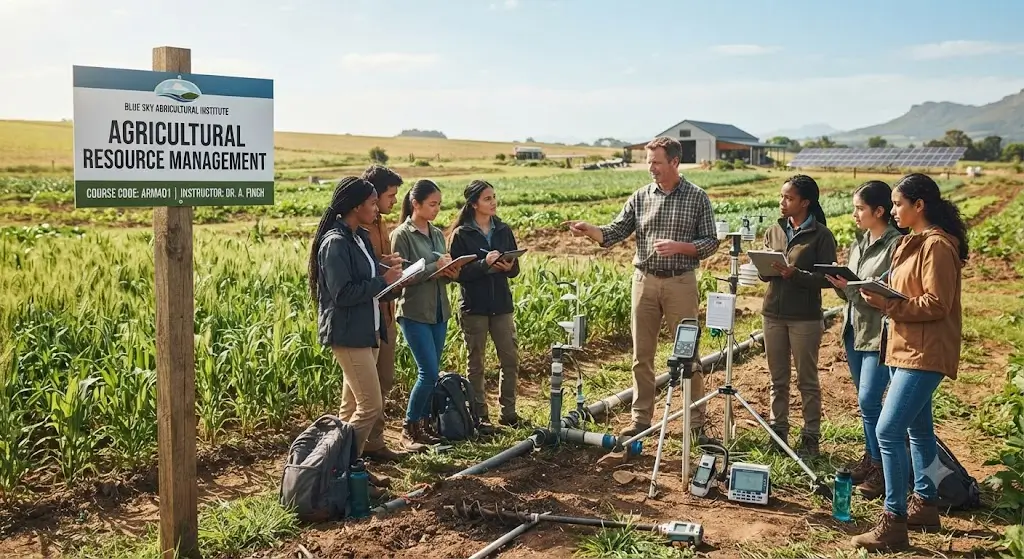
Efficient management of agricultural resources is essential for achieving higher productivity, reducing operational costs, and ensuring sustainable farming. The Agricultural Resource Management Course introduces learners to the principles, strategies, and technologies used to manage agricultural resources effectively. As farming continues to face challenges such as climate change, water scarcity, rising production costs, and increasing food demand, resource management has become a critical component of modern agriculture.
Agricultural resource management focuses on the efficient use of land, water, labor, machinery, capital, energy, and natural resources to maximize agricultural output while minimizing environmental impact. Therefore, effective resource management helps farmers improve profitability, conserve natural resources, and strengthen long-term farm sustainability.
Moreover, this course explains how farm planning, resource allocation, soil management, irrigation systems, financial planning, and precision agriculture contribute to efficient agricultural operations. Learners also become familiar with digital agriculture technologies, climate-smart farming, environmental conservation, and sustainable development practices.
In addition, participants develop practical skills in resource planning, farm budgeting, operational management, agricultural decision-making, data analysis, and strategic planning. These competencies prepare learners for careers in agriculture, agribusiness, farm management, agricultural consultancy, research institutions, and government organizations.
By completing this course, learners establish a strong foundation in agricultural resource management while contributing to sustainable farming, environmental protection, and improved agricultural productivity.
Course Overview
The Agricultural Resource Management Course provides comprehensive training in farm resource planning, land management, water conservation, agricultural economics, sustainable farming, and modern farm management techniques. Furthermore, the course explains how efficient resource utilization improves productivity, profitability, and environmental sustainability.
Fundamentals of Agricultural Resource Management
The course begins by introducing the principles of agricultural resource management and its importance in modern farming. Learners understand resource allocation, farm planning, production systems, and sustainable resource utilization. Consequently, they develop a strong foundation in agricultural management.
Land Resource Management
Efficient land utilization supports successful farming. Therefore, learners study land capability assessment, land use planning, soil conservation, crop rotation, and sustainable land management practices that improve agricultural productivity.
Water Resource Management
The course explains irrigation planning, water conservation, watershed management, rainwater harvesting, moisture management, and efficient irrigation systems. Moreover, participants understand how proper water management improves crop performance and reduces water wastage.
Soil Fertility Management
Learners explore soil health assessment, nutrient management, organic farming practices, fertilizer planning, integrated nutrient management, and soil conservation techniques. Consequently, they understand how healthy soils support sustainable agriculture.
Farm Financial and Resource Planning
The course introduces farm budgeting, financial planning, labor management, machinery utilization, input management, and operational efficiency. Furthermore, learners understand how resource planning contributes to profitable farming.
Climate-Smart Agriculture
Participants study climate adaptation strategies, sustainable farming methods, environmental conservation, renewable energy integration, and resilient agricultural systems. Therefore, learners become familiar with practices that support long-term agricultural sustainability.
Precision Agriculture Technologies
The course explains GPS-based farming, remote sensing, digital farm management, artificial intelligence, IoT devices, and data-driven decision-making that improve resource efficiency.
Risk Management
Learners study production risks, financial risks, environmental challenges, disaster preparedness, and resource optimization strategies that strengthen farm resilience.
Emerging Trends in Resource Management
Finally, participants examine smart farming, automation, circular agriculture, carbon farming, digital resource monitoring, and emerging agricultural innovations shaping the future of sustainable farming.
Overall, this course combines agricultural science with resource management principles, enabling learners to understand every aspect of agricultural resource management while preparing them for careers in agriculture, agribusiness, and sustainable farm management.
What You Will Learn
The Agricultural Resource Management Course equips learners with practical knowledge and management skills required to utilize agricultural resources efficiently and sustainably.
Fundamentals of Resource Management
First, learners understand agricultural resource management principles, farm planning, resource allocation, and sustainable agricultural systems.
Land and Soil Management
Participants learn land use planning, soil fertility improvement, conservation techniques, nutrient management, and sustainable soil practices. Furthermore, they understand how proper land management improves productivity.
Water Management Techniques
The course explains irrigation scheduling, water conservation, watershed management, rainwater harvesting, and efficient irrigation technologies. Consequently, learners gain practical water management skills.
Farm Resource Planning
Learners explore budgeting, labor planning, machinery management, financial planning, inventory control, and production scheduling. Moreover, they understand how resource planning supports profitable farm operations.
Climate-Smart Agriculture
The course introduces climate adaptation, sustainable farming, renewable energy, environmental conservation, and resilience planning. Therefore, learners become familiar with environmentally responsible agricultural practices.
Precision Agriculture Applications
Participants study digital agriculture, GPS mapping, IoT technologies, artificial intelligence, farm management software, and precision farming systems. In addition, they understand how technology improves resource utilization.
Agricultural Decision-Making
The course also emphasizes agricultural data analysis, performance monitoring, business planning, risk assessment, and strategic farm management.
Skills You Will Gain
After completing the Agricultural Resource Management Course, learners will develop valuable technical, managerial, and analytical skills required for efficient agricultural resource utilization.
Farm Resource Planning Skills
Develop the ability to plan, organize, allocate, and manage agricultural resources effectively to improve productivity and profitability.
Land Management Skills
Learn practical techniques for land use planning, soil conservation, crop rotation, and sustainable land management.
Water Management Skills
Gain expertise in irrigation planning, water conservation, moisture management, watershed development, and efficient water utilization.
Financial Management Skills
Understand farm budgeting, financial planning, investment analysis, cost management, and resource optimization for sustainable agricultural enterprises.
Precision Agriculture Skills
Develop practical knowledge of GPS technologies, IoT systems, artificial intelligence, digital farm management, and smart farming tools.
Sustainability Management Skills
Learn climate-smart farming, renewable energy applications, environmental conservation, resource efficiency, and sustainable agricultural development.
Analytical Skills
Interpret agricultural data, production records, environmental information, and operational reports to support informed management decisions.
Problem-Solving Skills
Analyze resource management challenges and implement practical solutions that improve farm efficiency, reduce costs, and increase sustainability.
Leadership Skills
Strengthen leadership abilities required to coordinate agricultural operations, manage farm resources, and support sustainable agricultural projects.
Professional Competence
Build the confidence to contribute effectively to commercial farms, agribusiness companies, research institutions, government agencies, agricultural consultancy firms, and rural development organizations.
Benefits of the Course
The Agricultural Resource Management Course provides learners with practical knowledge and management skills required to use agricultural resources efficiently while improving farm productivity and sustainability. Moreover, the course combines agricultural science with resource planning, financial management, and modern farming technologies, enabling learners to make informed decisions for long-term agricultural success.
Develop Strong Resource Management Knowledge
First, learners gain a comprehensive understanding of agricultural resource planning, land utilization, water management, soil conservation, and farm operations. As a result, they develop the confidence to manage farm resources effectively.
Improve Land Management Skills
Productive agriculture begins with efficient land use. Therefore, this course teaches learners how to assess land capability, improve soil health, implement crop rotation, and apply sustainable land management practices that enhance agricultural productivity.
Learn Water Conservation Techniques
Water is one of the most valuable agricultural resources. Consequently, learners study irrigation planning, rainwater harvesting, watershed management, moisture conservation, and efficient irrigation systems that reduce water wastage and improve crop performance.
Strengthen Farm Planning Skills
Effective planning improves operational efficiency. Furthermore, participants learn farm budgeting, labor management, machinery utilization, input planning, production scheduling, and resource allocation techniques that increase profitability.
Develop Financial Management Skills
Successful farms require sound financial planning. Accordingly, learners explore budgeting, cost analysis, investment planning, financial record keeping, and resource optimization strategies that support sustainable agricultural businesses.
Understand Precision Agriculture Technologies
Modern farming increasingly relies on digital technologies. Therefore, learners study GPS mapping, artificial intelligence, IoT devices, farm management software, remote sensing, and precision agriculture systems that improve resource efficiency.
Promote Sustainable Agriculture
The course emphasizes climate-smart farming, environmental conservation, renewable energy, and responsible resource utilization. Moreover, learners understand how sustainable resource management protects natural ecosystems while supporting long-term agricultural growth.
Expand Career Opportunities
Agricultural organizations increasingly seek professionals with expertise in resource management and sustainable farming. As a result, completing this course improves employability across agriculture, agribusiness, research, and environmental management sectors.
Prepare for Advanced Agricultural Learning
The course provides a strong academic foundation for advanced studies in agronomy, farm management, agricultural engineering, environmental science, and sustainable agriculture. In addition, it supports continuous professional development.
Support Long-Term Farm Sustainability
Efficient resource management improves productivity, reduces production costs, conserves natural resources, and strengthens farm resilience. Ultimately, this course prepares learners to contribute to profitable farming, environmental sustainability, and global food security.
Who Should Enroll
The Agricultural Resource Management Course is designed for individuals who want to develop expertise in farm planning, sustainable agriculture, and efficient resource utilization.
Agriculture Students
Students pursuing agriculture, agronomy, agricultural engineering, environmental science, or related disciplines can strengthen their academic knowledge while preparing for professional careers.
Farmers
Farmers who want to improve resource efficiency, reduce production costs, and increase farm productivity through better planning can benefit significantly from this course.
Farm Managers
Farm managers responsible for resource allocation, budgeting, production planning, and operational efficiency can enhance their management and leadership skills.
Agribusiness Entrepreneurs
Entrepreneurs involved in commercial farming, agricultural services, or agribusiness development can gain practical knowledge of resource planning and sustainable farm management.
Agricultural Consultants
Consultants providing advisory services to farmers and agricultural organizations can strengthen their expertise in resource optimization and farm management.
Researchers
Agricultural researchers can improve their understanding of sustainable resource utilization, climate-smart farming, and precision agriculture technologies.
Government Agriculture Professionals
Professionals working in agriculture departments, rural development agencies, watershed projects, and environmental organizations can improve their expertise in agricultural resource management.
Anyone Interested in Sustainable Agriculture
Anyone interested in farm management, environmental conservation, resource planning, or sustainable agriculture can enroll in this course regardless of previous experience.
Career Opportunities
The growing emphasis on sustainable farming and efficient resource utilization has created excellent career opportunities for professionals with expertise in agricultural resource management. Therefore, completing the Agricultural Resource Management Course can help learners build rewarding careers across agriculture, agribusiness, environmental management, and rural development.
Potential career roles include:
- Agricultural Resource Manager
- Farm Manager
- Sustainable Agriculture Consultant
- Agricultural Operations Manager
- Precision Agriculture Specialist
- Agricultural Project Coordinator
- Irrigation Management Officer
- Soil and Water Conservation Officer
- Agribusiness Manager
- Agricultural Extension Officer
- Environmental Resource Specialist
- Farm Planning Consultant
- Agricultural Research Assistant
- Rural Development Officer
- Climate-Smart Agriculture Advisor
Graduates may find employment opportunities in:
- Commercial farms
- Agribusiness companies
- Government agriculture departments
- Watershed development projects
- Agricultural research institutions
- Agricultural universities
- Environmental organizations
- Agricultural consultancy firms
- Rural development agencies
- Non-governmental organizations (NGOs)
Furthermore, this course provides a strong foundation for advanced education and specialized training in agricultural engineering, agronomy, environmental management, sustainable agriculture, natural resource management, and climate-smart farming.
Certification
Upon successfully completing the Agricultural Resource Management Course, learners will receive a Course Completion Certificate that recognizes their knowledge of agricultural resource planning, land management, water conservation, farm budgeting, precision agriculture, and sustainable farming practices.
Moreover, the certificate demonstrates your commitment to professional development and continuous learning within the agriculture sector. It can strengthen your resume, improve your professional profile, and increase employment opportunities with agribusiness companies, government agencies, research institutions, commercial farms, agricultural consultancy firms, and environmental organizations.
Additionally, the certification validates your understanding of resource optimization, climate-smart agriculture, digital farm management, soil conservation, irrigation planning, and sustainable agricultural practices. Consequently, it supports career advancement while preparing learners for technical, supervisory, advisory, and management roles in agriculture.
Conclusion
Efficient resource management is essential for building productive, profitable, and environmentally responsible agricultural systems. Therefore, professionals with expertise in agricultural resource management play an important role in improving farm efficiency, conserving natural resources, and supporting sustainable agricultural development.
The Agricultural Resource Management Course provides comprehensive knowledge of land management, water conservation, soil fertility, farm planning, financial management, precision agriculture, and climate-smart farming practices. Moreover, learners develop practical skills that enable them to optimize agricultural resources while improving productivity and profitability.
Throughout the course, participants strengthen their technical knowledge, analytical thinking, problem-solving abilities, and decision-making skills while exploring modern farming technologies and sustainable resource management strategies. In addition, they gain valuable insights into environmental conservation and efficient farm operations that support long-term agricultural success.
Whether your goal is to improve farm performance, build a career in agriculture, support sustainable farming initiatives, or manage agricultural resources effectively, this course provides the knowledge and confidence needed for long-term success. Ultimately, it prepares learners to contribute to efficient agriculture, environmental sustainability, resilient farming systems, and global food security.
FAQ SECTION
1. What is the Agricultural Resource Management Course?
The Agricultural Resource Management Course provides comprehensive training in land management, water conservation, farm planning, resource allocation, precision agriculture, and sustainable farming practices.
2. Who should enroll in this course?
This course is ideal for agriculture students, farmers, farm managers, agribusiness entrepreneurs, agricultural consultants, researchers, and anyone interested in sustainable agriculture.
3. Do I need prior agricultural experience?
No. The course is suitable for beginners as well as experienced professionals who want to strengthen their knowledge of agricultural resource management.
4. What topics are covered in this course?
The course covers land management, water resource management, soil conservation, farm budgeting, resource planning, climate-smart agriculture, precision agriculture, and sustainable farming.
5. What skills will I gain after completing this course?
You will develop skills in farm resource planning, land and water management, budgeting, precision agriculture, sustainable farming, data analysis, leadership, and strategic decision-making.
6. Why is agricultural resource management important?
Agricultural resource management improves productivity, conserves natural resources, reduces production costs, supports sustainable farming, and strengthens long-term farm profitability.
7. What career opportunities are available after completing this course?
Graduates can pursue careers as Agricultural Resource Managers, Farm Managers, Sustainable Agriculture Consultants, Precision Agriculture Specialists, Irrigation Management Officers, Agricultural Project Coordinators, and Environmental Resource Specialists.
8. Will I receive a certificate after completing the course?
Yes. Learners who successfully complete the course will receive a Course Completion Certificate that validates their knowledge and practical skills in agricultural resource management.
9. How does agricultural resource management support sustainable farming?
Agricultural resource management promotes efficient land use, water conservation, soil protection, climate-smart farming, responsible resource utilization, and long-term environmental sustainability.
10. How can this course benefit my career?
This course enhances your technical expertise, strengthens your professional profile, improves employability, and prepares you for career opportunities in agriculture, agribusiness, environmental management, agricultural consultancy, research, and sustainable farming.




Reviews
There are no reviews yet.