
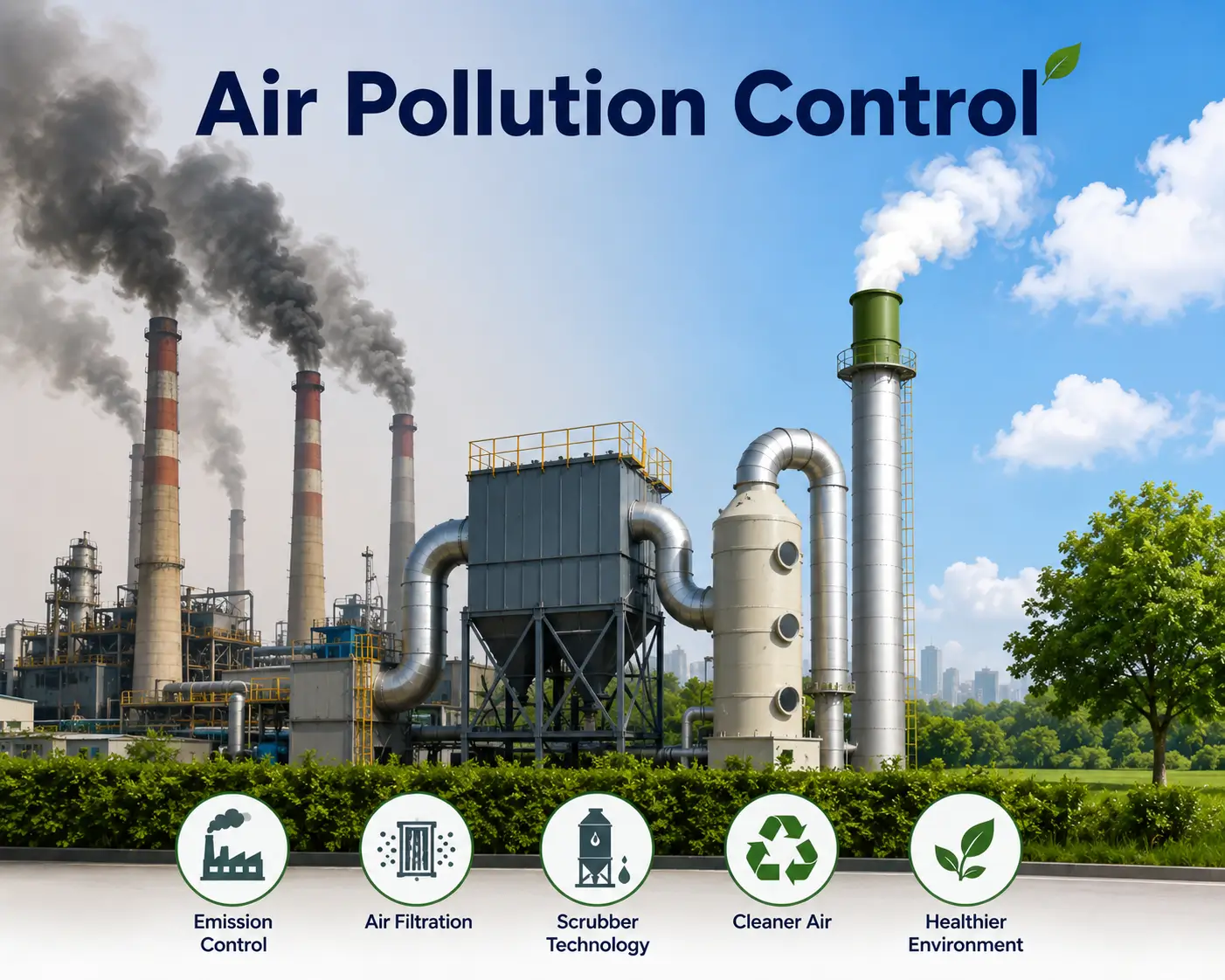
Introduction to Air Pollution Control
The Air Pollution Control Course is an in-depth professional training program designed to provide learners with a strong understanding of air pollution sources, atmospheric behavior of pollutants, control technologies, and regulatory frameworks used to manage and reduce air emissions. Air pollution is one of the most critical environmental challenges globally, affecting human health, ecosystems, climate stability, and industrial sustainability.
This course explains how pollutants are generated from industrial processes, transportation systems, energy production, and natural sources, and how engineering and policy-based solutions can be used to monitor, control, and minimize their impact.
Learners will gain both theoretical knowledge and practical insights into air quality management systems, emission control devices, environmental monitoring techniques, and compliance strategies aligned with national and international standards.
Importance of Air Pollution Control
Air pollution has direct consequences on respiratory health, environmental degradation, acid rain formation, and global climate change. Industrial emissions such as particulate matter (PM), sulfur oxides (SOx), nitrogen oxides (NOx), carbon monoxide (CO), volatile organic compounds (VOCs), and greenhouse gases contribute significantly to air quality deterioration.
Effective air pollution control is essential for:
- Protecting public health
- Meeting environmental regulations
- Reducing industrial emissions
- Improving workplace safety
- Supporting sustainable development goals
- Ensuring compliance with environmental laws
This course helps learners understand how industries can balance productivity with environmental responsibility by implementing effective air pollution control systems.
Course Overview
The Air Pollution Control Course covers the complete lifecycle of air pollution management—from identification and measurement of pollutants to designing and implementing control systems.
Learners will study the behavior of air pollutants in the atmosphere, dispersion mechanisms, meteorological influences, and health impacts. The course also explores engineering control technologies used in industries to reduce emissions at the source, along with end-of-pipe treatment methods.
Special focus is given to environmental standards, emission limits, monitoring techniques, and compliance reporting procedures.
Types and Sources of Air Pollution
Learners will understand various sources of air pollution, including:
Industrial Sources
Factories, chemical plants, refineries, cement industries, steel manufacturing, and power plants.
Transportation Sources
Vehicles, aviation, shipping, and diesel-powered machinery.
Agricultural Sources
Burning of crop residues, fertilizers, and livestock emissions.
Natural Sources
Wildfires, volcanic eruptions, dust storms, and biological decay processes.
Major Air Pollutants
The course provides detailed understanding of key pollutants such as:
- Particulate Matter (PM2.5 and PM10)
- Carbon Monoxide (CO)
- Sulfur Dioxide (SO₂)
- Nitrogen Oxides (NOx)
- Volatile Organic Compounds (VOCs)
- Ozone (O₃)
- Lead and heavy metals
- Greenhouse gases (CO₂, CH₄, N₂O)
Each pollutant is studied in terms of its formation, environmental impact, health effects, and control methods.
Air Pollution Control Technologies
Learners will explore various engineering and technological solutions used to control emissions:
Particulate Control Devices
- Cyclone separators
- Fabric filters (baghouse systems)
- Electrostatic precipitators (ESP)
Gaseous Pollutant Control
- Scrubbers (wet and dry)
- Absorption and adsorption systems
- Catalytic converters
Combustion Control Methods
- Low-NOx burners
- Fuel switching techniques
- Process optimization
Ventilation and Dilution Techniques
- Exhaust systems
- Stack design and dispersion improvement
Air Quality Monitoring and Measurement
The course includes detailed training on air quality assessment techniques such as:
- Ambient air quality monitoring
- Stack emission testing
- Real-time sensor-based monitoring systems
- Air quality index (AQI) interpretation
- Data analysis and reporting
Learners will understand how environmental engineers measure pollutant concentrations and evaluate compliance with regulatory limits.
Regulatory Framework and Standards
This section covers national and international air quality regulations, including:
- Environmental Protection regulations
- Industrial emission standards
- WHO air quality guidelines
- EPA standards (where applicable)
- Environmental clearance procedures
- Compliance auditing and reporting systems
Understanding regulatory frameworks is essential for environmental compliance and sustainable industrial operations.
Environmental and Health Impacts
Air pollution affects:
- Respiratory and cardiovascular health
- Ecosystem balance and biodiversity
- Climate change and global warming
- Visibility and atmospheric conditions
- Soil and water quality through deposition
The course highlights how pollution control directly contributes to improved public health and environmental sustainability.
Skills You Will Gain
After completing the Air Pollution Control Course, learners will develop:
- Air pollution analysis skills
- Emission source identification
- Pollution control system design understanding
- Air quality monitoring techniques
- Environmental compliance knowledge
- Industrial emission assessment
- Regulatory reporting skills
- Environmental risk evaluation
- Data interpretation and analysis
- Sustainability awareness
- Engineering problem-solving skills
These skills are highly valuable in environmental engineering, industrial operations, sustainability consulting, and regulatory compliance roles.
Applications of Air Pollution Control
Air pollution control knowledge is applied in:
- Power plants
- Cement and steel industries
- Chemical manufacturing
- Oil and gas facilities
- Transportation systems
- Municipal waste management
- Environmental consulting firms
- Government regulatory bodies
Conclusion
The Air Pollution Control Course provides a strong foundation in environmental engineering and pollution management. It prepares learners to design, evaluate, and implement effective air quality control systems while ensuring compliance with environmental regulations and contributing to sustainable development goals.
FAQ SECTION
1. What is this course about?
It covers air pollution sources, effects, monitoring, and control technologies.
2. Who should take this course?
Environmental engineers, EHS professionals, students, and industry workers.
3. Will I learn pollution control equipment?
Yes, including filters, scrubbers, and emission control systems.
4. Does it cover air pollutants?
Yes, PM, SOx, NOx, CO, VOCs, and more.
5. Is monitoring included?
Yes, air quality monitoring and AQI interpretation are covered.
6. Does it include regulations?
Yes, environmental laws and compliance standards are included.
7. Is this course practical?
Yes, with real industrial and environmental applications.
8. Can it help in jobs?
Yes, it supports careers in environmental and industrial sectors.
9. Does it cover industrial emissions?
Yes, stack and industrial emission control is included.
10. What industries use this knowledge?
Power plants, manufacturing, chemical, cement, transport, and more.





Reviews
There are no reviews yet.