
Introduction
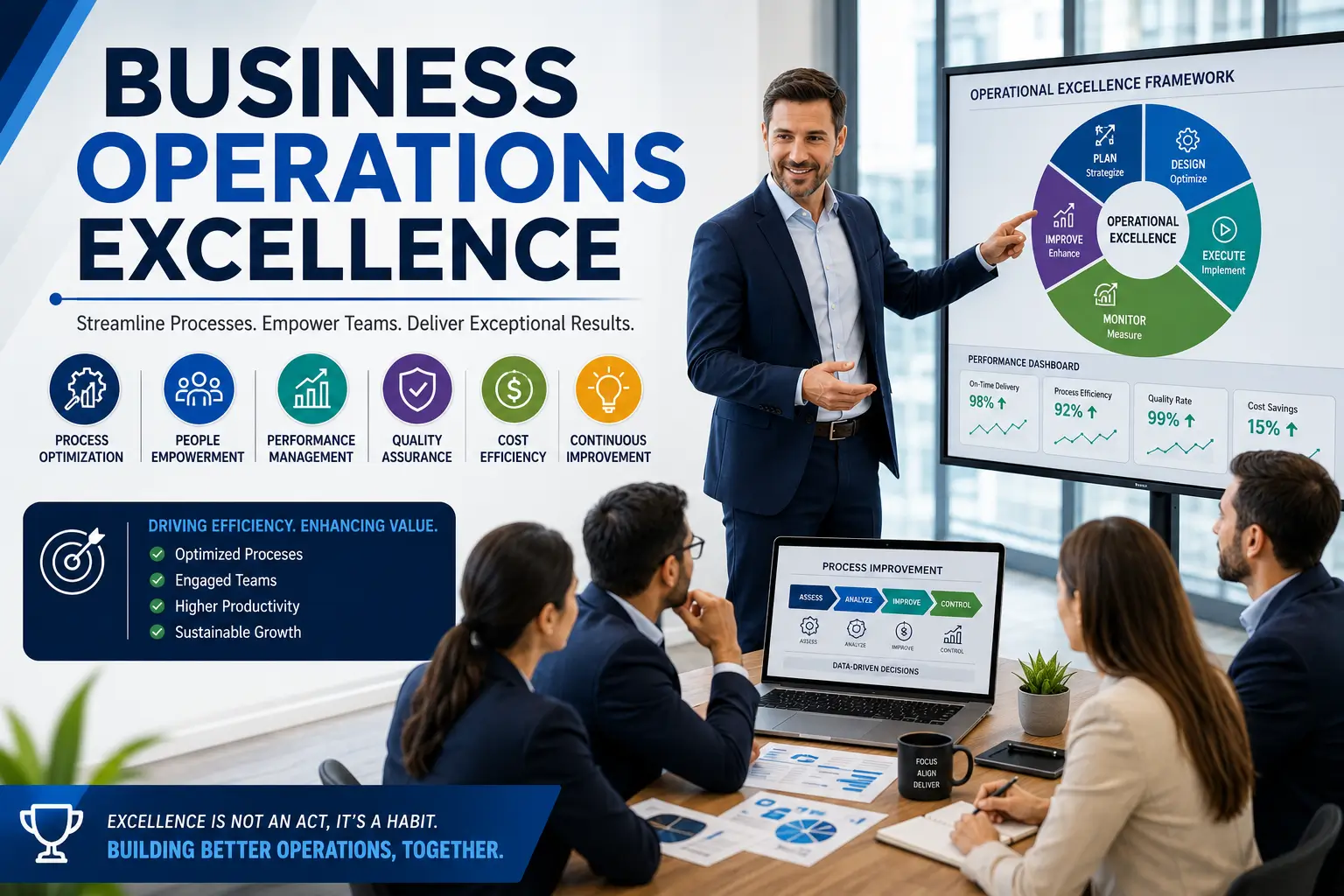
Business success depends on efficient operations, effective processes, and continuous improvement. However, organizations often face challenges such as inefficient workflows, resource limitations, and changing customer expectations. Therefore, business operations excellence has become essential for long-term growth.
The Business Operations Excellence Course introduces learners to the principles and practices required to improve operational performance. The course explains how organizations design better processes, manage resources, and achieve consistent results.
Moreover, operational excellence focuses on improving quality, reducing waste, increasing efficiency, and creating value for customers. A strong operations approach helps businesses remain competitive in changing markets.
Throughout this course, learners explore operational strategies, process improvement methods, performance measurement, quality management, and workflow optimization techniques. Additionally, they understand how successful organizations maintain high operational standards.
The course also develops practical skills such as problem-solving, analytical thinking, communication, and decision-making. These skills help professionals manage operations more effectively.
By completing this course, learners will gain a strong foundation in business operations excellence and understand how effective operations support organizational success.
Course Overview
The Business Operations Excellence Course provides comprehensive training on operational strategies, process improvement, performance management, efficiency optimization, and continuous improvement practices. Furthermore, the course helps learners understand how businesses achieve operational excellence.
Fundamentals of Business Operations Excellence
The course begins with operational excellence concepts, business processes, efficiency principles, and the importance of continuous improvement.
Operational Strategy Development
Learners explore methods for creating operational strategies aligned with business goals and organizational priorities.
Process Improvement Techniques
This section explains workflow analysis, process optimization, waste reduction, and methods for improving operational performance.
Performance Measurement and Analysis
Learners understand key performance indicators, operational metrics, reporting methods, and performance evaluation techniques.
Quality Management Practices
The course covers quality improvement methods, standards, process consistency, and customer-focused operations.
Resource Management
Learners explore resource planning, workforce management, capacity optimization, and efficient resource utilization.
Operational Problem Solving
This section explains problem identification, root cause analysis, corrective actions, and improvement strategies.
Lean Operations Principles
Learners understand lean concepts, efficiency improvement, waste elimination, and productivity enhancement methods.
Digital Operations Management
The course introduces automation, analytics, digital tools, and technologies supporting modern operations.
Continuous Improvement Culture
Learners explore methods for building improvement-focused teams and maintaining operational excellence.
Overall, this course combines operational management concepts with practical improvement techniques. Therefore, learners develop the skills required to improve business performance and operational efficiency.
What You Will Learn
The Business Operations Excellence Course helps learners develop practical skills required to manage and improve business operations.
Understand Operational Excellence Principles
Participants will understand operational concepts, improvement frameworks, and best practices used by successful organizations.
Improve Business Processes
Learners will learn methods to analyze workflows and create efficient processes.
Manage Operational Performance
This course helps learners understand performance measurement and improvement techniques.
Reduce Operational Waste
Participants will explore methods to identify inefficiencies and improve productivity.
Apply Problem-Solving Methods
Learners will develop skills to identify operational challenges and create effective solutions.
Improve Resource Utilization
The course teaches methods for managing resources and improving operational efficiency.
Support Continuous Improvement
Learners will understand how organizations maintain long-term improvement practices.
Use Modern Operational Tools
Participants will learn about digital tools and technologies that support operational excellence.
Skills You Will Gain
After completing the Business Operations Excellence Course, learners will develop valuable operations management skills.
Operational Management Skills
Develop the ability to manage and improve business operations effectively.
Process Improvement Skills
Learn techniques for analyzing and optimizing business processes.
Problem-Solving Skills
Build the ability to identify challenges and implement practical solutions.
Performance Management Skills
Understand methods for measuring and improving operational results.
Strategic Thinking Skills
Develop the ability to align operations with business objectives.
Quality Management Skills
Learn approaches for improving quality and operational consistency.
Analytical Skills
Improve the ability to evaluate processes and operational data.
Leadership Skills
Develop skills required to manage teams and support operational improvement.
Benefits of the Course
The Business Operations Excellence Course helps learners understand how organizations improve efficiency, optimize processes, and achieve better operational results. Moreover, the course develops practical skills required to manage modern business operations.
Improve Operational Management Skills
First, learners understand how to manage daily operations and improve business performance. As a result, they can support organizations in achieving operational goals.
Enhance Process Improvement Knowledge
Efficient processes create better outcomes. Therefore, this course helps learners identify problems, improve workflows, and increase productivity.
Reduce Operational Challenges
Business operations often face delays and inefficiencies. Additionally, learners gain knowledge of methods that help reduce operational problems.
Improve Decision-Making Skills
Accurate operational information supports better decisions. Furthermore, learners develop analytical skills to evaluate processes and select effective solutions.
Increase Business Efficiency
Operational excellence focuses on productivity and quality. Consequently, learners understand techniques that improve resource utilization and business performance.
Develop Problem-Solving Abilities
Operations require continuous improvement. Moreover, learners learn how to identify root causes and implement practical solutions.
Support Continuous Improvement
Organizations need regular improvement to stay competitive. Therefore, learners explore methods for creating improvement-focused work environments.
Learn Modern Operations Practices
The course introduces digital tools, automation methods, and modern approaches used in professional operations management.
Improve Leadership Skills
Effective operations require strong coordination. In addition, learners develop skills to manage teams and support operational success.
Expand Career Opportunities
Operations management skills are valuable across industries. Therefore, this course helps learners prepare for various professional roles.
Who Should Enroll
The Business Operations Excellence Course is suitable for individuals who want to develop skills in operations management, process improvement, and business performance enhancement.
Operations Managers
Operations managers can improve their ability to optimize processes, manage resources, and increase efficiency.
Business Professionals
Business professionals can understand how operational excellence supports organizational growth and success.
Project Managers
Project managers can learn improvement techniques that help manage projects and operational activities effectively.
Team Leaders
Team leaders can develop skills to improve team performance, workflow management, and productivity.
Entrepreneurs and Business Owners
Entrepreneurs can learn how efficient operations help businesses grow and deliver better results.
Quality Professionals
Quality specialists can understand process improvement methods and operational performance practices.
Students and Graduates
Students interested in business, management, and operations can gain practical professional skills.
Consultants
Consultants can strengthen their knowledge of operational strategies and improvement frameworks.
Career Opportunities
Business operations excellence skills are highly valuable because organizations need professionals who can improve processes, increase efficiency, and manage operational performance. Therefore, learners with these skills can explore multiple career opportunities.
Potential career roles include:
- Operations Manager
- Business Operations Specialist
- Process Improvement Manager
- Operational Excellence Consultant
- Business Analyst
- Project Manager
- Quality Manager
- Continuous Improvement Specialist
- Process Analyst
- Supply Chain Manager
- Business Transformation Specialist
- Operations Coordinator
- Performance Improvement Manager
- Management Consultant
- Strategy Analyst
Professionals can find opportunities in:
- Information technology companies
- Manufacturing industries
- Healthcare organizations
- Retail businesses
- Financial institutions
- Logistics companies
- Consulting firms
- Service industries
- Government organizations
- Global enterprises
Furthermore, this course provides a strong foundation for advanced learning in operations management, business strategy, quality management, process improvement, and organizational development.
Certification
After successfully completing the Business Operations Excellence Course, learners will receive a Course Completion Certificate that recognizes their knowledge of operational strategies, process improvement, performance management, quality practices, and efficiency improvement methods.
Moreover, the certificate demonstrates your commitment to developing professional operations management skills. It can strengthen your resume and highlight your ability to improve business performance.
Additionally, the certification validates your understanding of operational excellence frameworks, process optimization techniques, resource management, and continuous improvement practices. Consequently, it supports career growth in operations, management, and business improvement roles.
Conclusion
Business operations excellence plays an important role in helping organizations improve efficiency, maintain quality, and achieve sustainable growth. Companies need professionals who can optimize processes, manage resources, and support continuous improvement. Therefore, operational excellence skills are highly valuable in today’s business environment.
The Business Operations Excellence Course provides comprehensive knowledge of operational strategies, process improvement, performance measurement, quality management, and workflow optimization. Moreover, learners develop practical skills required to improve business operations.
Throughout the course, participants enhance their understanding of problem-solving, decision-making, resource management, and operational planning. In addition, they learn how effective operations create better business outcomes.
Whether your goal is to build a career in operations management, improve business processes, support organizational growth, or enhance your professional skills, this course provides the foundation required for success.
Ultimately, it prepares learners to manage operations effectively and contribute to business excellence.
Frequently Asked Questions (FAQs)
1. What is the Business Operations Excellence Course?
The Business Operations Excellence Course teaches learners how to improve business processes, manage operations, and enhance organizational performance.
2. Who should enroll in this course?
This course is suitable for operations managers, business professionals, project managers, team leaders, entrepreneurs, students, and consultants.
3. Do I need prior operations management experience?
No. The course is suitable for beginners as well as professionals who want to improve their operations skills.
4. What topics are covered in this course?
The course covers operational strategy, process improvement, performance measurement, quality management, resource optimization, and continuous improvement.
5. What skills will I gain after completing this course?
You will develop skills in operations management, process improvement, problem-solving, performance analysis, and strategic planning.
6. Why is business operations excellence important?
It helps organizations improve efficiency, reduce waste, maintain quality, and achieve better business results.
7. What career opportunities are available after completing this course?
Learners can pursue careers as Operations Managers, Process Improvement Specialists, Business Analysts, Quality Managers, and Consultants.
8. Will I receive a certificate after completing this course?
Yes. Learners who successfully complete the course will receive a Course Completion Certificate validating their operations excellence knowledge.
9. How does operational excellence improve business performance?
It improves workflows, increases productivity, reduces inefficiencies, and helps organizations achieve their goals.
10. How can this course benefit my career?
This course improves your operations management skills, strengthens your professional profile, and prepares you for business improvement roles.




Reviews
There are no reviews yet.