
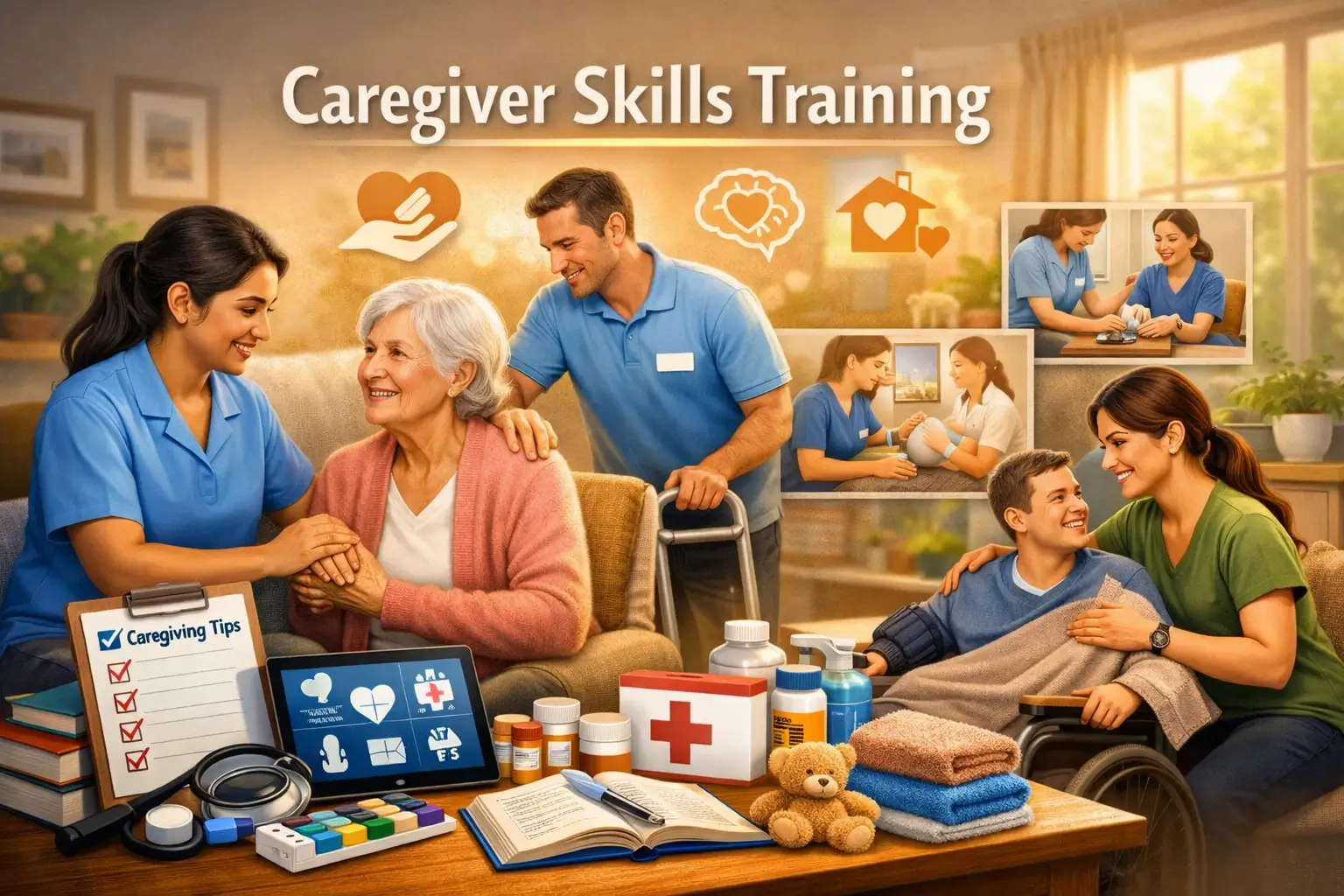
Introduction to Caregiver Skills Training
Caregiving is an important responsibility that involves providing support, assistance, and care to individuals who may require help with daily activities, personal care, mobility, or emotional well-being. The Caregiver Skills Training course provides learners with a comprehensive introduction to the knowledge, skills, and responsibilities involved in caregiving.
Caregivers play a vital role in helping individuals maintain comfort, dignity, independence, and quality of life. Effective caregiving requires communication skills, compassion, patience, safety awareness, and an understanding of individual care needs.
This course introduces learners to the fundamentals of caregiving and explores how caregivers can provide supportive and person-centered care in home, community, and healthcare-related environments.
Importance of Caregiver Skills Training
Caregiving skills are valuable for both professional and family caregiving situations.
Studying caregiver skills training helps learners:
- Understand caregiving responsibilities
- Improve communication abilities
- Promote safety and well-being
- Support daily living activities
- Enhance caregiving confidence
- Improve emotional support skills
- Encourage independence and dignity
- Strengthen care relationships
These benefits make caregiving knowledge valuable in healthcare support, family care, and community services.
Understanding the Role of a Caregiver
Caregivers provide support in many areas of daily life.
Care Responsibilities
Learners explore the duties involved in providing care and assistance.
Person-Centered Support
The course explains the importance of focusing on individual needs and preferences.
Respect and Dignity
Participants gain awareness of respectful caregiving practices.
Independence Promotion
Learners understand how caregivers can encourage self-reliance whenever possible.
Understanding these responsibilities helps improve the quality of care provided.
Personal Care Assistance
Personal care is a key component of caregiving.
The course introduces:
Hygiene Support
Understanding basic personal hygiene assistance.
Daily Living Activities
Learning how to support routine personal care needs.
Comfort and Well-Being
Exploring ways to improve comfort and quality of life.
Respectful Assistance
Understanding how to provide care while maintaining dignity and privacy.
These concepts help caregivers deliver compassionate and effective support.
Communication Skills for Caregivers
Effective communication is essential in caregiving.
Learners explore:
Active Listening
Understanding the importance of listening carefully to care recipients.
Clear Communication
Learning techniques that improve understanding and interaction.
Empathy and Compassion
Exploring communication approaches that build trust and confidence.
Relationship Building
Understanding how positive communication strengthens caregiving relationships.
Strong communication contributes to better care experiences.
Health Awareness and Care Support
Caregivers often assist with general health-related support.
The course covers:
Wellness Awareness
Understanding factors that influence health and well-being.
Observation Skills
Learning how to recognize changes in daily functioning.
Supportive Care Practices
Exploring ways to encourage healthy habits and routines.
Health Monitoring Awareness
Understanding the importance of monitoring well-being and comfort.
These concepts help caregivers provide effective support while promoting overall wellness.
Safety and Mobility Support
Safety is a major priority in caregiving.
Learners gain awareness of:
- Home safety practices
- Fall prevention awareness
- Mobility assistance concepts
- Safe caregiving techniques
- Environmental safety considerations
- Risk reduction strategies
These practices help improve safety and reduce potential hazards.
Emotional and Social Support
Caregiving involves more than physical assistance.
The course discusses:
Emotional Support
Understanding the importance of encouragement and companionship.
Social Engagement
Learning how social interaction supports well-being.
Positive Relationships
Exploring ways to build trust and meaningful connections.
Mental Well-Being Awareness
Understanding the value of emotional support in caregiving.
These factors contribute to a positive care environment.
Ethical and Professional Caregiving Practices
Quality caregiving requires professionalism and responsibility.
Learners understand:
Confidentiality Awareness
Respecting privacy and personal information.
Professional Conduct
Maintaining respectful and ethical behavior.
Responsibility and Accountability
Understanding the caregiver’s role in providing reliable support.
Respect for Individual Choices
Promoting dignity and personal preferences.
These principles help maintain trust and quality care standards.
Applications of Caregiver Skills Training
Caregiving skills are useful in many settings.
The course explores applications in:
Home Care
Supporting individuals in their homes.
Community Care Services
Providing assistance within community programs.
Healthcare Support Environments
Assisting with non-clinical support activities.
Family Caregiving
Helping family members provide quality care.
These applications demonstrate the practical value of caregiving knowledge.
Skills You Will Gain
Upon completing this course, learners may develop:
- Caregiving awareness
- Personal care assistance knowledge
- Communication skills
- Safety awareness
- Emotional support abilities
- Relationship-building skills
- Mobility support understanding
- Health awareness
- Observation skills
- Professional caregiving knowledge
These competencies are valuable in caregiving, healthcare support, community services, and family care environments.
Benefits of Studying Caregiver Skills Training
This course offers several valuable benefits:
- Improved caregiving confidence
- Better communication abilities
- Enhanced understanding of care needs
- Increased safety awareness
- Improved emotional support knowledge
- Better relationship-building skills
- Greater caregiving effectiveness
- Preparation for advanced caregiving studies
The knowledge gained helps learners provide compassionate, respectful, and effective care.
Who Should Join
This course is suitable for:
- Family caregivers
- Healthcare support workers
- Community care assistants
- Students
- Volunteers
- Home care assistants
- Social service learners
- Senior care workers
- Disability support assistants
- Beginners interested in caregiving
No prior experience is required.
Career Opportunities
After completing this course, learners may explore opportunities such as:
- Caregiver Assistant
- Home Care Support Worker
- Community Care Assistant
- Healthcare Support Assistant
- Personal Care Assistant
- Elder Care Assistant
- Residential Care Support Worker
- Disability Support Assistant
- Family Care Coordinator Assistant
- Wellness Support Worker
FAQ Section
1. What is Caregiver Skills Training?
It is a beginner-friendly course that teaches caregiving principles, personal care assistance, communication skills, and support techniques.
2. Who can join this course?
Family caregivers, students, healthcare support workers, volunteers, and anyone interested in caregiving can join.
3. Do I need prior caregiving experience?
No, the course is designed for beginners.
4. What will I learn?
You will learn caregiving responsibilities, communication skills, safety awareness, personal care assistance, and emotional support techniques.
5. Why is caregiver training important?
It helps improve the quality of care, safety, comfort, and well-being of individuals receiving support.
6. Does the course cover communication skills?
Yes, learners gain awareness of effective communication, active listening, and empathy-based interaction techniques.
7. What skills will I gain?
You will gain caregiving knowledge, communication abilities, safety awareness, emotional support skills, and personal care assistance understanding.
8. Is this course suitable for beginners?
Yes, it is specifically designed for learners with no prior caregiving experience.
9. Can this course support careers in caregiving and healthcare support?
Yes, it provides foundational knowledge useful in home care, elder care, healthcare support, disability support, and community care services.
10. Is Caregiver Skills Training useful for family caregivers?
Yes, it helps family caregivers improve caregiving confidence, communication skills, safety awareness, and overall care quality.





Reviews
There are no reviews yet.