
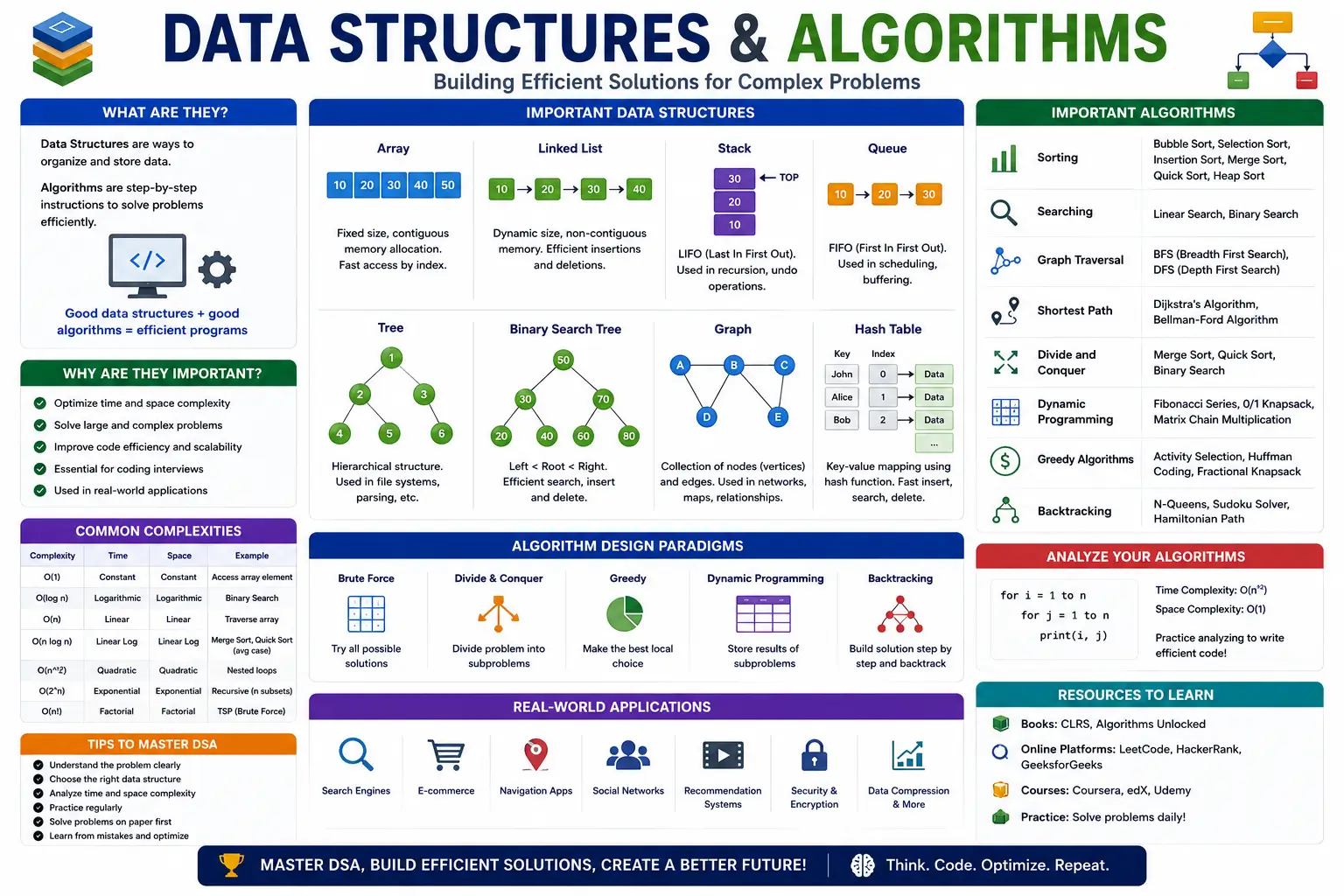
Data Structures & Algorithms: Build Strong Foundations in Programming
Data Structures and Algorithms (DSA) form the backbone of computer science and software engineering. They are essential for writing efficient code, solving complex problems, and excelling in technical interviews. The Data Structures & Algorithms course is designed to provide learners with a deep understanding of how data is organized, stored, and manipulated, alongside the logical steps required to solve computational problems effectively.
Why Learn Data Structures & Algorithms?
Every modern application—from search engines and social media platforms to financial systems—relies on efficient data handling and optimized algorithms. Mastering DSA not only improves your coding skills but also prepares you for competitive programming, technical interviews, and real‑world problem‑solving. Employers across the globe value candidates who can write clean, optimized, and scalable code.
What You’ll Learn
- Introduction to DSA: Understand the importance of data structures and algorithms in programming.
- Arrays & Strings: Learn how to store and manipulate collections of data.
- Linked Lists: Explore single, double, and circular linked lists for dynamic data storage.
- Stacks & Queues: Understand linear data structures used in memory management and scheduling.
- Trees & Graphs: Master hierarchical and network data structures for complex relationships.
- Hashing: Learn how to implement hash tables for fast data retrieval.
- Sorting Algorithms: Study bubble sort, merge sort, quicksort, and advanced sorting techniques.
- Searching Algorithms: Explore linear search, binary search, and graph traversal methods (DFS, BFS).
- Dynamic Programming: Solve optimization problems using memoization and tabulation.
- Greedy Algorithms: Learn strategies for solving problems step‑by‑step with local optimization.
- Complexity Analysis: Understand Big O notation and analyze time and space efficiency.
- Real‑World Applications: Apply DSA concepts to build efficient solutions for real projects.
Benefits of the Course
- Career Advancement: DSA is a core requirement for software engineering roles.
- Interview Preparation: Gain confidence for coding interviews at top tech companies.
- Problem‑Solving Skills: Learn to approach challenges logically and efficiently.
- Hands‑On Practice: Work on coding exercises, challenges, and projects.
- Future‑Ready Skills: Build a foundation for advanced topics like AI, machine learning, and big data.
Target Audience
This course is ideal for:
- Students pursuing computer science or IT degrees
- Professionals preparing for technical interviews and coding assessments
- Programmers aiming to strengthen their problem‑solving skills
- Anyone passionate about coding and algorithmic thinking
Why Choose This Course?
- SEO‑optimized content designed to rank well on Google
- Easy‑to‑read language for general audiences
- Structured with headings, bullet points, and clear formatting
- Includes benefits, learning outcomes, and target audience insights
By the end of the Data Structures & Algorithms course, you’ll be able to design efficient solutions, analyze code performance, and tackle complex programming challenges with confidence. Whether you’re preparing for a career in software engineering or aiming to excel in competitive programming, this course provides the skills and knowledge to succeed.
FAQ SECTION
1. What is a Data Structures and Algorithms Course?
A Data Structures and Algorithms Course teaches how data is organized, processed, and optimized using efficient programming techniques.
2. Who should take this course?
Students, software developers, programmers, and anyone preparing for coding interviews can benefit from this course.
3. Do I need programming experience?
Basic programming knowledge is helpful, but many courses start with beginner-friendly concepts.
4. Why are data structures and algorithms important?
They improve problem-solving abilities and help developers write efficient, scalable software.
5. What programming languages are used?
Concepts can be applied in languages such as C, C++, Java, Python, and JavaScript.
6. Will this course help with coding interviews?
Yes, the course covers common interview topics and problem-solving techniques.
7. What skills will I gain?
You will learn algorithm design, data organization, complexity analysis, and coding optimization.
8. Is certification provided?
Yes, a certificate is typically awarded upon successful completion.
9. What career opportunities can this course support?
It can help prepare for roles such as Software Developer, Software Engineer, Backend Developer, and Data Engineer.
10. How long does it take to complete?
Course duration varies depending on the learning format and curriculum depth.





Reviews
There are no reviews yet.