
Introduction
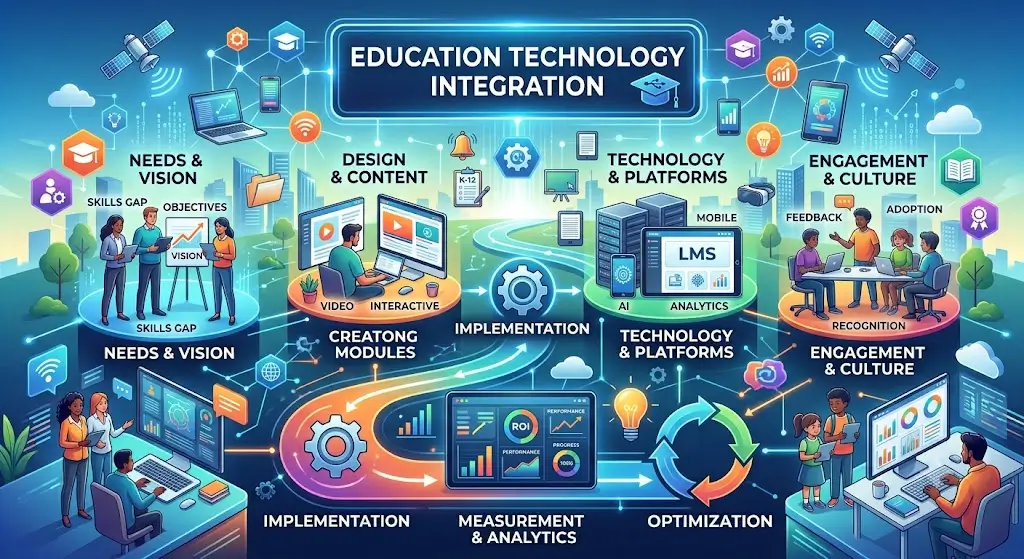
The Education Technology Integration Course is a comprehensive professional development program designed to equip learners with the knowledge and practical skills required to effectively integrate technology into educational settings. Technology has become an essential part of modern teaching and learning, transforming how educators deliver instruction, assess student performance, collaborate with learners, and create engaging educational experiences.
Educational institutions around the world are increasingly adopting digital tools, online learning platforms, interactive technologies, and artificial intelligence to improve learning outcomes and prepare students for the digital age. However, simply introducing technology into the classroom is not enough. Successful education technology integration requires thoughtful planning, instructional design, curriculum alignment, and continuous evaluation to ensure technology supports meaningful learning.
This course provides learners with a practical understanding of education technology integration while combining instructional design, educational technology, digital pedagogy, and learner-centered teaching strategies. Whether you are a teacher, instructional designer, trainer, academic coordinator, education consultant, school administrator, or learning and development professional, this course provides valuable knowledge and practical skills for integrating technology into educational environments.
Course Overview
Education technology integration focuses on using digital tools strategically to improve teaching effectiveness, learner engagement, collaboration, accessibility, and academic achievement. Effective technology integration enables educators to create flexible, interactive, and personalized learning experiences that meet the needs of diverse learners.
This course introduces learners to educational technology frameworks, digital learning environments, Learning Management Systems (LMS), classroom technologies, online teaching methods, assessment tools, educational applications, and technology-supported collaboration.
The curriculum combines educational theory with practical applications, enabling learners to confidently implement technology across classrooms, higher education institutions, corporate training environments, and online learning platforms.
What You Will Learn
The Education Technology Integration Course covers a broad range of topics related to planning, implementing, and evaluating technology-enhanced learning.
Learners begin by understanding the principles of education technology integration and its role in improving teaching quality and learner outcomes. They explore technology integration models, digital pedagogy, learner-centered instruction, and instructional planning.
The course introduces Learning Management Systems (LMS), virtual classrooms, educational software, cloud-based collaboration platforms, digital assessment tools, interactive whiteboards, presentation technologies, and communication platforms commonly used in education.
Participants study blended learning, hybrid learning, flipped classrooms, synchronous and asynchronous learning models, and online teaching strategies that support flexible education.
A major component of the course focuses on selecting appropriate educational technologies based on curriculum objectives, learner needs, accessibility requirements, and instructional goals. Learners understand how technology can support collaboration, creativity, critical thinking, communication, and problem-solving.
The course also explores multimedia learning, digital storytelling, video-based instruction, podcasts, simulations, virtual laboratories, educational games, and interactive learning activities that improve learner engagement.
Participants gain practical knowledge of assessment technologies, online quizzes, digital assignments, automated grading tools, learner feedback systems, and learning analytics used to monitor student progress and instructional effectiveness.
Additionally, learners study digital citizenship, online safety, cybersecurity awareness, responsible technology use, copyright considerations, accessibility standards, Universal Design for Learning (UDL), and inclusive technology practices.
The curriculum also introduces emerging technologies such as artificial intelligence, adaptive learning systems, virtual reality (VR), augmented reality (AR), gamification, and educational data analytics that continue to reshape modern education.
Finally, participants explore technology planning, professional development, change management, stakeholder collaboration, policy implementation, budgeting, and continuous improvement strategies for sustainable education technology integration.
Skills You Will Gain
Upon successful completion of the course, learners will develop valuable professional skills, including:
- Education technology integration
- Digital pedagogy
- Learning Management System (LMS) implementation
- Online teaching strategies
- Blended learning design
- Multimedia learning development
- Digital assessment
- Educational technology planning
- Classroom technology management
- Learning analytics
- Technology-enhanced instruction
- Digital collaboration
- Accessibility and inclusive learning
- Educational technology evaluation
- Digital citizenship and online safety
These skills are highly valued in schools, colleges, universities, corporate training organizations, educational technology companies, nonprofit organizations, and government education departments.
Benefits of the Course
The Education Technology Integration Course provides learners with practical knowledge and strategies for effectively using technology to improve education and training.
Participants gain expertise in integrating digital tools into teaching, designing technology-enhanced learning experiences, selecting appropriate educational technologies, and evaluating learning outcomes. These competencies improve learner engagement, instructional quality, and educational innovation.
The course also strengthens communication, instructional design, leadership, project management, and digital literacy skills that support career advancement across education and training sectors.
As educational institutions continue investing in digital transformation and online learning, professionals with expertise in education technology integration remain highly sought after.
Learners also gain the confidence to adapt to emerging educational technologies and support continuous improvement within their organizations.
Who Should Enroll?
This course is ideal for:
- Teachers
- College and university faculty
- Instructional designers
- Academic coordinators
- Curriculum developers
- Corporate trainers
- Learning and development professionals
- School administrators
- Education consultants
- Educational technology specialists
- Online course creators
- E-learning developers
- Teacher educators
- Education students
- Anyone interested in digital education and instructional technology
No prior experience with educational technology is required. The course is suitable for beginners as well as experienced education professionals.
Career Opportunities
After completing the course, learners may pursue opportunities such as:
- Educational Technology Specialist
- Instructional Designer
- Digital Learning Coordinator
- E-learning Developer
- Academic Technology Manager
- Learning Experience Designer
- Online Learning Specialist
- Corporate Trainer
- Learning and Development Consultant
- Curriculum Developer
- Educational Consultant
- LMS Administrator
- Faculty Development Coordinator
- Educational Innovation Manager
- Technology Integration Coach
Professionals with education technology integration expertise are employed by schools, universities, edtech companies, corporate training organizations, government agencies, nonprofit organizations, and online education providers.
Certification
Upon successful completion of the Education Technology Integration Course, participants receive a certification recognizing their knowledge of educational technology integration, digital pedagogy, online learning, instructional technology, learning management systems, multimedia learning, and technology-enhanced teaching. This certification enhances professional credibility and supports career advancement in education, instructional design, educational technology, and learning and development.
Why Choose This Course?
The Education Technology Integration Course combines instructional design principles with modern educational technology to provide a comprehensive learning experience.
The curriculum focuses on digital pedagogy, technology-enhanced instruction, online learning, blended learning, multimedia learning, educational technology planning, learning analytics, accessibility, and emerging technologies. Learners gain practical skills that help them create engaging, innovative, and learner-centered educational experiences.
Whether your goal is to improve classroom teaching, develop online learning programs, integrate educational technology into training initiatives, or build a career in instructional design and educational technology, this course provides the knowledge, practical skills, and confidence needed to succeed.
Enroll today and build a strong foundation in education technology integration, digital pedagogy, instructional technology, and innovative teaching practices.
FAQ Section
1. What is the Education Technology Integration Course?
The course teaches learners how to effectively integrate digital technologies into teaching and learning environments to improve engagement, collaboration, and educational outcomes.
2. Is this course suitable for beginners?
Yes. The course is designed for beginners as well as experienced educators and training professionals interested in educational technology.
3. What topics are covered in this course?
Topics include education technology integration, digital pedagogy, LMS platforms, blended learning, online teaching, multimedia learning, digital assessment, learning analytics, accessibility, and emerging educational technologies.
4. Will I receive a certificate after completing the course?
Yes. Participants receive a certificate upon successful completion of the course.
5. Do I need prior experience with educational technology?
No. The course starts with foundational concepts and gradually introduces advanced technology integration strategies.
6. Who should enroll in this course?
Teachers, instructional designers, trainers, curriculum developers, academic administrators, education consultants, online course creators, and learning and development professionals can benefit from this course.
7. Is the course fully online?
Yes. The course offers flexible online learning, allowing participants to study at their own pace.
8. What skills will I gain?
You will gain skills in education technology integration, digital pedagogy, online teaching, LMS management, digital assessment, multimedia learning, learning analytics, and technology-enhanced instruction.
9. Can this course improve my career opportunities?
Yes. Education technology integration skills are highly valued in schools, universities, edtech companies, corporate training organizations, government education departments, and online learning providers.
10. Why is education technology integration important?
Education technology integration enhances learner engagement, supports personalized learning, improves collaboration, increases accessibility, enables data-driven instruction, and prepares students for success in a technology-driven world.


Reviews
There are no reviews yet.