
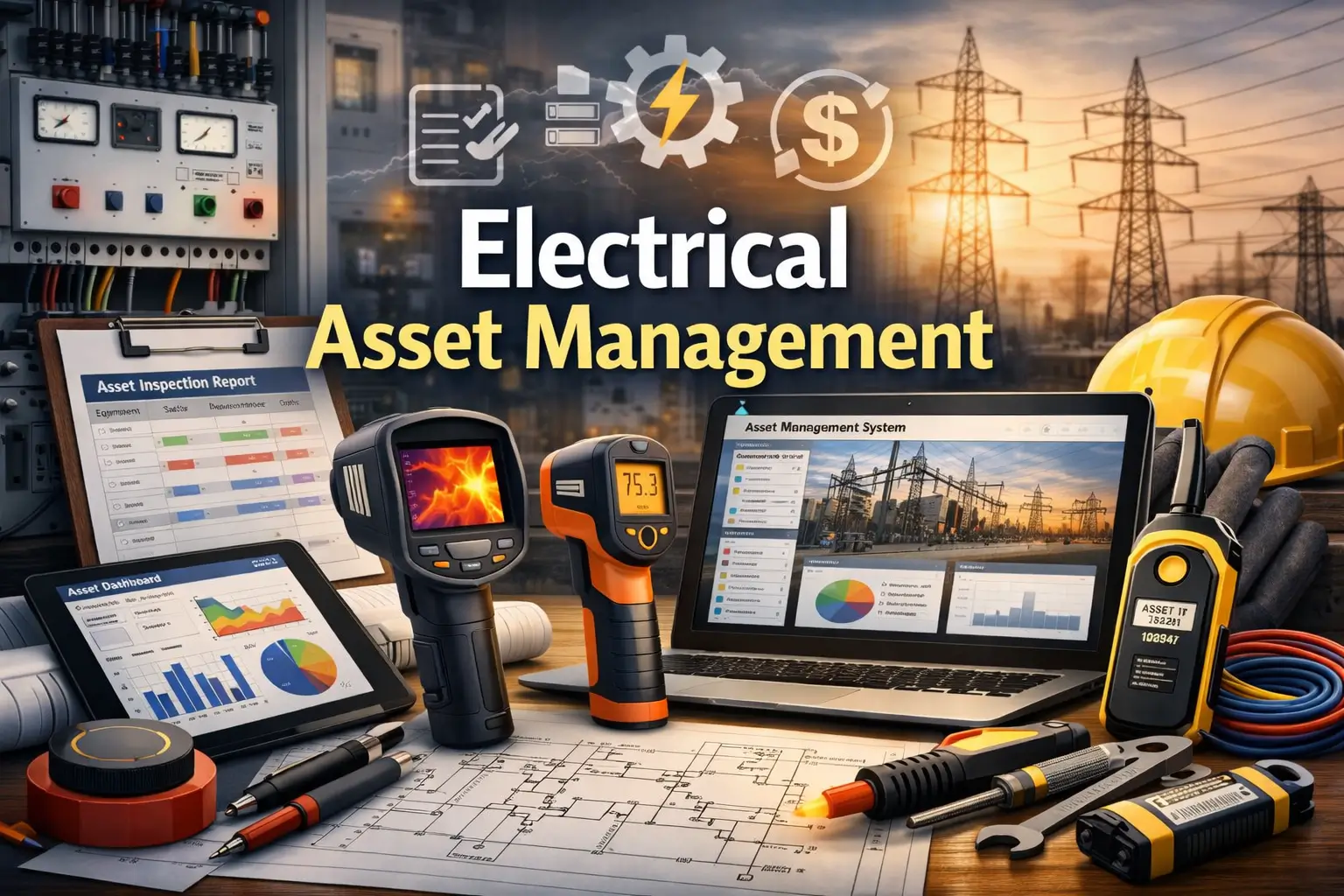
Introduction to Electrical Asset Management
The Electrical Asset Management Course is a professional training program designed to help learners understand how electrical assets are planned, operated, maintained, and optimized throughout their lifecycle. Electrical assets include motors, transformers, switchgear, distribution systems, and other critical electrical equipment.
Asset management ensures that electrical systems operate efficiently, safely, and cost-effectively while minimizing failures and downtime. Engineers must make data-driven decisions to maintain performance and extend asset life.
This course combines electrical engineering principles, maintenance strategies, reliability engineering, and industrial management practices to provide practical knowledge applicable across industries such as manufacturing, utilities, infrastructure, and energy sectors.
Why Electrical Asset Management Matters
Proper asset management reduces operational costs, improves system reliability, increases equipment lifespan, and ensures safety compliance. Poor management can lead to unexpected failures, high maintenance costs, and operational inefficiencies.
Understanding electrical asset management enables professionals to make informed maintenance decisions, improve system reliability, and optimize resource utilization.
The Electrical Asset Management Course builds essential skills required for modern industrial maintenance and reliability engineering roles.
Course Overview
The Electrical Asset Management Course introduces learners to the principles and practices of managing electrical equipment throughout its lifecycle.
Participants begin by studying asset classification and lifecycle management. The course explores maintenance strategies, condition monitoring, risk-based maintenance, and reliability engineering concepts.
Learners also study performance evaluation, failure analysis, documentation systems, and cost optimization methods.
Practical case studies demonstrate real-world asset management practices in industrial environments.
Benefits of the Course
The Electrical Asset Management Course provides practical knowledge for optimizing the performance and lifecycle of electrical equipment.
Participants gain confidence in managing assets, improving reliability, reducing downtime, and optimizing maintenance costs. The course also strengthens analytical and strategic decision-making skills.
As industries move toward smart maintenance and reliability engineering, asset management professionals are in high demand.
Career Opportunities
- Electrical Asset Manager
- Maintenance Engineer
- Reliability Engineer
- Electrical Engineer
- Plant Maintenance Manager
- Industrial Maintenance Engineer
- Condition Monitoring Engineer
- Technical Manager
- Operations Engineer
- Project Engineer
- Asset Optimization Specialist
- Facility Engineer
- Electrical Consultant
- Senior Asset Manager (future path)
Certification
Upon successful completion, learners receive a professional certificate recognizing expertise in electrical asset lifecycle management, maintenance optimization, reliability engineering, and performance improvement. This certification supports career advancement across industrial, utility, and infrastructure sectors.
Frequently Asked Questions (FAQs)
1. What is Electrical Asset Management?
It is the process of managing and optimizing electrical equipment throughout its lifecycle.
2. Who should take this course?
Electrical engineers, maintenance professionals, and reliability engineers.
3. Do I need prior experience?
Basic electrical knowledge is recommended.
4. What topics are covered?
Maintenance strategies, RCM, condition monitoring, and asset lifecycle management.
5. Is this course practical?
Yes, it includes real-world industrial asset management concepts.
6. Will I learn reliability engineering?
Yes, reliability-centered maintenance is included.
7. How does this help my career?
It builds skills for maintenance, reliability, and asset management roles.
8. Does it include cost optimization?
Yes, cost and performance optimization are covered.
9. Can this improve job opportunities?
Yes, asset management professionals are in high demand.
10. What industries use asset management?
Manufacturing, utilities, power plants, infrastructure, and industrial maintenance sectors.





Reviews
There are no reviews yet.