
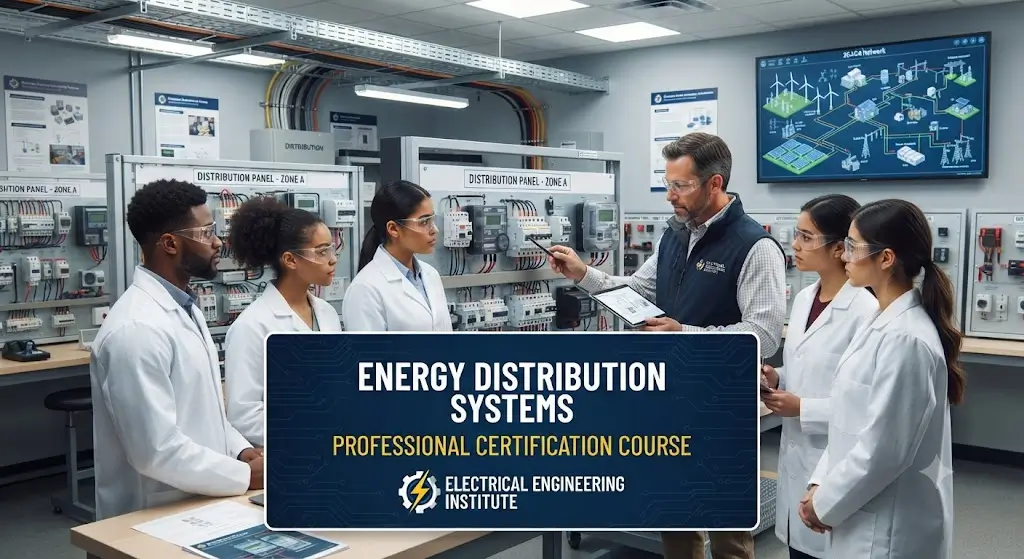
Introduction to Energy Distribution Systems
The Energy Distribution Systems Course is a professional training program designed to help learners understand how electrical energy is transmitted, transformed, and distributed to consumers. Energy distribution is a critical part of the power system that ensures reliable electricity delivery from substations to end users.
Energy distribution systems involve step-down transformers, distribution feeders, switchgear, protection devices, and control systems that manage safe and efficient power flow. Engineers must understand system architecture, load requirements, fault handling, and protection coordination.
This course combines electrical engineering principles, power systems design, industrial infrastructure knowledge, and safety standards to provide practical knowledge applicable across utilities, industries, and infrastructure projects.
Why Energy Distribution Systems Matter
Efficient energy distribution ensures stable power supply, reduces losses, improves system reliability, and enhances safety. Poorly designed distribution systems can lead to outages, equipment damage, and inefficiencies.
Understanding energy distribution systems enables professionals to design robust electrical networks, manage loads effectively, and ensure continuous power availability.
The Energy Distribution Systems Course enables learners to build strong expertise in electrical distribution engineering and system management.
Course Overview
The Energy Distribution Systems Course introduces learners to the principles and structure of electrical energy distribution networks.
Participants begin by studying electrical system fundamentals and distribution architecture. The course explores substations, transformers, feeders, switchgear, load management, and protection systems.
Learners also study grounding systems, fault detection, voltage regulation, and system reliability concepts.
Practical case studies demonstrate real-world energy distribution system applications.
Benefits of the Course
The Energy Distribution Systems Course provides practical knowledge for understanding and managing electrical distribution networks efficiently and safely.
Participants gain confidence in analyzing power systems, managing energy flow, improving reliability, and ensuring system safety. The course also strengthens analytical and engineering decision-making skills.
As global energy demand increases, professionals with distribution system expertise are highly in demand.
Career Opportunities
- Power Distribution Engineer
- Electrical Engineer
- Substation Engineer
- Utility Engineer
- Power System Engineer
- Maintenance Engineer
- Project Engineer
- Infrastructure Engineer
- Electrical Consultant
- Operations Engineer
- Technical Engineer
- Energy Systems Analyst
- Site Engineer
- Senior Power Engineer (future path)
Certification
Upon completion, learners receive a professional certificate recognizing expertise in energy distribution systems, power flow management, substation operations, and electrical network design. This supports career growth in utilities, infrastructure, and industrial power sectors.
Frequently Asked Questions (FAQs)
1. What is Energy Distribution Systems?
It is the study of how electrical energy is delivered from substations to end users.
2. Who should take this course?
Electrical engineers, power engineers, and students in electrical fields.
3. Do I need prior experience?
Basic electrical knowledge is recommended.
4. What topics are included?
Transformers, substations, switchgear, load management, and protection systems.
5. Is this course practical?
Yes, it includes real-world system design and applications.
6. Will I learn single line diagrams?
Yes, SLD interpretation is included.
7. How does it help my career?
It builds skills for power system and utility engineering roles.
8. Does it include fault analysis?
Yes, fault detection and isolation are covered.
9. Is this useful for jobs?
Yes, distribution engineers are highly demanded.
10. Which industries use this?
Power utilities, industries, infrastructure, and energy companies.




Reviews
There are no reviews yet.