
Introduction
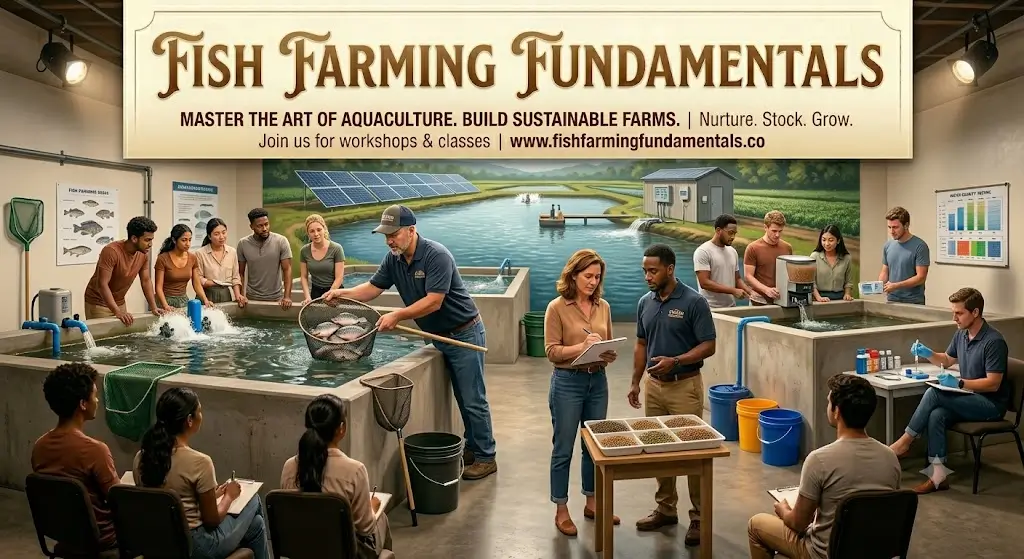
The Fish Farming Fundamentals Course helps learners understand the basics of aquaculture and fish production systems. It explains how fish are raised in controlled environments such as ponds and tanks.
Therefore, learners develop basic knowledge of fish farming methods and sustainable aquatic production.
Importance of Fish Farming Fundamentals Course
This course is important because fish is a major source of food and income in many regions. First, learners understand how fish grow in controlled systems. Then, they learn how to manage water quality and feeding.
Moreover, it supports food production and rural livelihoods. Therefore, fish farming becomes an important part of sustainable agriculture.
In addition, it helps improve awareness of aquaculture practices.
Key Learning Areas
Fish Breeding Basics
Learners understand how fish reproduce and grow in farming systems.
Pond Management
Learners study water quality, cleaning, and maintenance techniques.
Feeding Practices
Learners learn proper fish nutrition and feeding schedules.
Sustainable Aquaculture
Learners explore eco-friendly fish farming methods.
Skills You Will Gain
- Basic fish farming knowledge
- Aquaculture management skills
- Pond maintenance understanding
- Fish feeding techniques
- Sustainable farming awareness
- Water quality management basics
Benefits
This course helps learners understand how fish farming works in real conditions. First, it builds basic aquaculture knowledge. In addition, it improves awareness of sustainable food production.
Moreover, learners understand how fish farming supports livelihoods and food supply systems.
Who Should Join
- Students
- Beginners
- Farmers
- Aquaculture learners
- Rural entrepreneurs
No prior experience is required.
Career Opportunities
- Fish Farm Assistant
- Aquaculture Worker
- Pond Technician Assistant
- Fisheries Support Staff
- Rural Aquaculture Helper





Reviews
There are no reviews yet.