
Introduction
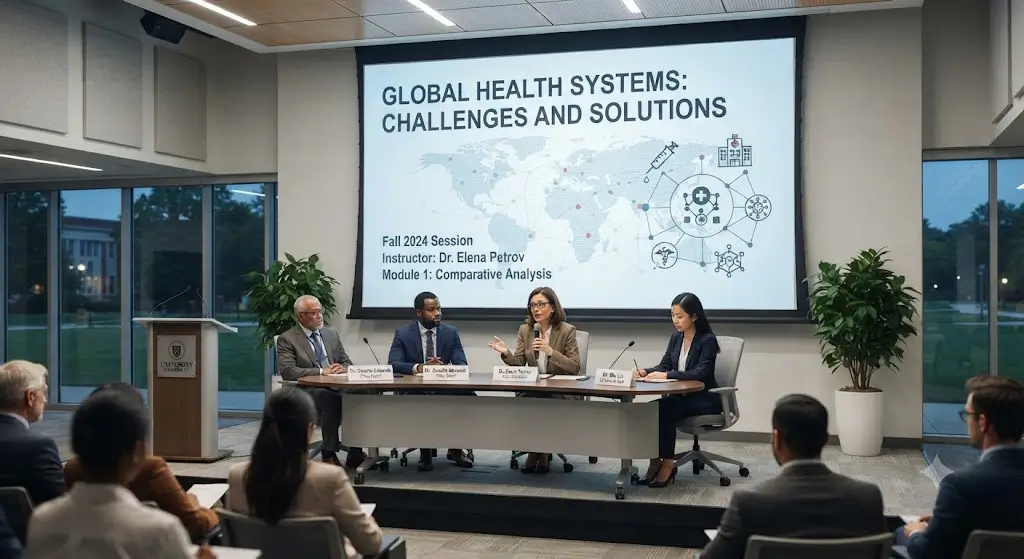
Healthcare challenges are not limited to individual countries because diseases, healthcare inequalities, and health emergencies often affect populations worldwide. The Global Health Systems Course introduces learners to the principles, structures, and strategies involved in managing healthcare systems at an international level.
Global health systems focus on improving healthcare access, strengthening healthcare delivery, reducing health disparities, and addressing worldwide health challenges. Therefore, professionals with knowledge of global health systems play an important role in developing solutions for healthcare improvement across different communities and regions.
Moreover, this course explains how healthcare systems operate, how countries manage healthcare resources, and how international organizations contribute to global health development. Learners explore healthcare models, health policies, healthcare financing, disease control programs, health workforce management, and strategies for improving healthcare accessibility.
In addition, participants develop practical skills in healthcare system analysis, global health research, policy understanding, health program planning, and evaluation methods. These competencies prepare learners for careers in public health organizations, international healthcare agencies, government departments, research institutions, NGOs, and healthcare management sectors.
By completing this course, learners establish a strong foundation in global health systems while contributing to improved healthcare planning, health equity, and stronger healthcare networks worldwide.
Course Overview
The Global Health Systems Course provides comprehensive training in healthcare structures, international health policies, health system management, and global healthcare improvement strategies. Furthermore, the course explains how healthcare systems respond to population needs and global health challenges.
Introduction to Global Health Systems
The course begins by introducing the fundamental concepts of global health systems and their importance in improving healthcare worldwide. Learners understand healthcare access, health challenges, system structures, and global health priorities.
Healthcare System Models
Learners explore different healthcare models, including public healthcare systems, private healthcare systems, universal healthcare approaches, and mixed healthcare structures. Consequently, they understand how countries organize healthcare delivery.
Global Health Organizations
The course explains the role of international health organizations, healthcare partnerships, and global initiatives in improving healthcare outcomes and responding to health challenges.
Healthcare Access and Health Equity
Participants study healthcare inequalities, social determinants of health, barriers to healthcare access, and strategies for promoting health equity.
Healthcare Financing Systems
Learners explore healthcare funding models, resource allocation, insurance systems, healthcare economics, and approaches for improving healthcare sustainability.
Global Disease Prevention and Control
The course introduces international approaches to disease prevention, outbreak management, vaccination programs, and global health emergency responses.
Healthcare Workforce Management
Learners understand the importance of healthcare professionals, workforce planning, training systems, and strategies for strengthening healthcare capacity.
Health Policy and Governance
The course explains global health policies, healthcare regulations, governance structures, and decision-making processes affecting international health systems.
Digital Health and Healthcare Innovation
Participants explore digital healthcare solutions, telemedicine, health information systems, artificial intelligence, and technologies improving global healthcare delivery.
Future Challenges in Global Health
Finally, learners study emerging global health issues, climate-related health risks, healthcare sustainability, and future strategies for strengthening health systems.
Overall, this course combines public health knowledge with healthcare management concepts, enabling learners to understand every aspect of global health systems while preparing them for careers in healthcare administration, international health, research, and public health sectors.
What You Will Learn
The Global Health Systems Course equips learners with practical knowledge and analytical skills required to understand international healthcare structures and improve health system performance.
Understanding Global Health Concepts
First, learners understand global health principles, healthcare challenges, health inequalities, and factors influencing worldwide healthcare outcomes.
Analyzing Healthcare Systems
Participants learn how different countries design, organize, and manage healthcare systems to meet population needs.
Understanding Healthcare Policies
The course teaches learners about global health policies, governance frameworks, healthcare regulations, and international health strategies.
Learning Health Equity Approaches
Learners explore healthcare disparities, social determinants of health, and methods for improving healthcare accessibility.
Studying Healthcare Financing
Participants gain knowledge of healthcare funding systems, resource management, insurance models, and sustainable healthcare planning.
Developing Health Program Skills
Learners understand global health programs, disease prevention initiatives, healthcare interventions, and program evaluation methods.
Exploring Digital Health Solutions
The course introduces modern healthcare technologies, digital health systems, and innovations improving healthcare delivery.
Improving Decision-Making Skills
Participants learn how research, healthcare data, and policy analysis support better global health decisions.
Skills You Will Gain
After completing the Global Health Systems Course, learners will develop valuable healthcare, analytical, and management skills required for global health roles.
Global Health Analysis Skills
Develop the ability to evaluate healthcare systems, identify challenges, and understand international health trends.
Healthcare Management Skills
Gain knowledge of healthcare planning, resource management, healthcare delivery, and system improvement strategies.
Policy Understanding Skills
Learn how global health policies influence healthcare development and population health outcomes.
Research Skills
Develop skills in healthcare research, data interpretation, health system evaluation, and evidence-based decision-making.
Health Equity Skills
Understand strategies for reducing healthcare inequalities and improving healthcare accessibility.
Communication Skills
Strengthen professional communication skills required for working with healthcare teams and international organizations.
Problem-Solving Skills
Analyze global health challenges and develop practical solutions for healthcare improvement.
Leadership Skills
Build confidence to contribute to healthcare planning, international health programs, and healthcare system development.
Benefits of the Course
The Global Health Systems Course provides learners with essential knowledge and practical skills required to understand international healthcare structures, address global health challenges, and support healthcare improvement initiatives. Moreover, the course combines public health concepts, healthcare management, and global strategies to prepare learners for modern healthcare environments.
Develop Global Healthcare Knowledge
First, learners gain a strong understanding of global health concepts, healthcare systems, international health challenges, and factors affecting population health worldwide. As a result, they develop the ability to analyze healthcare issues from a global perspective.
Understand Different Healthcare Models
Healthcare systems vary across countries. Therefore, this course helps learners understand different healthcare models, service delivery approaches, and strategies used to improve healthcare accessibility.
Improve Health System Analysis Skills
Effective healthcare improvement requires proper evaluation. Consequently, learners develop skills to analyze healthcare structures, identify challenges, evaluate performance, and recommend improvements.
Learn Health Equity Strategies
Healthcare inequality remains a major global challenge. Furthermore, learners understand social determinants of health, barriers to healthcare access, and approaches for promoting equal healthcare opportunities.
Strengthen Healthcare Management Skills
The course develops knowledge of healthcare planning, resource allocation, healthcare financing, workforce management, and system improvement strategies.
Understand Global Health Policies
Health policies influence healthcare outcomes worldwide. Accordingly, learners gain knowledge of international health policies, governance structures, regulations, and healthcare decision-making processes.
Develop Research and Data Skills
Global health decisions depend on accurate information. Therefore, learners improve their abilities in healthcare research, data analysis, health system evaluation, and evidence-based planning.
Explore Healthcare Innovation
Modern technologies are transforming healthcare delivery. Moreover, learners understand digital health solutions, telemedicine, healthcare innovations, and future trends in global healthcare.
Expand Career Opportunities
The demand for professionals with global health knowledge is increasing due to worldwide healthcare challenges. As a result, completing this course improves career opportunities in healthcare organizations, research institutions, international agencies, and public health sectors.
Prepare for Advanced Learning
The course provides a strong foundation for advanced studies in global health, public health, healthcare administration, health policy, epidemiology, and healthcare management.
Support Better Healthcare Outcomes
Global health systems aim to improve healthcare access, quality, and sustainability. Ultimately, this course prepares learners to contribute to stronger healthcare systems and healthier communities worldwide.
Who Should Enroll
The Global Health Systems Course is designed for individuals who want to develop expertise in international healthcare, public health, and healthcare system management.
Public Health Students
Students pursuing public health, healthcare management, epidemiology, medicine, nursing, or related fields can strengthen their understanding of global healthcare challenges.
Healthcare Professionals
Doctors, nurses, healthcare workers, and medical professionals can improve their knowledge of international healthcare systems and global health strategies.
Healthcare Administrators
Healthcare managers and administrators can gain insights into healthcare planning, system improvement, resource management, and global healthcare practices.
Government Health Professionals
Professionals working in government health departments and public health programs can enhance their understanding of global healthcare policies and initiatives.
Researchers
Healthcare researchers and analysts can develop knowledge of global health trends, healthcare systems, research methods, and health improvement strategies.
NGO Professionals
Individuals working with healthcare NGOs and community development organizations can understand global health programs and healthcare improvement approaches.
Healthcare Consultants
Consultants working in healthcare organizations can improve their knowledge of international healthcare structures and management strategies.
Anyone Interested in Global Health
Anyone interested in healthcare systems, public health improvement, international development, and healthcare management can enroll in this course.
Career Opportunities
The increasing need for stronger healthcare systems, disease prevention programs, and international health solutions has created excellent career opportunities for professionals with knowledge of global health systems. Therefore, completing the Global Health Systems Course can help learners build rewarding careers across healthcare, research, policy, and public health sectors.
Potential career roles include:
- Global Health Specialist
- Public Health Officer
- Health Systems Analyst
- International Health Coordinator
- Healthcare Program Manager
- Global Health Research Associate
- Health Policy Analyst
- Healthcare Administrator
- Public Health Consultant
- Health Program Coordinator
- Healthcare Project Manager
- Global Health Advisor
- Healthcare Quality Improvement Specialist
- Health Systems Consultant
- International Development Specialist
Graduates may find employment opportunities in:
- International health organizations
- Government health departments
- Hospitals and healthcare institutions
- Public health agencies
- Research organizations
- Universities and healthcare education centers
- Non-governmental organizations (NGOs)
- Healthcare consulting firms
- Global healthcare programs
- Health policy organizations
Furthermore, this course provides a strong foundation for advanced education and specialization in global health, public health management, healthcare policy, epidemiology, health economics, and international healthcare development.
Certification
Upon successfully completing the Global Health Systems Course, learners will receive a Course Completion Certificate that recognizes their knowledge of healthcare systems, global health challenges, healthcare policies, health equity, and international healthcare management strategies.
Moreover, the certificate demonstrates your commitment to professional development and continuous learning in global healthcare and public health fields. It can strengthen your resume, improve your professional profile, and increase employment opportunities with healthcare organizations, research institutions, government agencies, NGOs, and international health programs.
Additionally, the certification validates your understanding of healthcare system structures, global health policies, healthcare planning, resource management, and evidence-based decision-making. Consequently, it supports career advancement while preparing learners for healthcare management, research, policy, and public health roles.
Conclusion
Global health systems play a crucial role in improving healthcare access, reducing health inequalities, and addressing worldwide health challenges. Therefore, professionals with knowledge of global healthcare structures and strategies are essential for developing effective solutions and strengthening healthcare systems.
The Global Health Systems Course provides comprehensive knowledge of healthcare models, international health policies, healthcare financing, health equity, disease prevention strategies, and healthcare system improvement approaches. Moreover, learners develop practical skills that enable them to analyze healthcare challenges and support effective global health initiatives.
Throughout the course, participants strengthen their analytical thinking, research abilities, communication skills, and healthcare management knowledge while exploring modern healthcare innovations and international health strategies. In addition, they gain valuable insights into healthcare planning, policy development, and sustainable healthcare solutions.
Whether your goal is to work in public health, support international healthcare programs, improve healthcare systems, or build a career in global health management, this course provides the knowledge and confidence needed for long-term success. Ultimately, it prepares learners to contribute to healthier communities, stronger healthcare networks, and improved global health outcomes.
FAQ SECTION
1. What is the Global Health Systems Course?
The Global Health Systems Course provides training in international healthcare structures, healthcare policies, health equity, healthcare management, and global health improvement strategies.
2. Who should enroll in this course?
This course is ideal for public health students, healthcare professionals, administrators, researchers, NGO workers, policymakers, and individuals interested in global healthcare.
3. Do I need prior global health experience?
No. The course is suitable for beginners as well as professionals who want to improve their understanding of global healthcare systems.
4. What topics are covered in this course?
The course covers healthcare models, global health policies, healthcare financing, health equity, disease prevention, healthcare management, and international health challenges.
5. What skills will I gain after completing this course?
You will develop skills in healthcare system analysis, global health research, policy understanding, healthcare management, and evidence-based decision-making.
6. Why are global health systems important?
Global health systems help improve healthcare access, reduce health inequalities, manage health emergencies, and strengthen healthcare delivery worldwide.
7. What career opportunities are available after completing this course?
Graduates can pursue careers as Global Health Specialists, Health Systems Analysts, Public Health Officers, Healthcare Program Managers, Health Policy Analysts, and International Health Coordinators.
8. Will I receive a certificate after completing this course?
Yes. Learners who successfully complete the course will receive a Course Completion Certificate that validates their knowledge and skills in global health systems.
9. How do global health systems improve communities?
They improve communities by increasing healthcare access, supporting disease prevention programs, strengthening healthcare services, and promoting health equity.
10. How can this course benefit my career?
This course improves your understanding of international healthcare, strengthens your professional profile, expands career opportunities, and prepares you for roles in healthcare, research, and public health sectors.



Reviews
There are no reviews yet.