
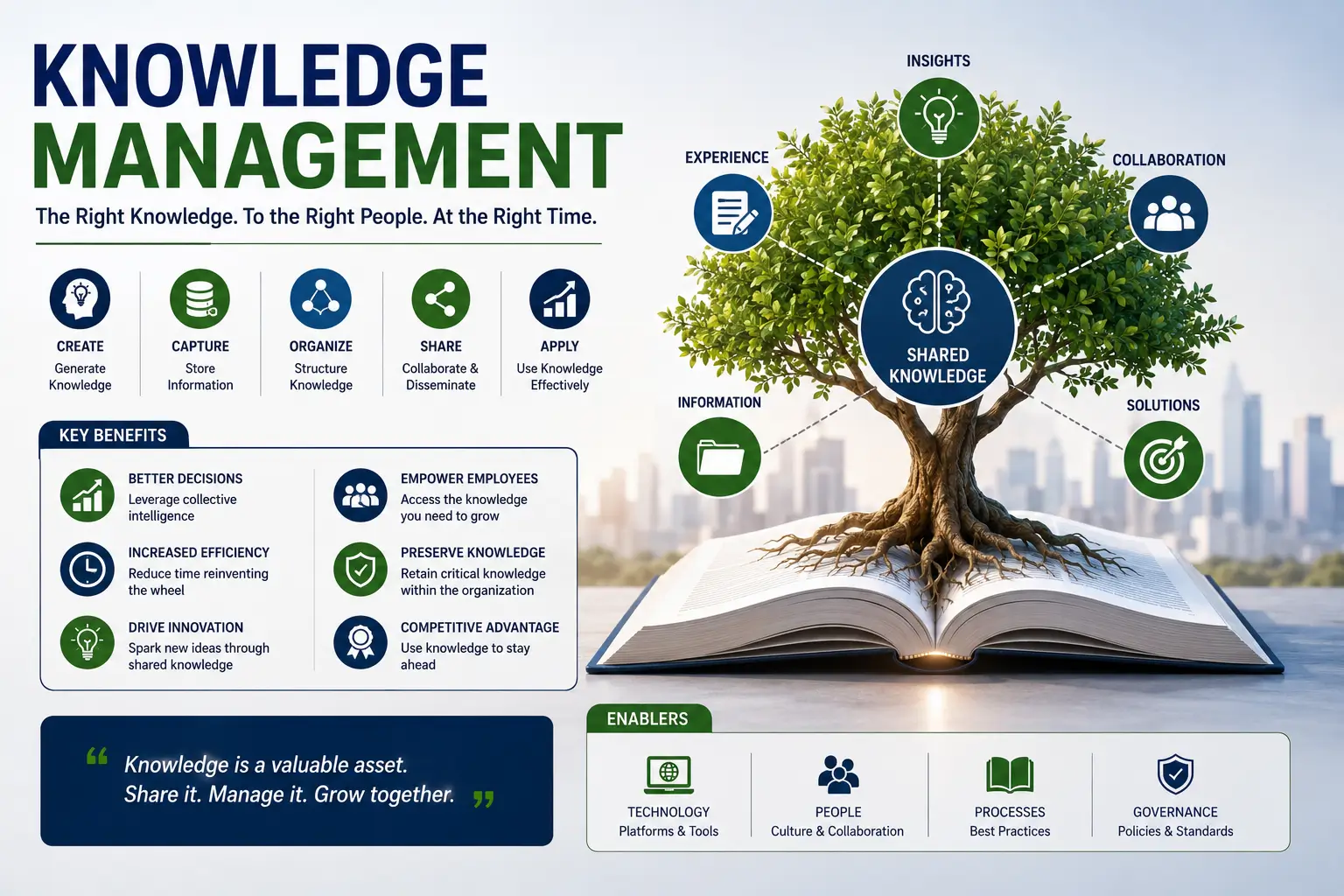
Knowledge Management Course
The Knowledge Management Course is designed to help learners understand how organizations create, capture, share, and utilize knowledge effectively. Moreover, the course provides practical knowledge of knowledge management systems, information sharing strategies, organizational learning, and knowledge retention techniques. As a result, learners develop the skills needed to improve collaboration, innovation, and business performance.
Knowledge Management Course Overview
Knowledge is one of the most valuable assets in any organization. Therefore, managing knowledge effectively is essential for maintaining competitiveness, improving decision-making, and supporting continuous learning. This Knowledge Management Course provides a comprehensive understanding of how organizations organize and leverage knowledge for long-term success.
In addition, learners explore knowledge-sharing frameworks, collaboration tools, and information management practices. Furthermore, they gain practical insights into building knowledge-driven organizations.
Fundamentals of Knowledge Management
The course begins with the fundamentals of knowledge management. Therefore, students learn the concepts, principles, and benefits of managing organizational knowledge. Moreover, they understand the role of knowledge in improving productivity, innovation, and business growth.
These foundations help learners develop strong knowledge management skills.
Knowledge Creation and Capture
Creating and capturing knowledge is essential for organizational success. Consequently, learners study methods for documenting expertise, collecting information, and preserving valuable organizational knowledge. In addition, they explore techniques for converting individual knowledge into shared organizational assets.
As a result, students gain practical knowledge-capture expertise.
Knowledge Sharing and Collaboration
Knowledge sharing promotes teamwork and continuous improvement. Therefore, the course covers collaboration strategies, communication methods, communities of practice, and knowledge-sharing platforms. Furthermore, learners understand how effective collaboration supports innovation and organizational learning.
These skills strengthen workplace communication and teamwork.
Knowledge Management Systems
Technology plays a significant role in knowledge management. Consequently, students learn about knowledge repositories, databases, content management systems, and digital collaboration tools. In addition, they explore how technology supports efficient knowledge storage and retrieval.
These concepts improve information management capabilities.
Knowledge Retention Strategies
Organizations must retain critical knowledge to avoid losing valuable expertise. Therefore, learners study succession planning, documentation practices, mentoring programs, and knowledge transfer techniques. Moreover, they understand how retention strategies support long-term organizational success.
As a result, students develop valuable knowledge preservation skills.
Organizational Learning and Innovation
Learning organizations continuously adapt and improve. Consequently, the course introduces organizational learning models, innovation strategies, and continuous improvement practices. In addition, learners explore how knowledge management drives creativity and business transformation.
These skills support innovation and growth.
Information Governance and Best Practices
Effective governance ensures knowledge remains accurate, secure, and accessible. Therefore, students learn information governance principles, compliance requirements, data management practices, and quality control measures. Furthermore, they understand how governance supports reliable decision-making.
These concepts strengthen strategic management capabilities.
Practical Learning and Case Studies
The Knowledge Management Course includes practical assignments, collaboration projects, and real-world case studies. Moreover, learners analyze successful knowledge management initiatives and apply concepts to realistic business scenarios.
As a result, students gain hands-on experience and industry-relevant knowledge.
Learning Outcomes
By the end of this course, learners will be able to:
- Understand knowledge management principles and frameworks.
- Create and implement effective knowledge-sharing strategies.
- Use knowledge management systems and digital tools.
- Support organizational learning and innovation initiatives.
- Apply knowledge retention and transfer techniques.
- Improve collaboration and information accessibility.
- Contribute to knowledge-driven organizational success.
Who Should Enroll?
This course is ideal for managers, HR professionals, business leaders, consultants, knowledge specialists, students, and professionals interested in organizational learning and information management. Moreover, it benefits anyone seeking to improve knowledge-sharing and collaboration skills.
Conclusion
The Knowledge Management Course provides comprehensive training in knowledge sharing, information management, organizational learning, and knowledge retention. Furthermore, it combines theoretical concepts with practical applications. As a result, learners gain the expertise needed to build knowledge-driven organizations and improve business performance.
FAQ SECTION
What is a Knowledge Management Course?
A Knowledge Management Course teaches how to capture, organize, share, and use knowledge within organizations.
Who can enroll in this course?
Students, managers, HR professionals, consultants, and beginners can enroll.
Do I need prior experience?
No, beginners can learn the fundamentals of knowledge management.
What skills will I learn?
You will learn knowledge sharing, information management, collaboration, and knowledge retention strategies.
Is practical training included?
Yes, the course includes projects, case studies, and practical exercises.
Will I receive a certificate?
Yes, learners receive a course completion certificate.
Does the course cover knowledge management software?
Yes, learners are introduced to knowledge management systems and collaboration tools.
What career opportunities are available?
Career options include Knowledge Manager, Information Specialist, Learning and Development Manager, Business Analyst, and Organizational Development Consultant.
Why is knowledge management important?
Knowledge management improves collaboration, decision-making, innovation, and organizational efficiency.
Can organizations benefit from knowledge management?
Yes, it helps retain expertise, improve productivity, and support business growth.





Reviews
There are no reviews yet.