
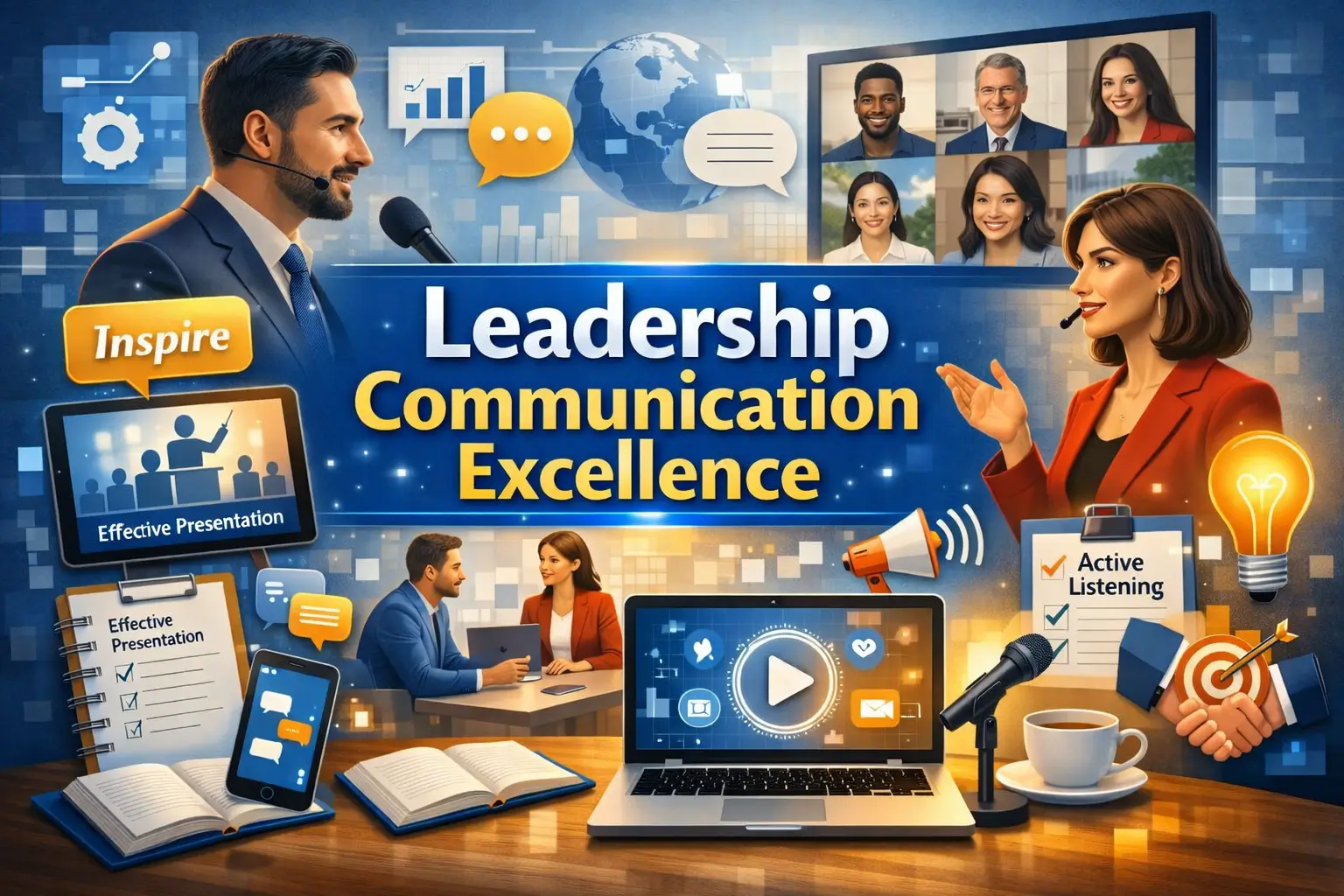
Introduction to Leadership Communication Excellence
The Leadership Communication Excellence course provides learners with a comprehensive introduction to the communication skills that successful leaders use to guide teams, build trust, and achieve organizational objectives. Communication is one of the most valuable leadership competencies because it influences decision-making, teamwork, motivation, and workplace culture.
Effective leaders communicate with clarity, transparency, empathy, and confidence. This course helps learners understand how communication supports leadership effectiveness in both everyday interactions and strategic business situations.
Learners are introduced to practical communication techniques that strengthen leadership capabilities and improve workplace relationships.
Importance of Leadership Communication Excellence
Strong communication is essential for effective leadership.
The Leadership Communication Excellence course helps learners:
- Understand leadership communication principles
- Improve verbal and written communication
- Develop active listening skills
- Build professional confidence
- Strengthen interpersonal relationships
- Enhance collaboration and teamwork
- Improve conflict resolution abilities
- Support organizational success
Effective communication helps leaders inspire, guide, and influence others.
Understanding Leadership Communication
Leadership communication involves sharing ideas clearly while motivating and guiding others.
Learners explore:
What is Leadership Communication
Understanding communication in leadership roles.
Communication Responsibilities
Supporting employees through clear messaging.
Leadership Presence
Communicating with confidence and professionalism.
Trust Building
Creating credibility through honest communication.
These concepts establish the foundation of leadership communication.
Verbal and Non-Verbal Communication
Leaders communicate through words and actions.
The course covers:
Verbal Communication
Delivering clear and meaningful messages.
Non-Verbal Communication
Using body language, facial expressions, and gestures effectively.
Tone of Voice
Communicating with confidence and respect.
Clarity and Precision
Reducing misunderstandings through effective communication.
Strong communication improves workplace relationships.
Active Listening and Feedback
Listening is a key leadership skill.
Learners understand:
Active Listening
Giving full attention to others.
Asking Effective Questions
Encouraging meaningful discussions.
Constructive Feedback
Supporting employee development.
Receiving Feedback
Using feedback for continuous improvement.
Listening strengthens collaboration and trust.
Public Speaking and Presentation Skills
Leaders often communicate with groups.
The course introduces:
Public Speaking
Presenting ideas confidently.
Presentation Planning
Organizing information effectively.
Audience Engagement
Maintaining attention and interest.
Professional Delivery
Speaking with clarity and confidence.
Presentation skills improve leadership influence.
Emotional Intelligence in Communication
Emotional intelligence improves leadership effectiveness.
Learners explore:
Self-Awareness
Recognizing communication strengths and weaknesses.
Empathy
Understanding others’ emotions and viewpoints.
Relationship Management
Building positive workplace connections.
Emotional Control
Managing communication during challenging situations.
Emotional intelligence strengthens leadership communication.
Team Collaboration and Conflict Resolution
Communication supports teamwork.
The course covers:
Team Collaboration
Encouraging open communication.
Conflict Resolution
Managing disagreements professionally.
Negotiation Skills
Finding mutually beneficial solutions.
Workplace Relationships
Promoting respect and cooperation.
Strong communication creates healthier workplaces.
Communication During Organizational Change
Leaders guide teams through change.
Learners understand:
Change Communication
Explaining organizational changes clearly.
Transparency
Building trust during transitions.
Employee Engagement
Keeping teams informed and motivated.
Organizational Alignment
Supporting shared goals through communication.
Clear communication reduces uncertainty.
Skills You Will Gain
After completing this course, learners may develop:
- Leadership communication skills
- Public speaking abilities
- Active listening techniques
- Professional presentation skills
- Interpersonal communication
- Conflict resolution skills
- Team collaboration knowledge
- Emotional intelligence awareness
Benefits of Leadership Communication Excellence Course
This course provides several benefits:
- Improved leadership confidence
- Better workplace communication
- Stronger team collaboration
- Enhanced presentation abilities
- Greater professional credibility
- Career advancement opportunities
Who Should Join
This course is suitable for:
- Students
- Beginners
- Aspiring managers
- Team leaders
- Entrepreneurs
- Working professionals
- Corporate employees
No prior communication or leadership experience is required.
Career Opportunities
After completing this course, learners may explore:
- Team Leader
- Management Trainee
- Project Coordinator
- Human Resources Executive
- Corporate Trainer
- Customer Relations Executive
- Business Communication Executive
- Operations Supervisor
FAQ Section
1. What is Leadership Communication Excellence?
Leadership Communication Excellence is a beginner-friendly course that teaches leadership communication, public speaking, interpersonal communication, and workplace collaboration.
2. Who can join this course?
Students, beginners, aspiring managers, entrepreneurs, and professionals can join.
3. Do I need previous leadership experience?
No. The course is designed for beginners and individuals who want to improve their communication skills.
4. What will I learn in this course?
You will learn leadership communication, public speaking, active listening, emotional intelligence, conflict resolution, and presentation skills.
5. Why is leadership communication important?
Leadership communication helps leaders build trust, motivate teams, improve collaboration, and achieve organizational goals.
6. Does this course include public speaking?
Yes. It covers public speaking, presentation planning, audience engagement, and professional delivery techniques.
7. What skills will I gain?
You will gain leadership communication, presentation, interpersonal communication, active listening, teamwork, and conflict resolution skills.
8. Is this course suitable for beginners?
Yes. It is specifically designed for beginners with no prior leadership or communication experience.
9. Can this course help with career advancement?
Yes. It develops valuable communication and leadership skills that are highly useful across business, management, and professional roles.
10. How does this course improve workplace communication?
It teaches clear communication, active listening, feedback techniques, emotional intelligence, and collaboration strategies that improve relationships and organizational performance.




Reviews
There are no reviews yet.