
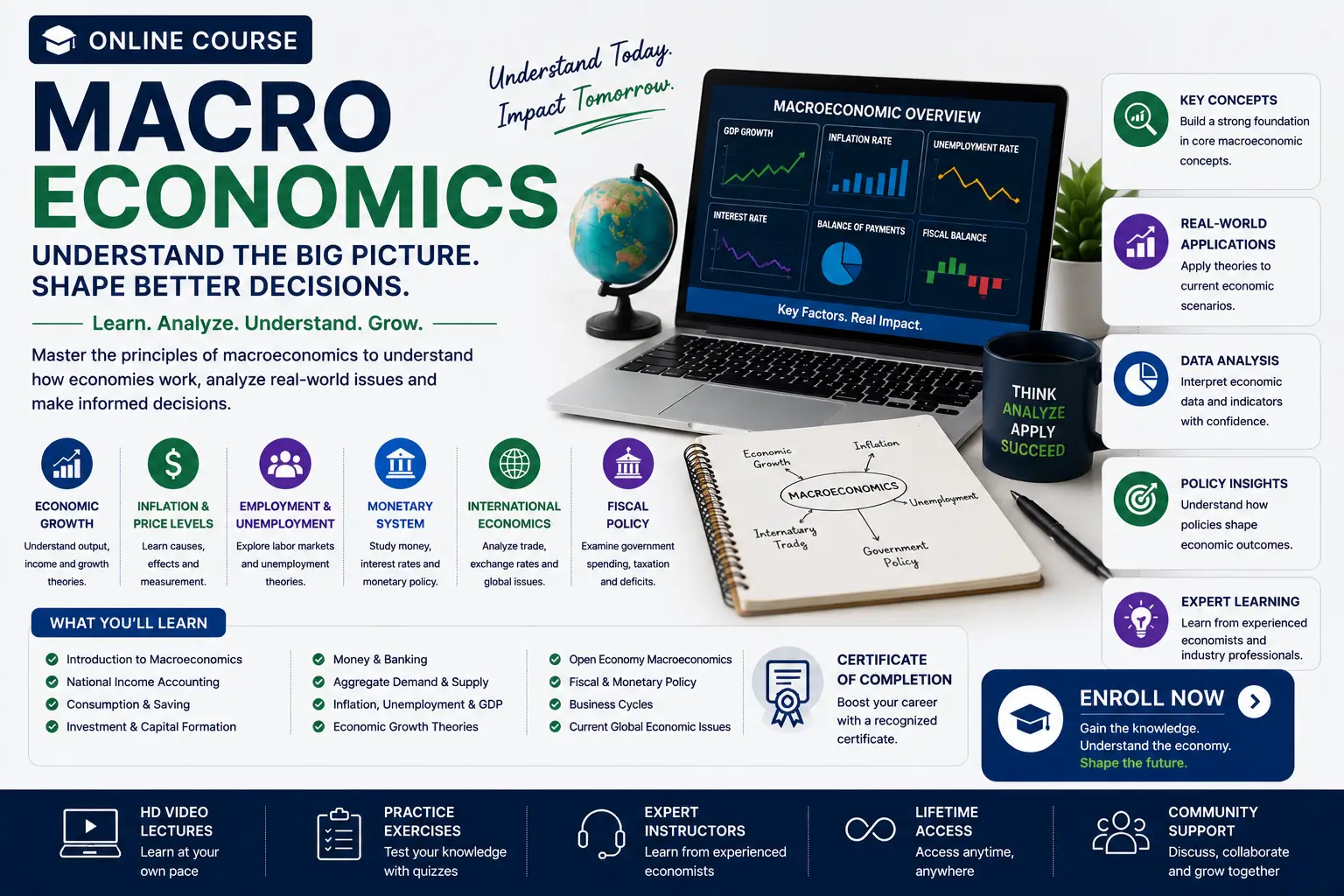
Macroeconomics: Understand the Big Picture of Global Economies
Macroeconomics is the study of the economy as a whole, focusing on national and global trends that shape growth, stability, and prosperity. Unlike microeconomics, which examines individual markets, macroeconomics looks at the bigger picture—covering topics such as inflation, unemployment, GDP, fiscal policy, and international trade. The Macroeconomics course is designed to provide learners with a strong foundation in economic theory and practical applications, helping them understand how governments, businesses, and individuals interact within the global economy.
Why Learn Macroeconomics?
Macroeconomics is essential for anyone who wants to understand how economies function and how policies affect everyday life. From analyzing government budgets to predicting the impact of global trade, macroeconomics equips learners with the tools to interpret economic data, make informed decisions, and anticipate future trends. These skills are highly valuable in careers across finance, business, public policy, and international relations.
What You’ll Learn
- Introduction to Macroeconomics: Understand the scope, importance, and differences from microeconomics.
- National Income & GDP: Learn how economies measure growth and productivity.
- Inflation & Deflation: Explore causes, consequences, and policy responses to price changes.
- Unemployment: Study types of unemployment and strategies to reduce joblessness.
- Fiscal Policy: Analyze government spending, taxation, and budget deficits.
- Monetary Policy: Understand the role of central banks in controlling money supply and interest rates.
- International Trade & Finance: Gain insights into exchange rates, trade balances, and globalization.
- Economic Growth & Development: Learn theories and policies that drive long‑term prosperity.
- Business Cycles: Study expansions, recessions, and recovery phases in economies.
- Case Studies: Examine real‑world examples of macroeconomic policies and their impact.
Benefits of the Course
- Career Advancement: Build skills valued in finance, consulting, and policy analysis.
- Practical Knowledge: Learn how macroeconomic trends affect businesses and individuals.
- Future‑Ready Skills: Understand global economic challenges like inflation, recession, and trade wars.
- Versatility: Applicable for careers in economics, business, and government.
- Confidence Building: Develop the ability to analyze and interpret economic data.
Target Audience
This course is ideal for:
- Students pursuing economics, commerce, or business studies
- Professionals working in finance, consulting, or public policy
- Entrepreneurs seeking to understand market trends and government policies
- Anyone interested in learning how economies function at a national and global level
Why Choose This Course?
- SEO‑optimized content designed to rank well on Google
- Easy‑to‑read language for general audiences
- Structured with headings, bullet points, and clear formatting
- Includes benefits, learning outcomes, and target audience insights
By the end of the Macroeconomics course, you’ll be able to understand the forces that drive national and global economies, analyze government policies, and interpret economic indicators. This course empowers you to confidently engage with economic discussions, whether you are preparing for a career in finance or simply want to understand how the world’s economies impact daily life.
FAQ SECTION
1. What is a Macroeconomics Course?
A Macroeconomics Course studies economic systems at the national and global levels, including GDP, inflation, unemployment, and government policies.
2. Who should enroll in this course?
Students, economists, business professionals, policymakers, entrepreneurs, and competitive exam aspirants can benefit from this course.
3. Do I need prior economics knowledge?
No, the course is suitable for beginners and gradually introduces key macroeconomic concepts.
4. What topics are covered?
Topics include GDP, inflation, unemployment, fiscal policy, monetary policy, international trade, and economic growth.
5. How does macroeconomics differ from microeconomics?
Macroeconomics focuses on entire economies, while microeconomics studies individual consumers, firms, and markets.
6. Is certification provided?
Yes, learners receive a certificate upon successful completion of the course requirements.
7. Can this course help with competitive exams?
Yes, macroeconomic concepts are commonly included in UPSC, UGC NET, SSC, banking, and other competitive examinations.
8. What skills will I gain?
You will develop economic analysis, policy evaluation, data interpretation, and critical thinking skills.
9. What career opportunities are available?
Career paths include economist, financial analyst, policy researcher, consultant, business analyst, and academic researcher.
10. Is the course available online?
Yes, many institutions offer flexible online learning options for macroeconomics training.




Reviews
There are no reviews yet.